Roman Shades: The Fabric Decides How It Folds
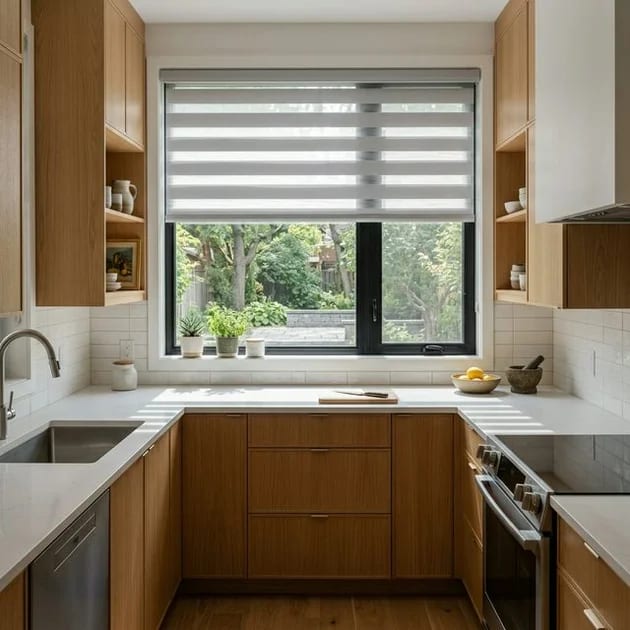
A Roman shade, or Roman blind, is not a product category you pick instead of curtains. It is a fabric assembly built to one window, and the cloth decides almost everything.
Every article I read presents a Roman shade as a product category. A thing you choose instead of curtains, the way you would choose a chair instead of a bench.
It is not one. A Roman shade is a fabric assembly built to a single window, and how it folds is decided almost entirely by the cloth. Put the same mechanism behind two different fabrics and you get two objects that do not look related.
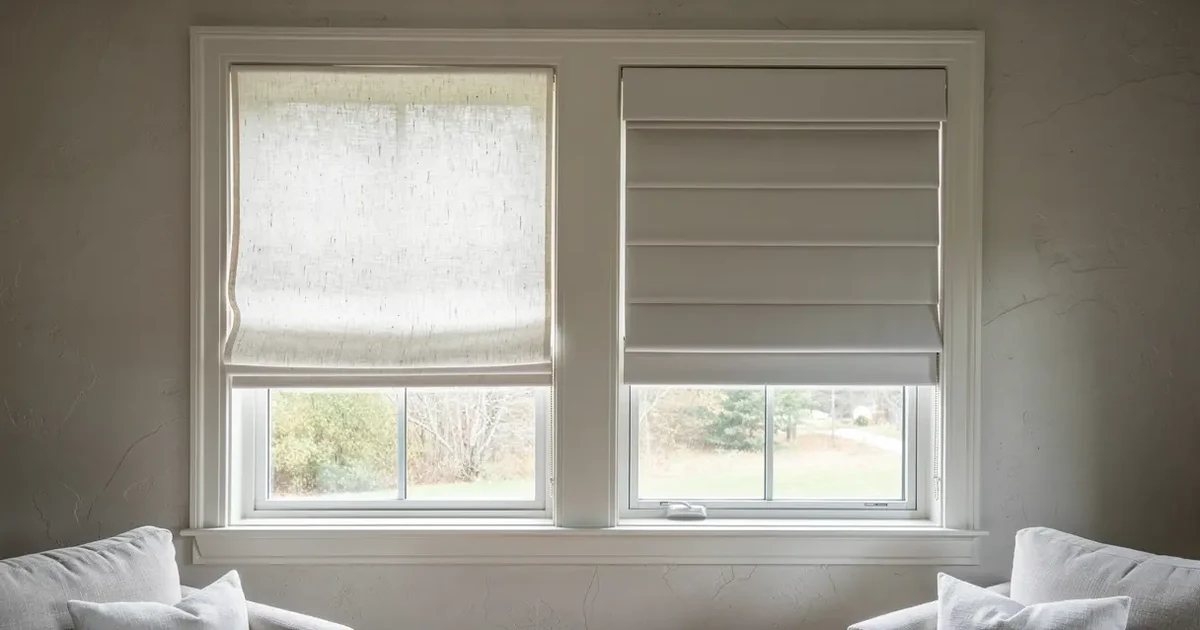
A Roman shade is made, not bought
The confusion is understandable, because the thing is sold as a unit, and under two names. Roman shade and Roman blind are the same object. Which one you say depends mostly on where you learned the word, and neither is more correct than the other. I write shade here for consistency and I answer to either.
What actually happens is that a flat panel of cloth is built with horizontal channels at set intervals across its back, rods or battens are seated in those channels, and cords run vertically so that lifting the cord makes the panel fold on those lines. The mechanism is a way of pulling. Everything you see is textile.
That is why two shades from the same maker, same window, same mechanism, can look nothing alike. The fabric is not a finish applied at the end. It is the object.
What the fabric decides and what the mechanism decides
Worth separating, because consumer coverage attributes almost everything to the wrong half.
The mechanism decides: how it lifts, how far it stops, whether the cord is on the left or the right, and how the whole thing is fixed above the window.
The fabric decides: the shape of every fold, how deep the stack is when the shade is up, whether the bottom edge stays straight or smiles, how much light comes through when it is down, and whether it looks tailored or relaxed.
People shopping for Roman shades spend their energy on the first list. The second list is what they will actually look at every day.
The fold is a property of the cloth, not of the mechanism. That single sentence would save most people from the shade they end up disliking.
Soft fold or flat stack: same mechanism, two objects
Here is the choice underneath the choice.
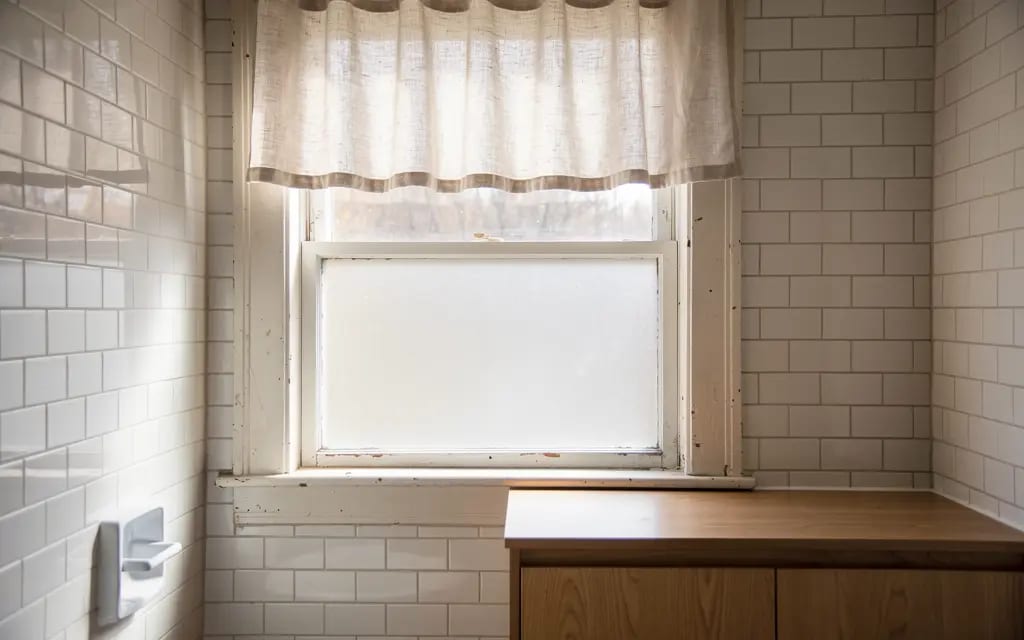
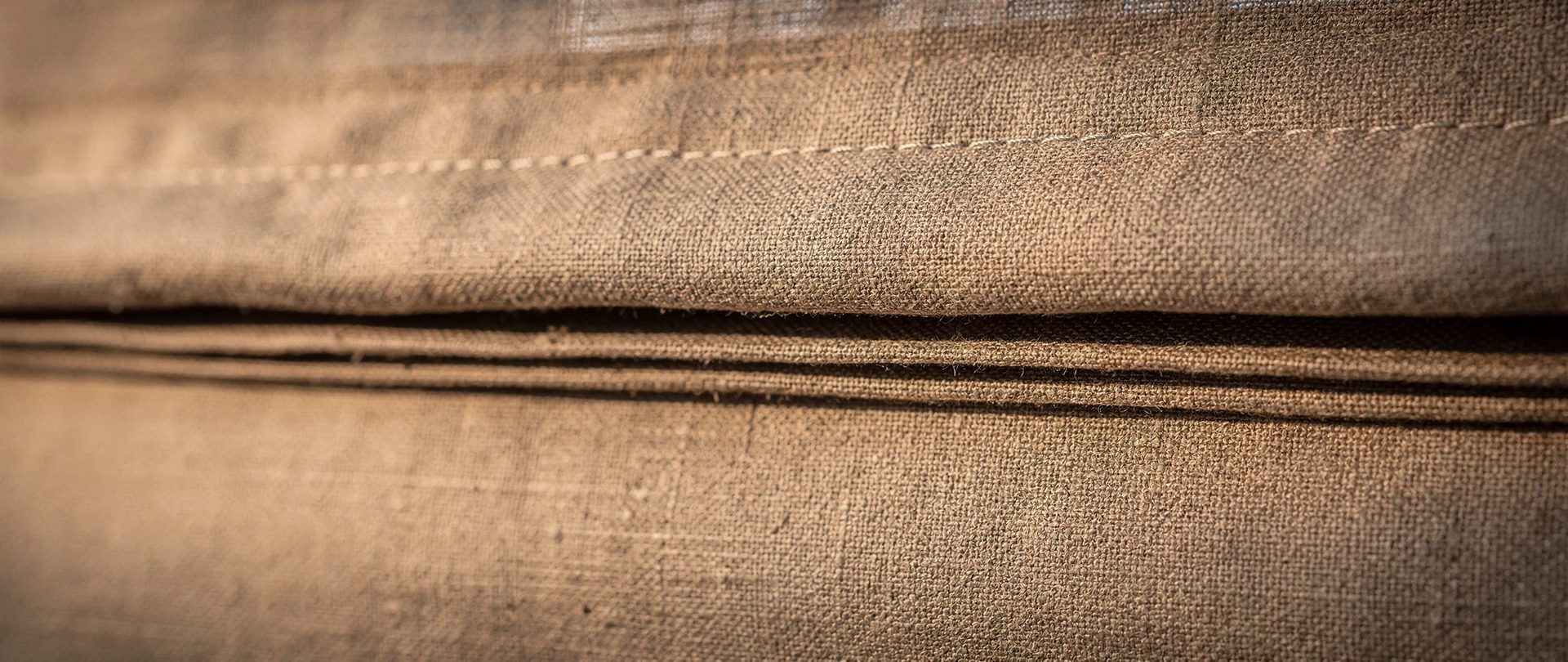
A soft washed linen or a loose-weave cotton gives the relaxed fold: each section curves gently between its battens, the stack is deep and soft when raised, and the whole thing has the slightly undone look that magazines photograph. It is forgiving. It is also never crisp, and if crisp is what you wanted you will be disappointed by a fabric that is behaving exactly as it should.
A firm cotton, a tight twill or a mid-weight blend gives the flat tailored stack: each fold sits square, the sections are even, the bottom edge holds a hard horizontal line. It looks made. It is also unforgiving, because a firm cloth shows every error in the fold spacing and every millimetre of a window that is out of square.
Neither is better. But choosing the fabric for its colour and then hoping for a particular fold is the most common way to end up with the wrong shade.
Lining chosen for condensation, not for light
This is where Quebec changes the answer, and where advice written elsewhere fails.
Most guidance treats lining as a light decision: heavier lining for a darker room. That is true and it is secondary here. A Roman shade sits flat and close to the glass, often inside the window recess, and it stays there. In a Sherbrooke January the inside face of a window runs cold and wet, and anything held against it stays damp.
So the lining question is really a moisture question. What matters is that the assembly can dry between cycles: a lining that breathes rather than a coated blackout backing, enough clearance from the glass rather than a shade fitted tight into the recess, and a fabric that tolerates being damp without marking.
Where I see this go wrong is a coated blackout lining in a bedroom on a north wall. It does exactly what it was asked to do about light, and it holds moisture against the cloth all winter. The face fabric ends up marked along the lowest fold, which is where the water collects.
If you want real darkness on a cold window, the honest answer is often a lined curtain rather than a shade, or a shade fitted well clear of the glass with a lining that can breathe.
Fold spacing is a measurement
The number of folds is not a preference, though it gets asked as one.
Fold spacing is derived: the finished drop, minus the stack height you can live with, divided into sections that are deep enough to hold their shape in the chosen cloth. A soft linen needs deeper sections or it looks limp. A firm cotton can take shallower ones and stay crisp.
Get it wrong and it fails in one of two visible ways. Sections too deep and the fabric sags in the middle of each fold. Sections too shallow and the stack is enormous, eating the top of your window even when the shade is fully up.
I take the finished measurement from where the mechanism will sit, not from the window frame, and I ask how much of the glass you are willing to lose to the stack. That second answer is the one that sets the spacing.
Where the atelier's work stops
Said plainly, because this is a place where a shade order can go wrong late.
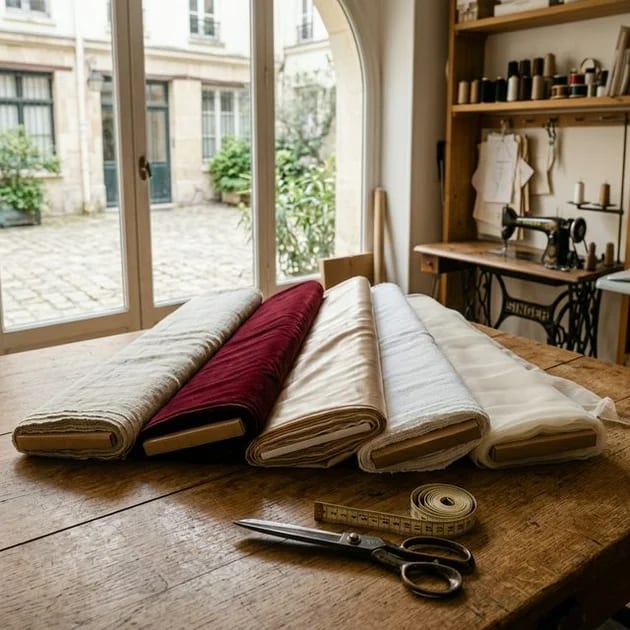
I make the textile: the panel, the lining, the channels, the battens seated in them, the hems and the finishing. That is the part that decides how it looks.
The lifting mechanism, I order for each shade: cordless, cord or chain, to suit the window and your habits, and compliant with Canadian child-safety rules for window coverings. You have nothing to buy or supply. One shade runs up to 5 feet wide; a wider window is split into two or three shades side by side. The drop goes to about 80 inches, a little more or less depending on the weight and weave of the cloth. The finished measurement is always taken from the mechanism rather than from the window. It is premium sewing work, slow to make, and priced to match.
I also do not work on powered or remote-operated systems at all. That is outside what this atelier does, and it is not a question of size or of the room.
What I would rather do is have this conversation before an order than during one. If you send me the window measurements and a photograph of the recess, I can tell you whether a shade is the right answer for that window before anything is ordered.
Before you order
Measure the width and the drop, note whether the shade will sit inside the recess or outside it, and photograph the window from an angle so I can see the depth.
Then tell me which fold you want, relaxed or tailored, because that decides the cloth before anything else does. If you are weighing a shade against curtains for the same window, the room-by-room reasoning is the better place to start, and the living room page covers how the two work together.