Curtain Fabric Guide: Linen, Velvet, Silk and More
Curtain fabric determines light quality and insulation. Linen, velvet, silk, cotton, and sheers compared with care notes and room pairings. Sherbrooke.
Every time a new client comes to my atelier on the Plateau St-Joseph, the question that comes up first is almost never about color or length. It's about fabric, and it's exactly the right place to start. The fabric choice determines everything: how light moves through your window, how the curtain insulates against a Quebec January, how it ages, how you'll care for it, and the mood it creates in your room. This guide covers the major fabric families, but it also goes further than a first atelier visit: what weight actually predicts about drape, how Quebec light wears a fabric down over years, what a lining and an interlining each do for you, and which fabrics I quietly steer people away from.
Weight in Grams per Square Meter: The Number That Predicts Drape
Before we talk about fibers, let's talk about the number I check first on any fabric spec sheet: weight per square meter, in g/m². It tells you more about how a curtain will hang than the fiber name ever will.
A sheer floats because it weighs almost nothing, a few dozen grams per square meter. An ordinary cotton, somewhere around 150 to 200 g/m², makes soft folds that move with the air in the room. A mid-weight linen or an upholstery-grade velvet sits in a denser band, roughly 250 to 350 g/m², where the fabric starts to break into crisp folds instead of rippling. Past that, in the 400 to 500 g/m² range and up, you're into heavy velvet or triple-layer territory, the fabric that falls with a gravity nothing lighter can fake. For a reference point you can feel with your hands: 350 g/m² is about the thickness of a good hoodie.
That same band, roughly 250 to 500 g/m², is also where a fabric starts doing real work against noise in a room, which I cover in detail in my custom acoustic curtains guide. One thing worth saying plainly, because it comes up often: size is not my limit, weight is. I sew long, wide curtains for big window walls and high ceilings without any trouble. What my machines will not take is industrial machine-room fabric, 5 to 10 kilograms per square meter, and stage curtains. Even the heaviest upholstery velvet on the market is nowhere close to that limit.
Custom Linen Curtains: Natural, Breathable, Effortlessly Elegant
Linen is the fabric I recommend most often to clients who want something that feels alive and authentic. It filters light in a way few other materials can match: in the morning, a linen curtain washes a room in warm, diffused clarity. It breathes, it moves, and it ages beautifully.
Linen wrinkles. I say this upfront because some clients are surprised by it, and others fall in love with it immediately. Those gentle folds that develop over time are not imperfections, they are linen's character, the way a leather bag develops a patina. If you want curtains that look pressed and rigid at all times, linen probably isn't your fabric. But if you love that relaxed, lived-in quality, linen will look extraordinary in your home.
Linen also moves with the seasons, which surprises most people. It's a hygroscopic fiber: it absorbs moisture from the air and releases it again. A panel is slightly shorter in January, when heating dries out the indoor air, and slightly longer in July. On a floor-length panel, that seasonal swing can add up to a centimeter or two, which is part of why I ask about your heating habits before cutting the hem length.
Linen also has a clear preference on the heading. It makes excellent flat, pinch, and grommet pleats, where its slightly angular folds read as character. It's less comfortable in a wave heading, which asks for a continuous ripple that pure linen fiber resists forming, so for a wave in linen I usually reach for a linen-cotton blend instead. That difference never shows on a flat bolt of fabric, only once the heading is gathered.
On light: linen ages well, but not forever. An unprotected south-facing window will still weaken it over the years, a bit slower than silk and a bit faster than dense polyester. The leading edge, the part you handle every day, always fades first, and rotating the two panels once a year is the simplest habit for slowing that down.
Strengths: natural fiber, breathable, beautiful light diffusion, graceful aging. Know before you buy: shifts a centimeter or two with the seasons, pre-washing before fabrication is recommended, expect some wrinkling as a feature, not a flaw. Best rooms: living room, bedroom, dining room.
Custom Velvet Curtains: The Insulating Luxury of Quebec Winters
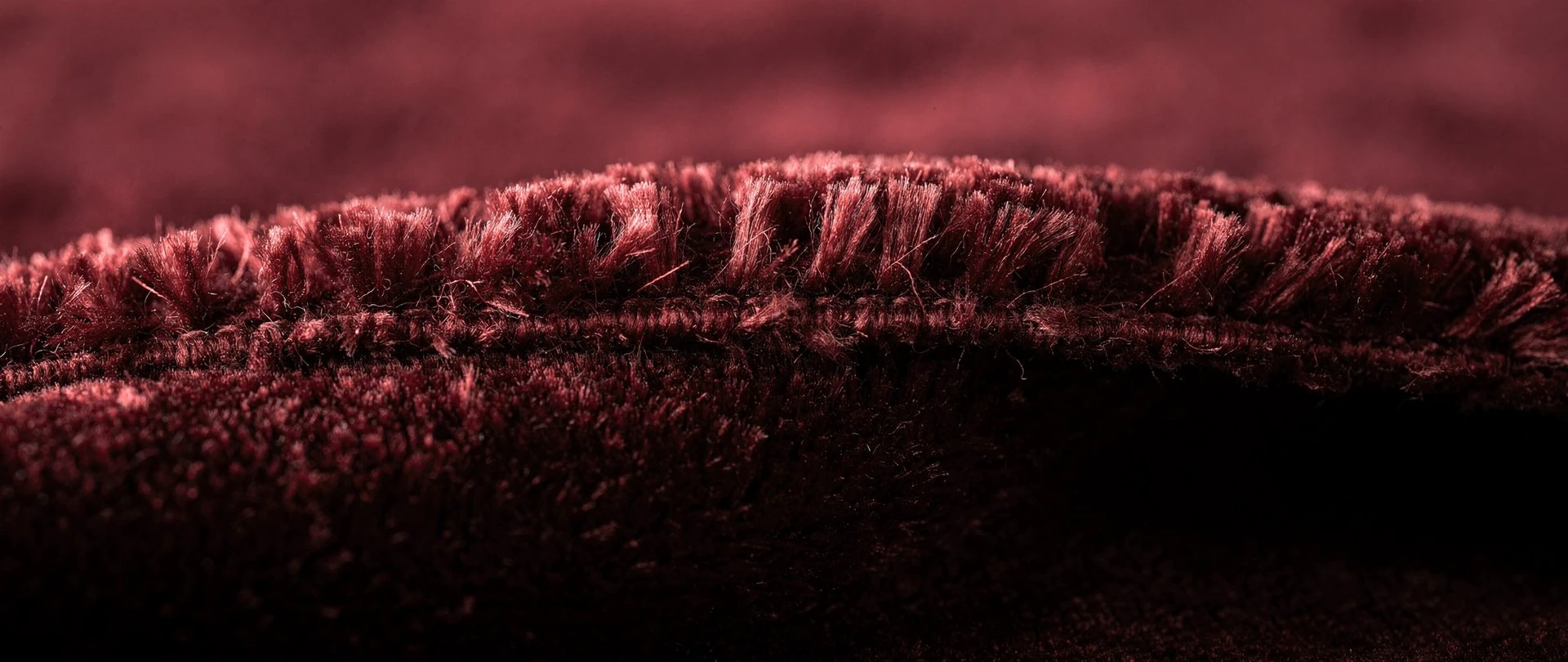
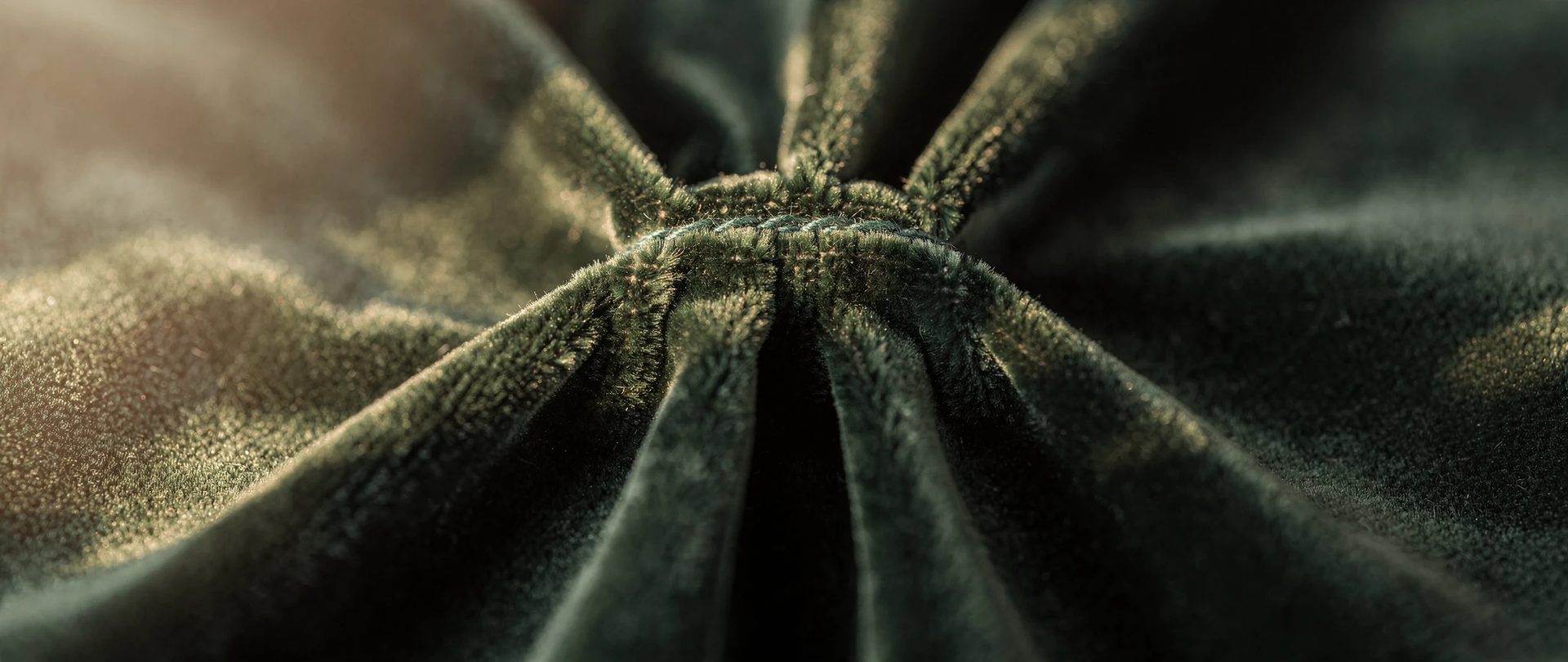
If there is one fabric that was made for Quebec winters, it is velvet. Its density and pile create a natural thermal barrier against the cold that seeps through window glass on a February night in Sherbrooke. In an older home in Vieux-Nord or a well-appointed residence on the Plateau, a well-made set of velvet drapes can make a genuine difference in how warm and quiet your rooms feel.
But velvet earns its place beyond insulation. It falls with a kind of majesty that lighter fabrics cannot reproduce. It absorbs light rather than reflecting it, giving a room depth and richness that reads as intentional, not accidental. A deep burgundy or forest green velvet in a reading room or a home office creates what I can only describe as an inhabited cocoon atmosphere.
A good upholstery-weight velvet for curtains typically runs 250 to 500 g/m². In that band, a well-chosen, well-hung velvet also absorbs a real amount of a room's noise, not just its cold. What actually decides that outcome is how it's gathered, in deep lobes rather than hung flat, and how far it stands off the wall, at least as much as the weight itself. That is not the same as industrial fabric, 5 to 10 kilograms per square meter, which my machines simply cannot sew: it's an ordinary velvet, hung a particular way. I cover this in detail, including why I never promise a lab-measured number without you paying for the test, in my acoustic curtains guide.
Maintenance requires more attention than with other fabrics: velvet should be brushed in the direction of the pile and dry cleaned rather than machine washed. What actually wears first on a velvet isn't the face fabric in general, it's the pile at points of repeated contact, where a tieback pinches the same spot every day, or where an edge rubs against a windowsill. The pile flattens there and never quite springs back, even after brushing. For a primary living space where quality is the goal, the result is well worth the effort.
Strengths: superior thermal insulation, majestic drape, exceptional visual richness, contributes to room acoustics. Know before you buy: dry cleaning recommended, pile wears fastest at contact points, not evenly across the panel. Best rooms: living room, master bedroom, home office, reading room.
Silk Curtains: The Fabric That Plays with Light
Silk is the most precious fabric I work with in my atelier, and it has a relationship with light that is entirely its own. It catches, plays, and transforms the light throughout the day in a way that changes the entire atmosphere of a room from one hour to the next. A silk curtain at sunset, holding the golden hour before letting it go, is difficult to describe and impossible to forget once you've seen it in person.
Silk is delicate, and it is the most UV-sensitive fabric in my whole atelier. It doesn't just fade, it weakens: the fiber turns brittle and the fabric tears at the slightest strain. I never recommend unprotected silk in front of a strongly sunlit window, no matter how beautiful the fabric.
That's exactly why I almost always fabricate silk curtains with a quality lining. The lining does two jobs at once: it takes the UV exposure in place of the face fabric, which makes it a sacrificial part you replace long before the fabric you fell in love with is damaged, and it adds the weight silk needs for a rich drape instead of a flat one. Depending on the weave and origin, silk can be hand-washed in cool water or may require dry cleaning.
This is not the fabric for every room. It is the fabric for rooms that deserve particular intention: a master bedroom, a formal sitting room, a boudoir, ideally not one facing due south.
Strengths: unmatched light play, natural luminosity, fluid and elegant drape. Know before you buy: UV sensitive, lining is effectively mandatory, damage is irreversible once the fiber weakens. Best rooms: master bedroom, formal living room, dressing room.
Cotton Curtains: Versatile, Easy, and Honest
Cotton is my working fabric in the best sense. It accepts dye beautifully, takes printed patterns well, blends cleanly with other fibers, and is forgiving in terms of care. It is washable in most cases, reasonably priced for larger quantities, and adaptable to almost any interior style.
Cotton is not linen's casual grace, not velvet's drama, not silk's luminosity. What it offers instead is reliability. A textured white cotton in a bright kitchen or a child's bedroom is exactly right: unfussy, practical, easy to live with.
An unwashed cotton can lose 5 to 10 percent of its dimensions on first contact with hot water. That's why I always pre-wash untreated cotton before cutting, and why I recommend cool water for ongoing care once the curtain is made: shrinkage doesn't come back out with an iron.
Cotton is also the fabric people choose most often in pattern: plaid, stripes, florals. And a pattern carries a cost that never shows on the sample swatch. To make a design line up across two panels, you have to buy more fabric than you actually sew, sometimes up to a quarter more on a large-scale print. I break the real math down, with actual numbers, in a companion article I wrote for the French edition of this site on what pattern matching really costs.
For families with children or pets, cotton is often my first recommendation. It tolerates machine washing, handles everyday wear, and can be replaced panel by panel if something gets damaged, without requiring a full refabrication.
Strengths: versatile, easy care, wide range of colors, textures and patterns, accessible price point. Know before you buy: less natural luminosity than linen or silk, shrinks 5 to 10 percent if not pre-washed, a large pattern repeat raises the fabric needed. Best rooms: kitchen, children's bedroom, family rooms, multi-use spaces.
Quality Polyester: The Practical Answer for Demanding Rooms
I hear the hesitation in clients' voices when I mention polyester. But hear me out. High-quality polyester in 2026 bears little resemblance to the synthetic fabrics of twenty years ago. Modern polyester weaves can be dense, rich-textured, and visually convincing in ways that would surprise you if you felt them in person at the atelier.
Where polyester genuinely excels is in rooms with moisture challenges: bathrooms, open kitchens, laundry rooms, or any space with significant humidity variation. It does not mold, does not shrink, and holds color far better over time under UV exposure than most natural fibers. It's the most light-stable fabric in this whole guide.
Here's a nuance worth knowing before you buy: a very glossy polyester can photograph beautifully under staged lighting and read a little plastic in the flat grey light of a November afternoon. That's exactly why I always have clients feel and look at a sample in the actual light of their room, never a showroom's lighting and certainly not a screen. A well-woven polyester rarely has this problem; a cheap one almost always does.
Strengths: moisture-resistant, excellent color stability, minimal maintenance, high durability. Know before you buy: less breathable than natural fibers, weave quality changes how the sheen actually reads in your room. Best rooms: bathroom, kitchen, laundry room, rooms with intense direct sun exposure.
Sheer Curtains and Voile: Light in Layers
Sheers are almost always the first layer, the foundation of a layered window treatment. Alone, they offer modest privacy. Paired with a heavier drape, they give you full control: draw the heavy panel open to flood the room with light, keep the sheer closed to maintain privacy from the street.
In row houses and urban neighborhoods like St-Joseph in Sherbrooke, where homes sit close together, sheers are often indispensable. They filter without blocking. Linen and fine cotton sheers have an organic quality that synthetic voiles struggle to reproduce.
I always fabricate sheers wider than the window opening, usually double the width, to create the cloud-like softness that defines the look. That extra fullness is where the difference between a fabric on the bolt and the same fabric gathered becomes most obvious: flat against the light, a sheer reads as almost ordinary; doubled over on itself in soft folds, the same fabric becomes a study in shadow and translucence.
Strengths: soft light filtration, partial privacy, elegant layering with heavier drapes. Know before you buy: sheers alone do not provide full privacy, plan for a second, heavier layer. Best rooms: living room, bedroom, any room facing a street or neighboring windows.
Lining and Interlining: What Each One Actually Does, and When It's Worth the Cost
Clients often ask if a lining is necessary, as if it were a luxury add-on. That's not quite the right question, because a lining and an interlining do two different jobs.
A lining is the fabric sewn behind the face fabric, on the window side. It does three things: it protects the fabric you chose by absorbing UV exposure in its place, it adds the weight that improves drape on a lightweight fabric, and depending on the type, it can either block light or simply soften it. By design, it's also a wear part: it's meant to fail before the face fabric does, and when it does, you replace only the lining, not the panel you already paid for.
An interlining is different. It's sewn inside the heading itself, not across the whole panel, and that's what gives structured pleats, pinch and goblet especially, the body they need to hold their shape through years of daily opening and closing. Without it, a soft linen or a lightweight cotton sags at the top instead of holding its folds.
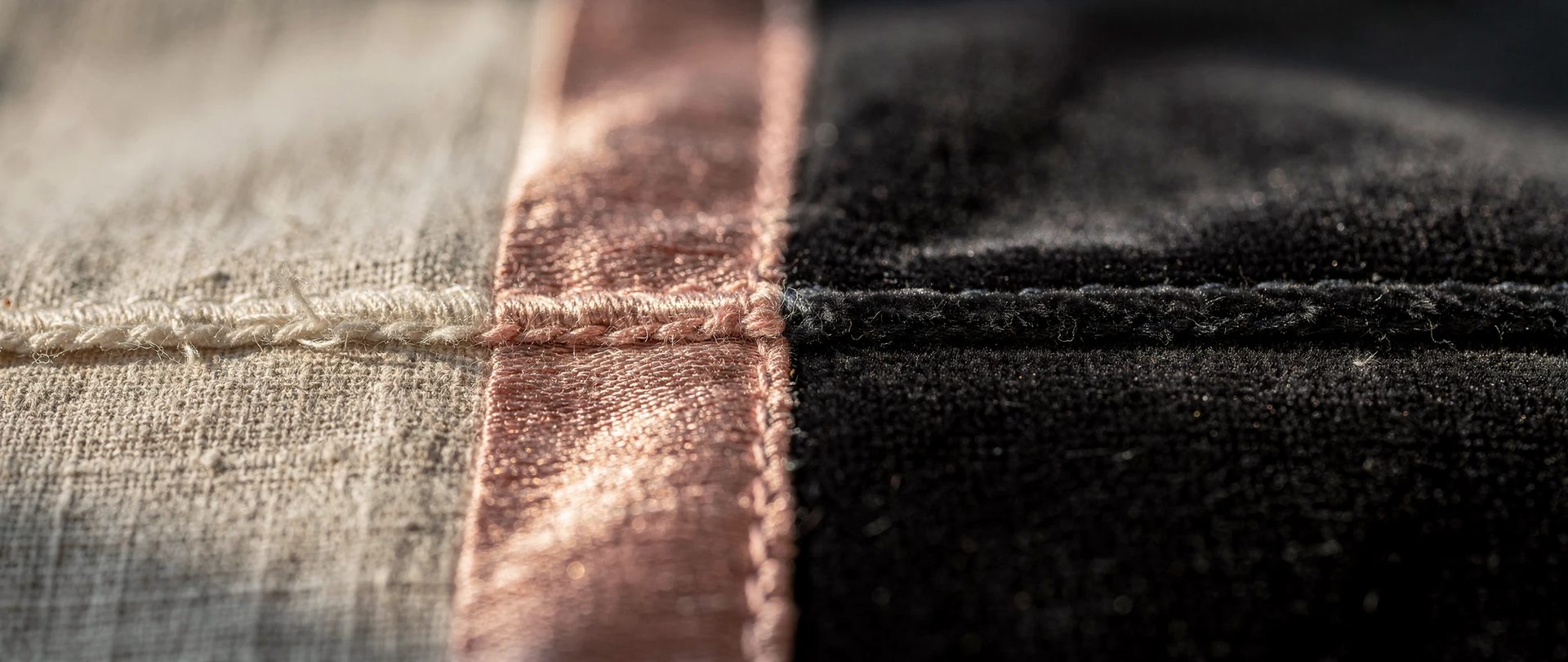
Face fabric and lining never shrink at exactly the same rate, so I mount them with a bit of play rather than stitching them flat against each other, specifically so they can move independently across the seasons. A lined curtain sewn without that allowance is the one that twists after its first wash, and it's the single most common repair I do. It's worth the cost whenever one of these applies: the fabric is UV-fragile like silk, the window faces due south with heavy exposure, the room needs true darkness for sleep, or you want a structured pleat on a tall window.
What Wears Out First, by Fabric Family
Every fabric family has a different weak point, and knowing it changes how you care for a curtain, not just how you choose one. On unlined linen and cotton, it's the fiber itself that weakens over years of direct sun, always starting at the leading edge: pinch the fabric near that edge and pull gently, and if it gives or makes a sharp sound, the fiber is done, and a repair right there will only shift the problem an inch over. On velvet, it's the pile at points of repeated contact that flattens first, not the fabric overall. On silk, it's the fiber itself that turns brittle under UV, and it's irreversible from the moment it starts. On any lined curtain, whatever the face fabric, it's almost always the lining that fails first, exactly as it's supposed to: when the face fabric is still beautiful, you replace only the lining, for a fraction of what a new curtain would cost.
Fabrics I Quietly Steer Clients Away From
I'd rather tell you plainly where I'd point you elsewhere than let you fall in love with a fabric that won't age well in your home. Pale, unlined silk in front of a strongly sunlit south-facing window: the most fragile fiber in my atelier, in the worst exposure it could face. A sheer alone as the only treatment for a bedroom on a busy street: it filters, it doesn't hide, and real privacy after dark needs a second, heavier layer. A very glossy, budget polyester for a main living space where you want a rich drape: it looks great in a catalogue photo and often reads plastic once it's hanging in your actual living room light. And a large-repeat pattern chosen on price per meter alone, without the real yardage calculated first: it's not the fabric itself I'm steering you from, it's a decision made without the real number.
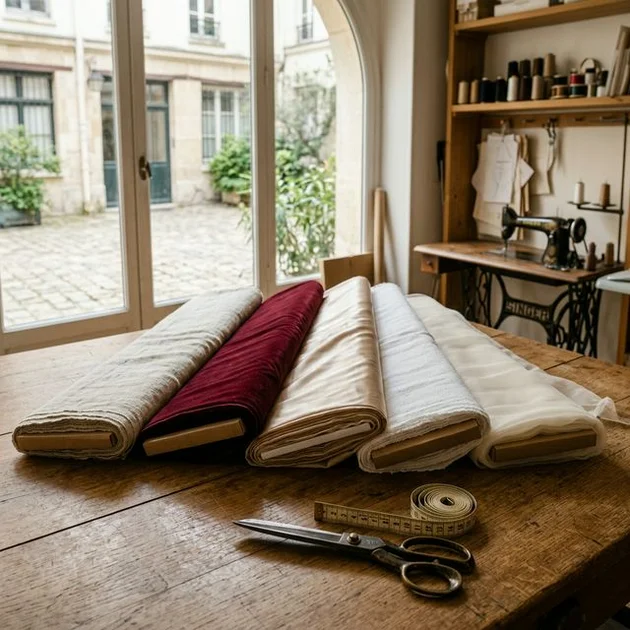
The right fabric is not the most beautiful one in the catalogue. It's the one that fits your life in that specific room, at that hour of the day, in this climate. I say this to every client: fabric samples at the atelier are not for looking at colors, they're for watching how Sherbrooke light moves through them, and how a fabric actually behaves once it's gathered, not how it looks flat on the bolt.
How I Help You Choose at the Atelier
No screen can show you how a fabric will behave in your room with your light. That is why, when you visit my atelier on the Plateau St-Joseph, I bring the bolts to the windows. We watch how the linen filters the afternoon sun. We feel the weight of the velvet in our hands, in grams per square meter as much as by touch. We observe how the silk catches the flat grey light of a January sky, and how a fabric that looked ordinary flat on the table transforms once it's gathered at the heading.
If you want to understand how fabric and pleat style work together, I invite you to read my article on the wave pleat trend in 2026, and my full guide to curtain pleat types if you want to compare the six headings I sew most often. For full residential projects, living rooms, bedrooms, complete homes, you can find the details of my process on the residential services page.
Every home is different. Every client is different. That is precisely why custom work exists: to answer what ready-made cannot. If you are ready to start the conversation, request a quote and we will go from there.