Where to get curtains made in the Townships, and what to ask
How to tell a fabrication atelier from an alterations counter in the Townships. What a real quote itemizes, and five questions to ask before you commit.
Search for where to get curtains made in Quebec and you get a phone directory. Listings that mix garment seamstresses, dry cleaners who do alterations, and decor boutiques. No page explains how to choose between them.
I am obviously not a neutral party here. But most of the criteria below do not point at me specifically, and knowing them will save you a bad experience wherever you end up.
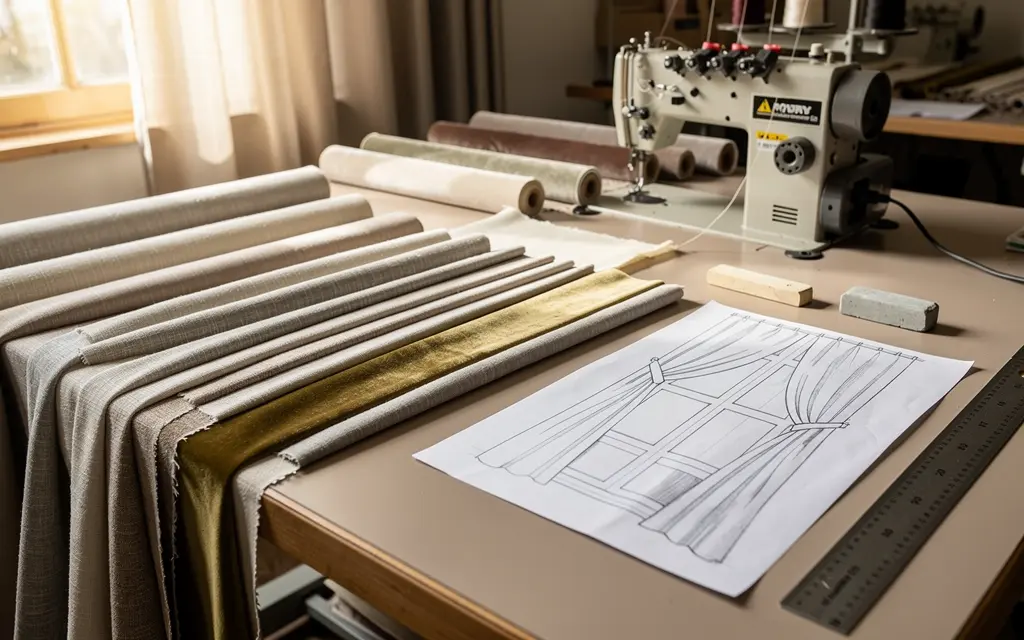
Fabrication atelier or alterations counter
This distinction explains half of the disappointing outcomes.
An alterations counter does hems. It is a real trade, often beautifully executed, but it is organised around garments: small pieces, domestic or semi-industrial machines, a normal-sized work table. Many of these shops take curtains, and for shortening a pair of panels that is perfectly adequate.
A furnishing fabrication atelier is organised around the large piece. That means a cutting table long enough to lay out a full panel, machines that handle several layers with lining, and above all the habit of fullness calculations, pattern matching and drape.
The difference shows on a full project. A 2.6 metre panel with lining, pinch pleats and a pattern repeat matched across seams is not a big alteration. It is a different trade.
A quick way to tell: ask whether the sewing happens on site, and ask how long the cutting table is. The answer is revealing and nobody minds the question.
What a real quote itemizes
A custom curtain quote that fits on one line is a red flag. You should see, separately:
- Fabric: reference, width, total metreage, price per metre.
- Lining: type and metreage. Blackout, thermal and standard linings differ in both price and effect.
- The fullness used: how many times the window width. This single number decides how the finished curtain looks.
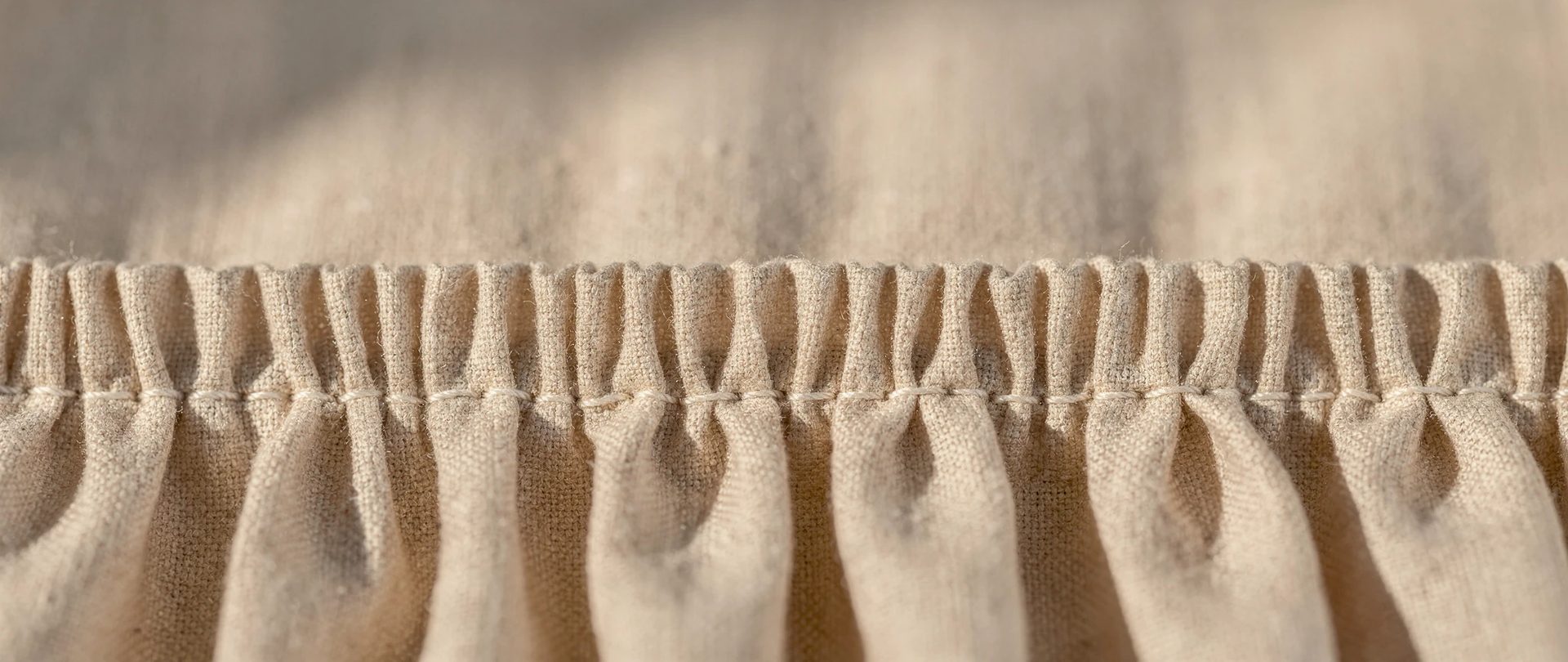
- Heading type: pinch pleat, wave, goblet, grommets, tape. Each consumes a different amount of fabric.
- Making: labour, separate from fabric.
- Hardware: supplied or not, and by whom.
- Installation: included, extra, or yours to handle.
When everything is fused into one number you cannot compare two quotes and you cannot adjust. If the total is over budget, an itemized quote lets you change fabric or move from a pinch pleat to a flat pleat knowing exactly what that changes.
Fullness is the number that matters most
If you remember one thing from this article, ask about fullness.
A curtain should contain 2 to 3 times the window width in fabric. Below 2x it looks skimpy no matter how good the fabric is. At 2.5x it hangs properly. At 3x it is generous, and that is what you see in magazines.
It is also the first place anyone cuts to bring a price down, and it does not show on a quote that displays only a total. Two quotes can differ by 30% purely because one plans 2x fullness and the other 3x.
When one quote is much cheaper than another for the same fabric, it is almost never the labour. It is the fullness.
What to bring to a consultation
- Photos of the room at different times of day. Light changes everything, especially on beiges and greys.
- Rough measurements, width and height of each window. They will be redone, but they frame the conversation.
- What bothers you now: too much morning light, the neighbour, cold near the glass, street noise. Problems guide the work better than aesthetic preferences.
- A reference image if you have one, even an approximate one.
- Your budget range, so nobody shows you fabrics that were never for this project.
I bring physical samples and lay them out in your room, in your light. A fabric seen on a screen or under shop lighting is not the same fabric in your house.
Normal lead times
One to three weeks of making after the quote is approved and the fabric arrives, depending on complexity. What stretches a timeline is almost never the sewing. It is the fabric supplier, especially on an imported reference.
An atelier promising 48 hours on a full lined and pleated project, without the fabric in hand, is promising something it does not control.
Five questions worth asking
- Where exactly does the sewing happen?
- What fullness are you planning, and why that one?
- Does the quote itemize fabric, lining, heading and installation separately?
- Who supplies the hardware?
- What happens if I do not like the drape at installation?
The fifth is the most useful. It does not test competence, it tests how problems will be handled.
Here in the Eastern Townships
For context: Quebec's curtain fabrication ateliers are concentrated in Montreal and Quebec City. In the Townships the offer is thin, and plenty of people in Knowlton, Sutton, Georgeville, North Hatley and Magog either order online or drive two hours.
I work from the atelier on Plateau St-Joseph in Sherbrooke and travel roughly 100 kilometres, which covers Magog, Orford, Bromont, Sutton, Lac-Brome, North Hatley, Ayer's Cliff, Coaticook, East Angus and out toward Lac-Mégantic. Some clients also come to the atelier with their measurements and install themselves, which works well on a straightforward window.
Measuring in person matters most where the window is not square, which in older Townships houses is most of them.
To start, call 873 200-4056, or use the quote page.