Custom Curtains vs Store-Bought: An Honest Comparison
Ready-made versus a curtain maker, priced per window rather than per panel. Where store-bought genuinely wins, and the four things a stock panel cannot do.
I'm not here to tell you that store-bought curtains are bad. Many of my clients have bought them. Some were happy — until they saw what custom actually looks like in their home.
The question I hear most often in my studio is this: is it really worth paying more for custom curtains? It's an honest question. And it deserves an honest answer, not a sales pitch, but a real comparison between what you pick off a rack and what gets made specifically for your windows, your light, and your space.
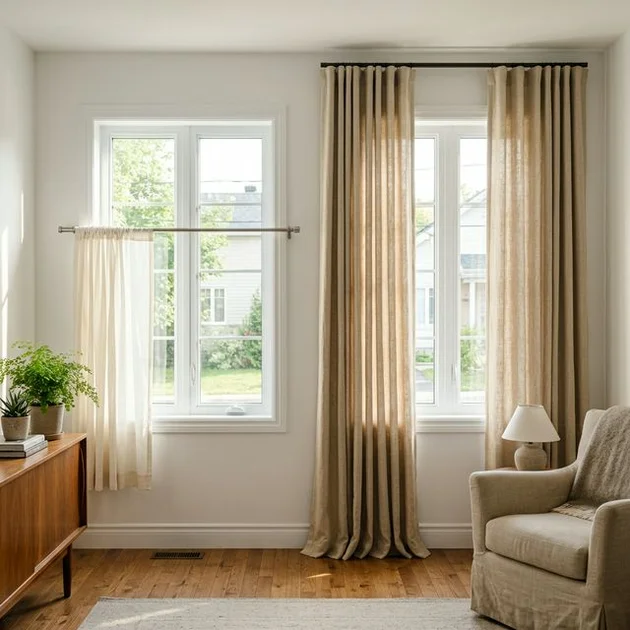
The Sticker Price vs the Real Price
A panel from a big-box store often runs between $30 and $80. Two panels for a standard window: $60 to $160. That's attractive. But here's what that price doesn't include.
Most store-bought curtains come in fixed lengths: 84, 96, or 108 inches. And most real homes don't have theoretical windows. Yours are probably an odd height. Too tall for 96 inches, too short for 108. So you hem them, you fold them under, or you live with a panel that hovers awkwardly above the floor, looking unfinished even if the fabric wasn't bad to begin with.
And that fabric. The thin polyester that makes up the majority of mass-market curtains typically holds up for two or three years before it starts to fade, lose its drape, or pill. Grommets loosen. Hems pull. What seemed economical at purchase becomes a recurring cost.
My clients who've made the switch from store-bought to custom tell me the same thing, almost without variation: I could have bought three sets from the store for what I paid here. But I would have replaced them three times.
A Perfect Fit Isn't a Luxury
When I take measurements at a client's home in Sherbrooke, I'm not just noting window width and ceiling height. I'm watching how light moves through the room at different angles. I'm measuring the gap between the ceiling and the window frame. I'm noting whether the window sits in a recess, whether the baseboard profile affects how the panel will hang, whether extending the curtain rod past the frame will make the opening feel wider.
A store-bought curtain can't account for any of that. It's designed for the theoretical window of a theoretical house. Yours is specific.
Custom means your curtains land exactly where they should: covering what needs to be covered, with no gap at the sides, no bunching in the corners, no deliberate extra length you didn't choose. It's that precision that shifts a room from acceptable to considered.
That attention to fit is what makes the difference in residential projects where the windows are the focal point of the space.
Fabric: Between Available and Right
At a big-box store, you choose from what's in stock. Colors rotate each season. The tone you loved in September is gone by February. And the selection, wide as it may look, is shaped by what sells in volume, which isn't always what's right for your window.
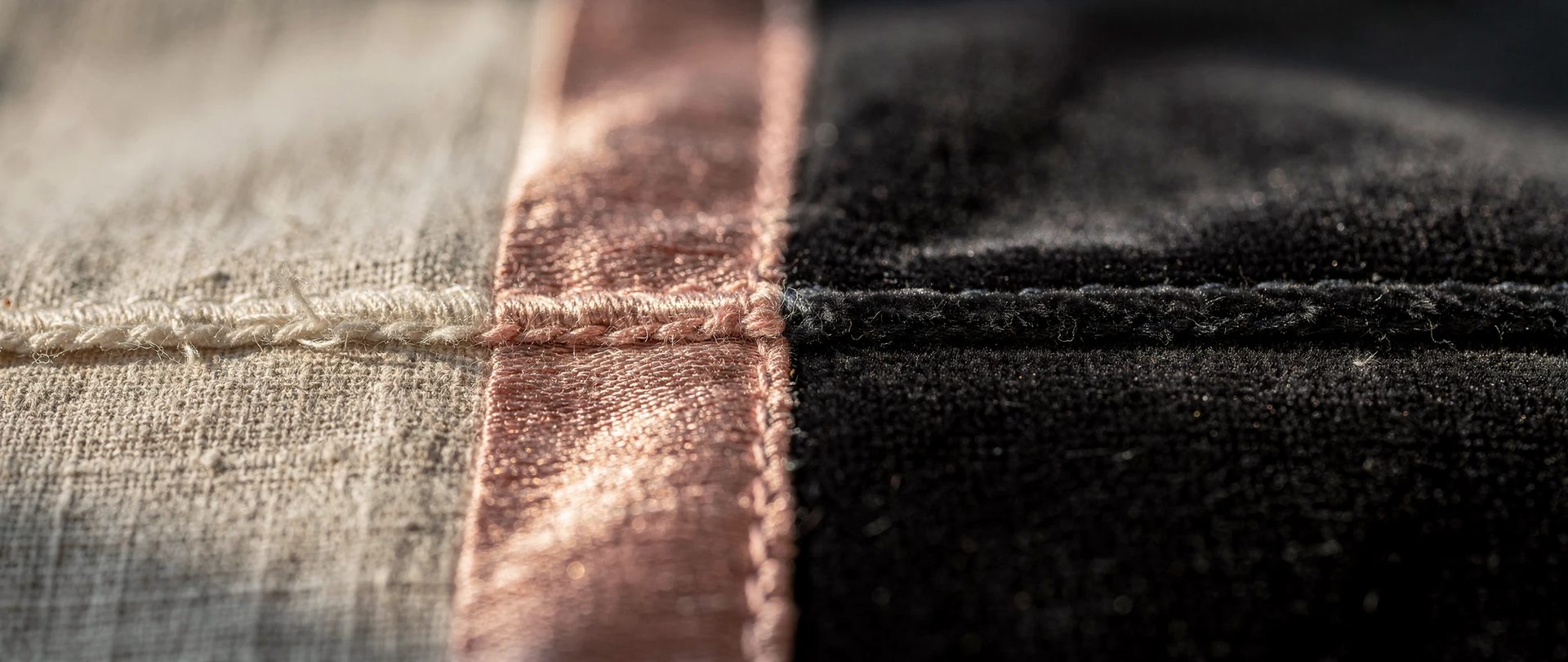
In my studio, the fabric conversation starts with your specific situation. We talk about sun exposure: a south-facing window needs something UV-resistant. A bedroom that needs real darkness needs a proper blackout lining. A living room that lacks warmth will benefit from a heavy linen or a cotton velvet, something with weight and body that changes the feel of the room.
We also talk about how you live. Do you open and close your curtains multiple times a day? If so, delicate fabrics are the wrong call. I'll tell you that plainly.
Fabric isn't just an aesthetic choice. It's a behavioral one. The right material works with your room: your light, your climate, your habits. The wrong one, even if it looks beautiful on a website, will disappoint you in your actual space.
Getting the material right takes a conversation. Not a scroll.
What the Consultation Actually Looks Like
I understand that walking into an artisan studio can feel like unfamiliar territory, especially if you're not sure whether your budget or your project is "the right kind." It isn't like that here.
What I offer is a conversation. We look at your windows together. We talk about what you like and what catches your eye in the photos you've been saving. I ask questions about how you use the room. I'm not selling you something from my inventory. I'm making something for you, starting from your constraints and your taste.
By the end of the consultation, you have a clear quote. You know exactly what you're paying and why. No surprises.
What Time Does to the Math
Here's a simple calculation. Store-bought curtains that last three years, replaced twice, give you six years of adequate window treatments. Custom curtains, properly made with a fabric suited to your sun exposure, typically last ten to fifteen years without losing their drape or their color.
The cost per year looks very different.
What you're paying for with custom isn't just a better-looking object. It's not having to think about it again. It's not reopening the browser tab three years from now, wondering if the style you liked still exists, and whether it'll still look too short.
Here in Sherbrooke, I work with families who are in their homes for the long term. The curtains we make together are meant to stay.
If you're still weighing the decision, that's completely reasonable. Custom window treatments are an investment worth thinking through. What I'd suggest is starting with a conversation — no commitment required. Book a consultation and we'll talk through what your windows actually need. Whether you're comparing prices or already convinced, I'm here to help you get it right.
The comparison at a glance
| Ready-made panel | Made to measure | |
|---|---|---|
| Width fit | Fixed widths; you buy the nearest size | Cut to your window, any width |
| Length fit | Standard drops, usually 84, 95 or 108 inches | Cut to your ceiling height |
| Fullness | Typically 1.5x the window width or less | 2x to 3x, specified before cutting |
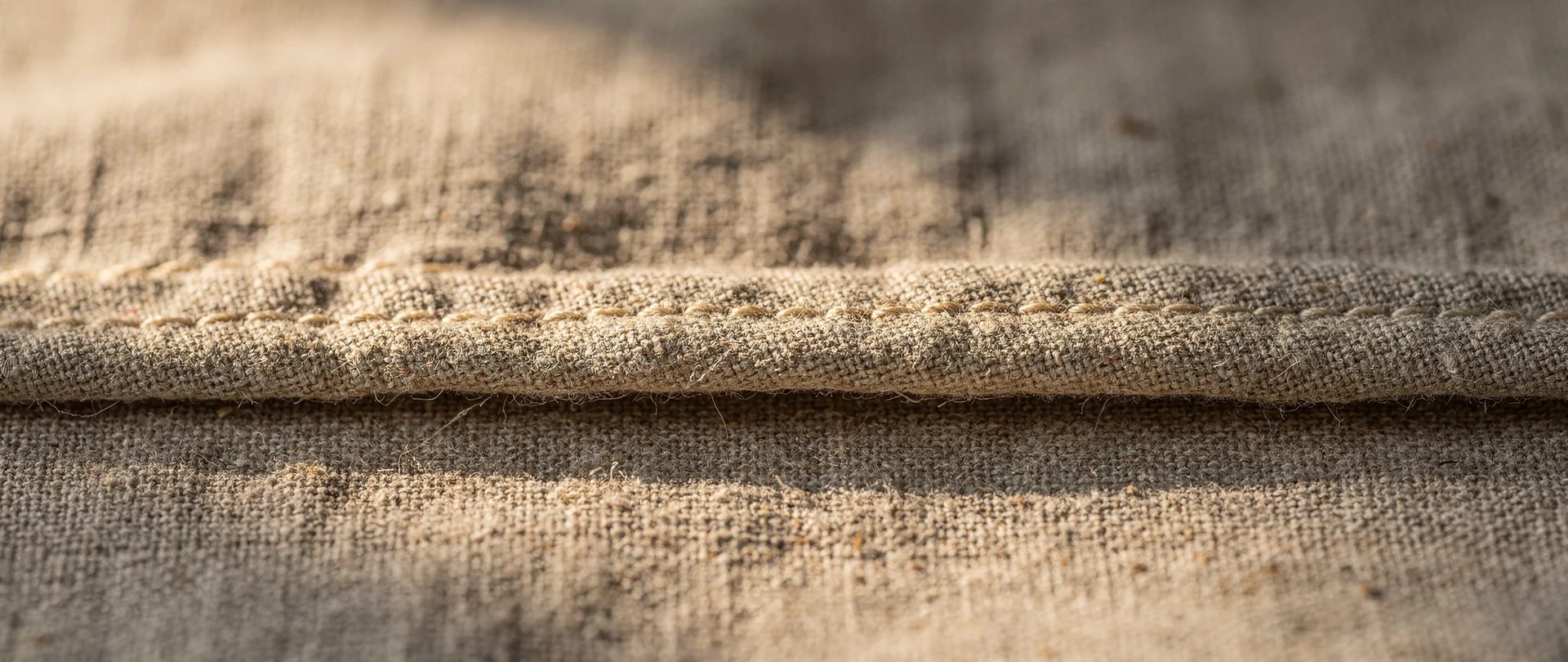
| Hem | Single, machine-serged, 2 to 4 inches | Double, 6 to 8 inches, weighted |
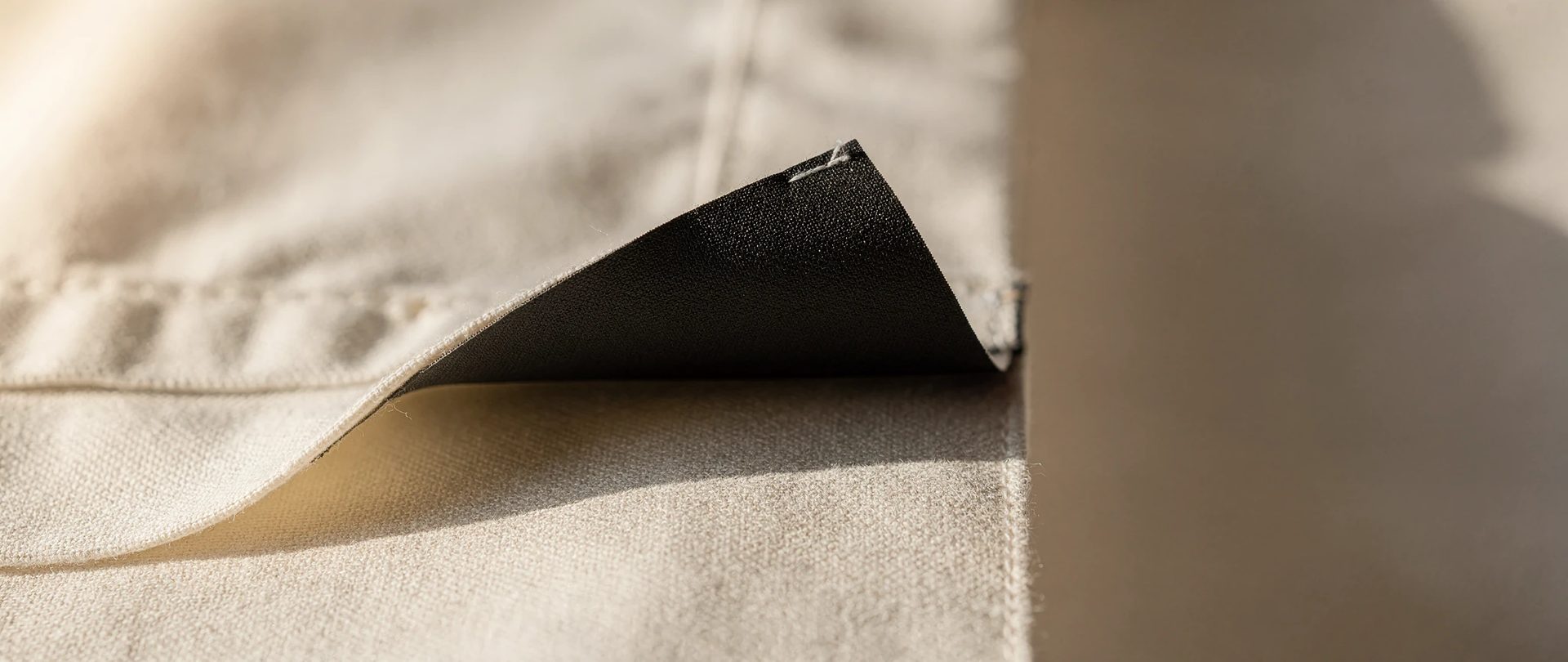
| Lining | Bonded or none | Separate, chosen for the job, hung with ease |
| Pattern matching | Not matched across panels | Matched across seams and between panels |
| Lifespan | 3 to 5 years typical | 15 years and often longer |
| Alterable later | Rarely worth the labour | Shortened, relined, remade |
Four things a stock panel cannot do
Match a window that is not square. In older Quebec houses almost none are. A made panel is cut to the measurement taken at three heights, using the narrowest.
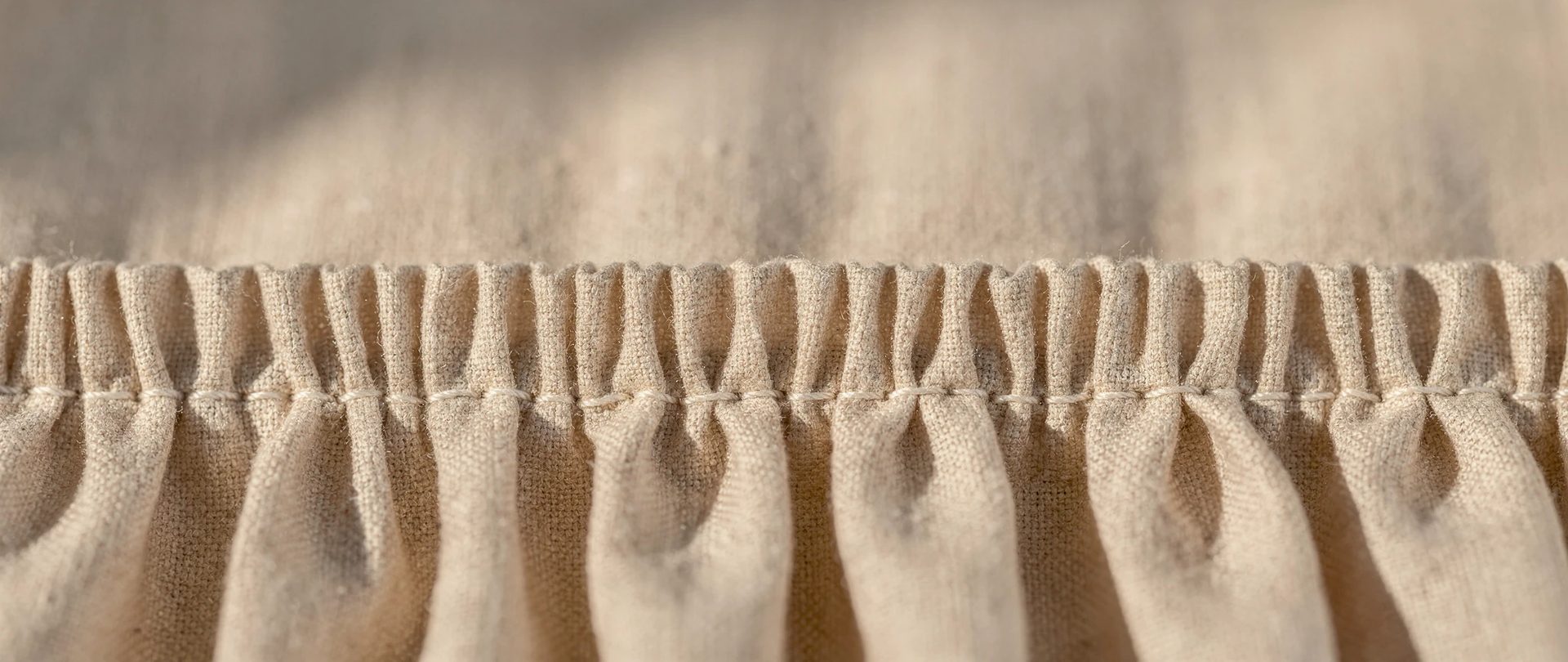
Carry real fullness. Ready-made panels are sized so that two of them cover a window. That is roughly 1.5x fullness, which is why they look flat. Fullness is a fabric quantity decision, and it is made before anything is cut.
Hang from ceiling height. Standard drops assume the rod sits on the window frame. Mounting at ceiling height, which is the single cheapest way to make a room look taller, requires a length nobody stocks.
Be repaired instead of replaced. A made curtain has hem allowance and a separately hung lining, so it can be shortened, lengthened or relined years later. That is the whole basis of the repair service.
Cost per window over ten years
The panel price is the wrong comparison. Two ready-made replacements at five-year intervals, plus the rod you buy twice, closes much of the gap with a single made pair that is still hanging at year fifteen and can be relined at year ten for a fraction of its original cost.
That said, the honest answer depends on how long you plan to stay. If you are renting for two years, buy ready-made. Nobody should hear otherwise from a curtain maker.