Curtain Pleat Types: Pinch, Flat, Wave, Goblet and More
Curtain pleat type controls how fabric falls and what mood it creates. Six heading styles (pinch, flat, wave, goblet, pencil, grommet) compared by Nalia.
When a client walks into my atelier in Sherbrooke, the first question I ask isn't "what colour?" It's "what heading?"
Because the pleat type is the decision that shapes everything else: how the fabric falls, what mood it creates, how much fabric is needed, what hardware it requires. Choosing a curtain heading also means choosing how much fabric you're buying, how the curtain will age, and what it will do every day for a decade when you pull it open and closed.
Pleat types are not interchangeable. What works in a minimalist loft will feel wrong in a Victorian dining room. There are six heading styles I use regularly, each with its own strengths, requirements, and character.
If you want the six compared side by side, the pleat types page does exactly that in a table. Here I do the opposite: each heading on its own. It covers what a table column can't: how it actually behaves in a room, what it costs in fabric, what it does at the top of a tall window, and how it holds up after years of daily use.
Here's the full tour.
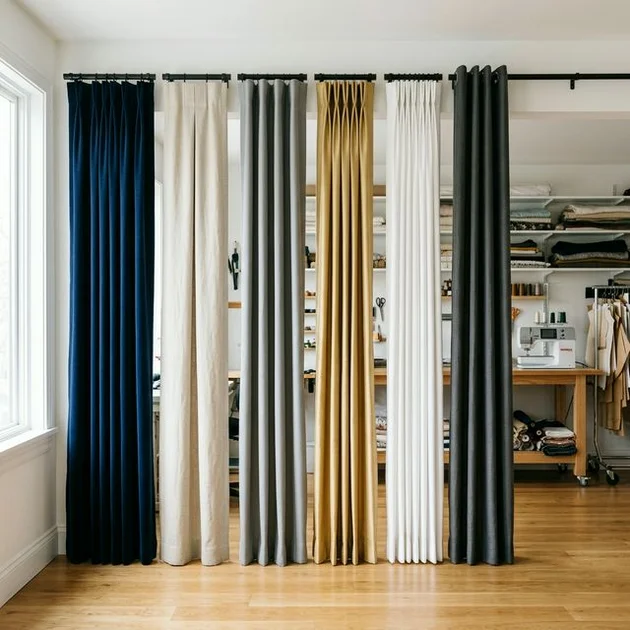
Pinch Pleat: The Classic That Holds Up
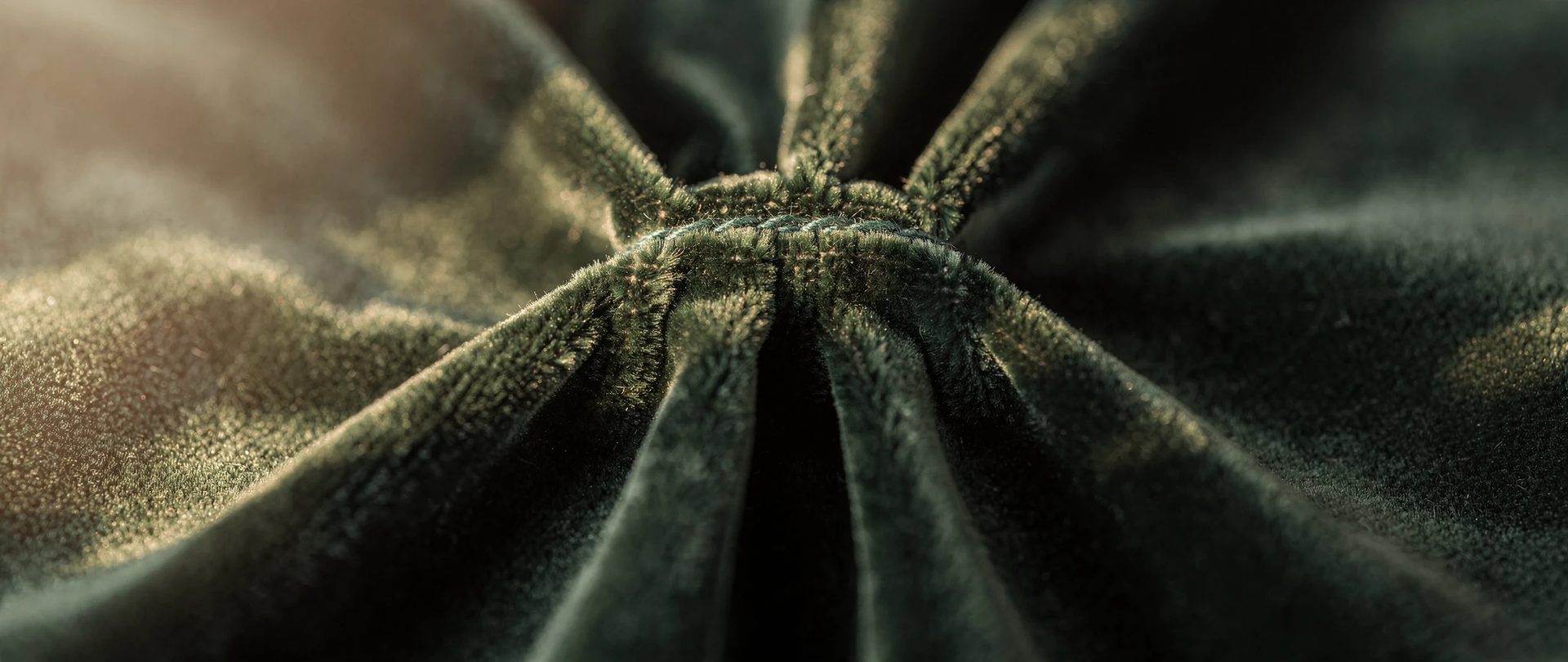
The pinch pleat is probably the most recognized heading of all. It forms clustered groups of fabric along the top of the panel, traditionally three pleats pinched together at the base and fanning out slightly at the top, held in place by hooks or rings on the rod. You'll sometimes hear it called a triple pleat, which is exactly what it is.
Visually, it gives volume, depth, and formality. Closed, the panel reads as regular columns. Open, the fabric stacks in a clean, precise accordion.
Best rooms: Formal living room, dining room, home library. Spaces where you entertain and want presence.
Fabrics that work: Velvet, silk, damask, heavy cotton, mid-weight linen. The heading needs body to hold its shape.
Formality level: High. This is the heading of traditional interiors, and rooms where the details matter.
What it requires: Typically 2 to 2.5 times the window width in fabric. Spacing between clusters needs to be consistent to the millimetre.
That's the highest ratio in the group along with goblet, and it's why pinch pleat almost always costs more in fabric than flat pleat or grommets on the same window, nearly double. It also wants height: the clusters need room to open up, and under an eight-foot ceiling with little clearance they look crowded rather than stately.
Open, it stacks in a dense accordion that eats a real chunk of wall, up to 8 or 10 inches of glass per side on a wide patio door. For everyday use it holds up well: rings glide, and the structure is sewn in, not pressed in. What wears first is almost always the lining or hooks after fifteen or twenty years, which is a repair, not a rebuild. In the wash, dry cleaning only. I steer clients away from pinch pleat for a child's room or a casual cottage, it wants more ceremony than either setting gives it.
Flat Pleat: Modern Restraint
The flat pleat doesn't pleat at all. It creates a clean, taut band along the top of the panel, no cluster, no gather. The fabric falls in straight vertical columns, like an architectural drape.
This is the heading of pared-down interiors. Scandinavian rooms, open-plan kitchens, home offices that need to breathe. It stands there and lets the fabric do the work.
Best rooms: Contemporary living rooms, kitchens, minimalist bedrooms. Any space where lightness is the goal.
Fabrics that work: Linen, light to medium cotton, natural blends, woven polyester. Lighter fabrics work here than with pleated headings.
Formality level: Low to medium. Contemporary, understated, quietly elegant.
What it requires: The cut must be perfectly straight. A crooked heading line is immediately visible, with no gather to absorb the mistake.
Fabric-wise, this is the most economical heading in the group: I generally count 1.5 to 1.8 times the width, against 2 to 2.5 for pinch pleat. Across a large bay, that gap can move you up a whole fabric tier. Height is where flat pleat is most forgiving of all six: it works as well under an eight-foot ceiling as in a double-height room, since there's no volume to let breathe, just a straight line.
Open, it stacks nearly as tight as wave, a strong choice for a wide patio door where clearing glass matters. It's durable as long as the heading stays stiff, a strip of buckram sewn inside holds the line for years, but moisture and machine washing can warp that stiffening into a ripple with no local fix; the heading has to be rebuilt. Dry cleaning as soon as the fabric allows it. I steer clients away from flat pleat for a room that needs warmth and presence, a formal dining room for example: it does exactly what it's built for, stay quiet, and that's a problem when the room wants the opposite.
Wave Pleat: The Contemporary Flow
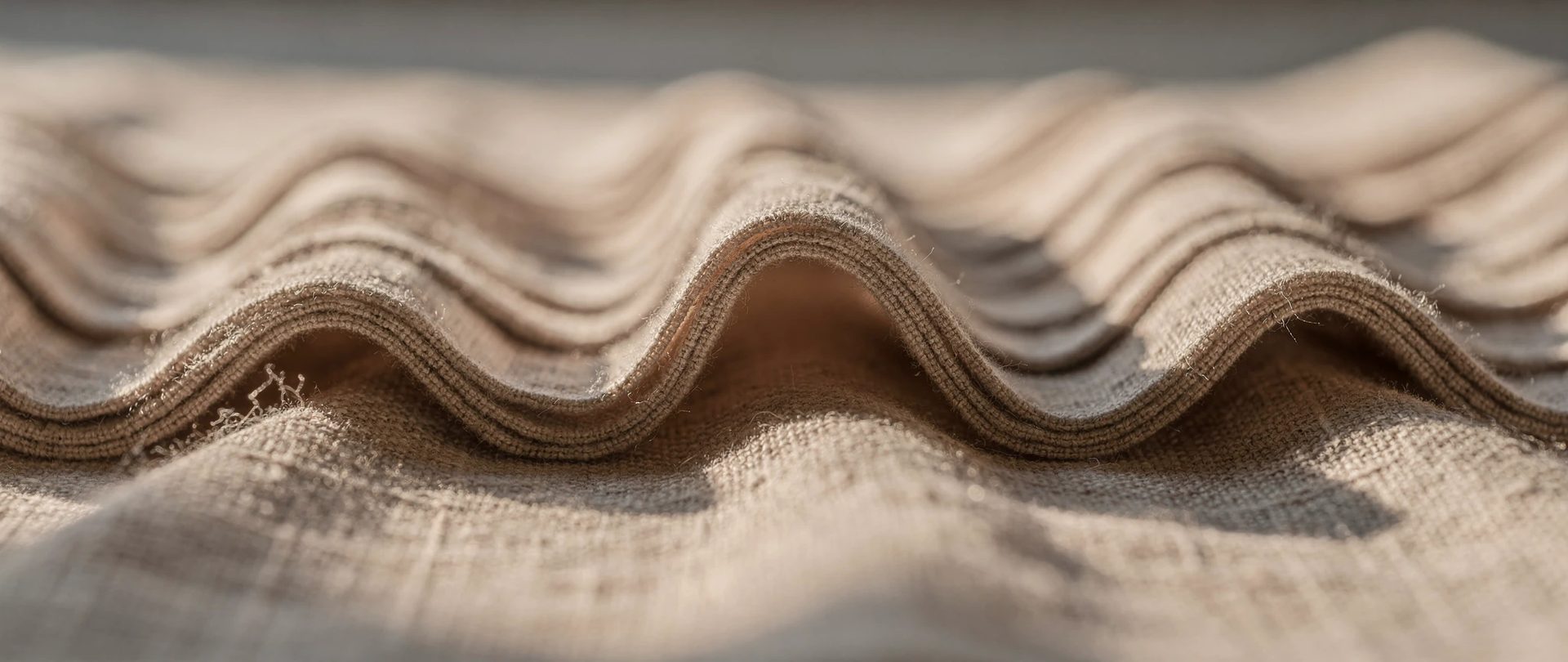
The wave heading creates continuous, even undulations across the full width of the panel. Unlike pinch pleat, which forms distinct clusters, wave is fluid and uninterrupted.
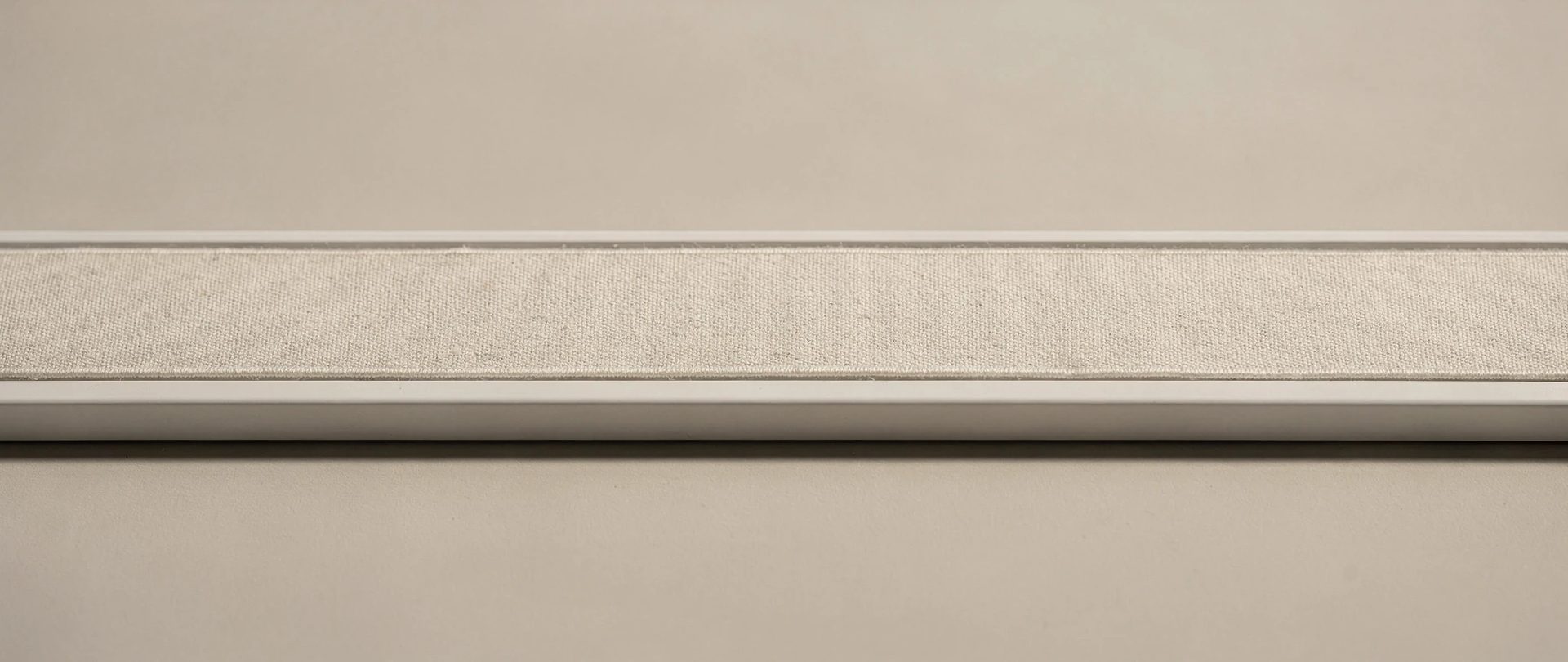
It's the heading style that has transformed a lot of interiors over the last few years. I wrote a full post about the wave pleat if you want to go deeper. The hardware question it raises, which track and what it needs, is a subject on its own; my guide to rods, tracks and wave rails covers it in full, and I don't repeat that ground here.
Best rooms: Open-concept living spaces, primary bedrooms, contemporary homes with tall windows.
Fabrics that work: Mid-weight linen, cotton velvet, high-quality woven polyester, raw silk. Body without stiffness.
Formality level: Medium. Contemporary and refined, neither formal nor casual.
What it requires: A specific rail system, a pleat ratio calculated for your window width, a fabric that holds the undulation without sagging.
In fabric, wave typically needs 1.8 to 2 times the width, a little less than pinch pleat, because the ripple itself reads as fullness. This is the heading that benefits most from height: a wave with two and a half metres to unfold reads completely differently from one squeezed under a low ceiling.
Open, it stacks about as tight as flat pleat, making the two of them the best choice for a wide patio door. For everyday use it's one of the gentlest headings on the fabric, weight riding on rolling carriers rather than dragging on rings. What ages is the wave tape sewn into the heading: if it loses tension, usually from an unsuitable wash, the ripple turns uneven and pressing won't fix it, the seam has to be redone. Dry cleaning, more so than for most other headings. I steer clients away from wave if they aren't ready to invest in the right track: on an ordinary rod, wave tape produces uneven ripples that collapse at the centre.
Goblet Pleat: Architectural Drama
The goblet pleat is related to pinch pleat, same grouped clusters, but each cluster is left open at the top, forming a hollow cylinder: a goblet, or a vase. It's the detail designers notice before clients do.
The goblet pleat is a declaration. You don't install it without thinking, but once it's there, it anchors the room.
Best rooms: Formal dining rooms, reception areas, executive home offices. Not for a child's bedroom.
Fabrics that work: Silk, velvet, brocade, firm structured fabrics. Soft linens generally don't work here.
Formality level: Very high. The most dramatic, most context-dependent of all six.
What it requires: Cylinders are typically reinforced inside with light cardboard or foam. Each goblet is controlled by hand for uniform height.
Goblet is the most fabric-hungry heading in the group, usually 2.5 to 3 times the width, because each cylinder needs surplus cloth to stay hollow. It's also the most ceiling-dependent: under an eight-foot ceiling, the cylinders look crowded instead of unfolding.
Open, it stacks as thick as pinch pleat, sometimes thicker, because of the internal reinforcement. On a patio door it's almost never my recommendation, this heading is built to stay mostly closed, not pulled fully back daily. That's exactly where it ages worst if handled often: the reinforcement wears down with repeated opening and closing, and a cylinder that's gone soft doesn't spring back with pressing. Dry clean only, done rarely. I steer clients away from goblet for a daily-use room, a bedroom especially: it's a representational heading, not an everyday one, and I say so before we cut fabric.
Pencil Pleat: The Quiet All-Rounder
The pencil pleat creates narrow, upright folds in tight formation across the full heading. It's the oldest heading style and, in some ways, the most overlooked, which is exactly why it's one of the most useful.
It doesn't have the presence of pinch pleat or the fluidity of wave. But that's precisely why it works in so many contexts.
Best rooms: Bedrooms, living rooms, cottages, traditional Quebec interiors.
Fabrics that work: Linen, cotton, polyester, blends. The most permissive heading for fabric choice.
Formality level: Low to medium. Traditional, reassuring, reliable.
What it requires: Fold regularity has to be maintained across the full panel width.
In fabric, count on 2 to 2.5 times the width, up to 3 for a very tight pencil pleat, comparable to pinch pleat but usually applied to lighter, less expensive fabrics. Height-wise, this is the most forgiving heading after flat pleat, unassuming on a small bedroom window or a tall living room one.
Open, it stacks in the middle, tighter than pinch pleat but looser than flat or wave. It's one of the sturdiest headings for everyday use, the gathered tape on hooks handling years of opening and closing. What ages it is machine washing an unwashed fabric, which shrinks and permanently distorts the folds. On unlined cotton or polyester a gentle machine wash is usually fine; on a lined curtain, dry cleaning, the same as any lined panel. I almost never steer a client away from this heading, it has the fewest situations where it feels wrong.
Grommets: The Practical Modern Option
Grommets are metal rings punched directly through the fabric, the rod passes through them. No clusters, no pleats: the fabric forms a zigzag between each grommet.
This is the easiest heading to install and live with. The fabric slides directly on the rod.
Best rooms: Children's rooms, playrooms, casual kitchens, secondary rooms, lake houses.
Fabrics that work: Light to medium linen, cotton, printed polyester. Avoid very heavy or precious fabrics.
Formality level: Low. Casual, practical, contemporary in its cleaner versions.
What it requires: Perfectly even spacing. A stiffening band sewn along the top keeps the zigzag uniform.
In fabric, this is one of the most economical headings: 1.8 to 2 times the width, the zigzag itself creating fullness without added gathering. On a tall window, the metal rings become visible along the full drop, an intentional look or a flaw depending on the room's style.
Open, grommets stack loosely, between the tightest and loosest of the group. It's a common patio door choice because the glide is the smoothest of all six headings. That's its biggest strength in daily use: fabric rides directly on the rod with nothing in between, so it takes the least friction over time. What ages is the grommet itself: on heavy fabric, repeated stress distorts the hole or wears the fabric around it. In the wash, it's the most permissive heading, with no lining to protect, a cotton or polyester panel often tolerates a gentle machine wash. I steer clients away from grommets for heavy velvet or precious silk, the weight on narrow contact points wears out fabric and metal roughly twice as fast as a heading that spreads the load.
What the Fullness Ratio Does to Your Bill
Here's what a table column never shows: the same fabric, on the same window, costs differently depending on the heading.
Take a window 8 feet wide, dressed in two panels. Pinch pleat at 2.25x average fullness needs roughly 18 feet of fabric total before pattern-matching and hems. The same project in flat pleat at 1.65x needs roughly 13 feet. Nearly a third less fabric, on the same window, for a result that's just as considered but in a different register. On a good-quality fabric, that gap translates directly into dollars, before labour is even counted. This isn't an argument for the cheapest heading, it's an argument for choosing with the real cost in hand.
Which Pleat Is Right for Your Project?
There's no universal answer. There's a lifestyle, a room's architecture, a quality of light, a fabric. What guides my recommendations isn't the trend of the moment, it's the question: in this room, with this ceiling height, this window, this family, which heading will still be right in ten years, and will you still enjoy opening and closing it every day in five?
For formal rooms and reception spaces, I often come back to pinch pleat or goblet, knowing goblet asks to be handled sparingly. For contemporary spaces with height, wave or flat pleat, also the two best choices for a wide patio door. For bedrooms and everyday rooms, pencil pleat or grommets depending on how relaxed the atmosphere needs to be, and how the curtain will actually be used.
The conversation always starts with the fabric in hand, not a catalogue. That's what custom residential work looks like here.
If you have a project in mind and aren't sure which heading fits it, book a consultation. We'll work through it together.