A small window looks easy to dress. In practice it is often the one that gives the most trouble. A curtain that is too long makes it look even smaller, one that is too short looks like a mistake, and in the basement the window often opens inward, right where you wanted the fabric.
Here are the three ways I most often dress a small kitchen, bathroom or basement window, and the measurements that make them look intended.
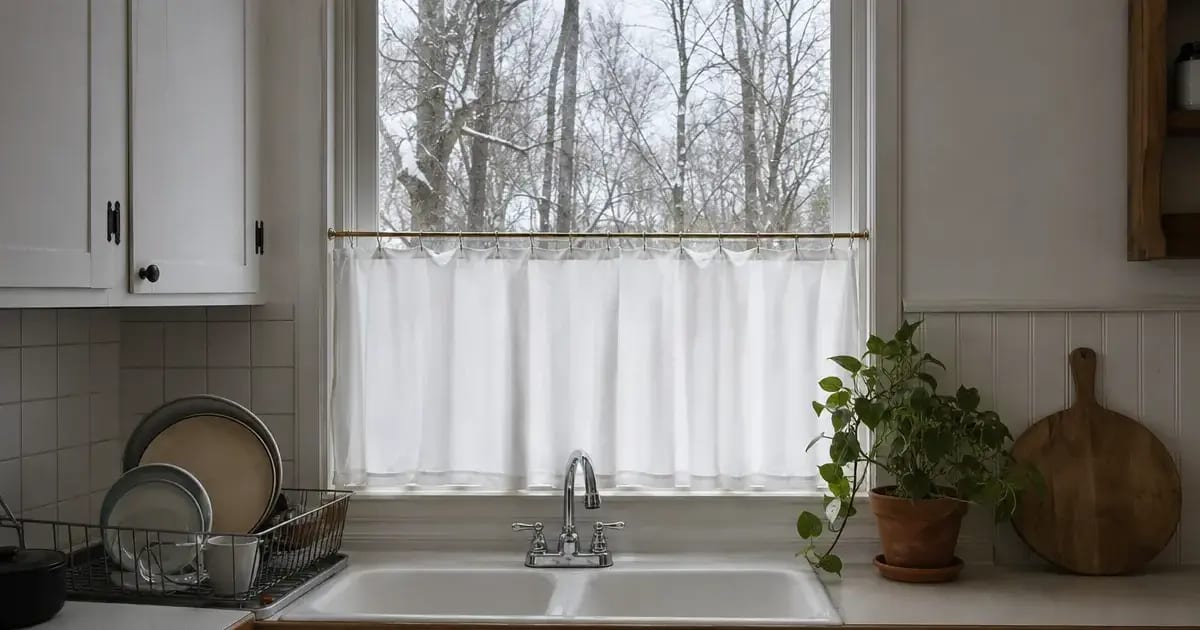
Short curtain, cafe curtain or half curtain: the difference
These words get mixed up, and that is fine. Here is how I tell them apart in my workroom:
- A short curtain covers the full height of the window and stops at the sill, or a little below. It opens and closes like a full curtain, just smaller.
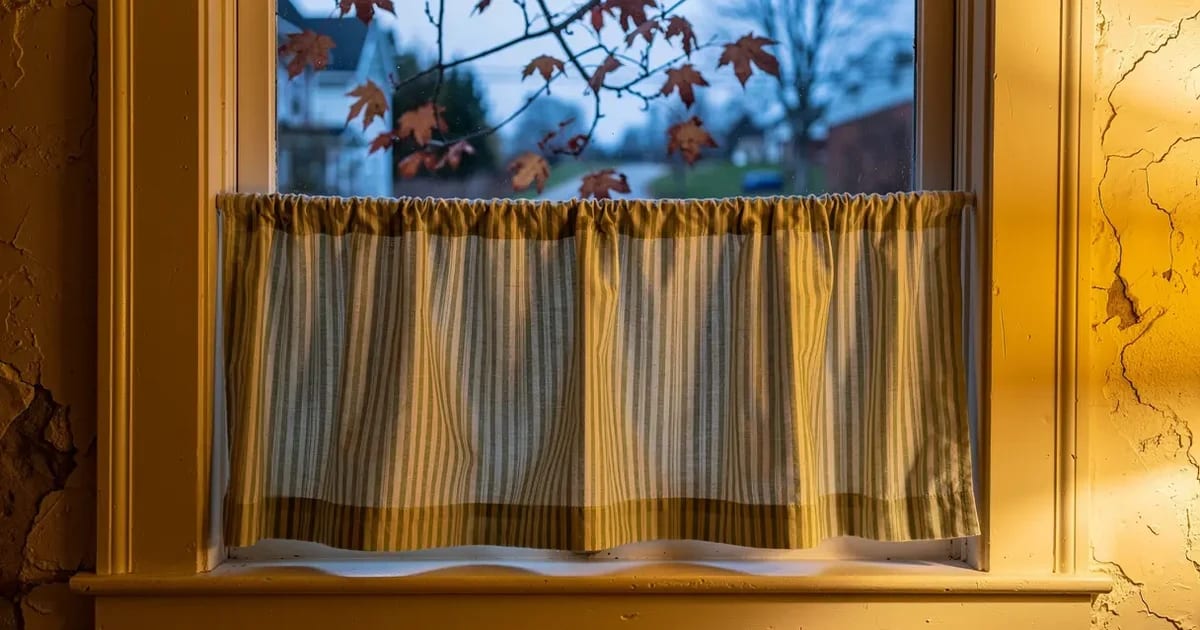
- A cafe curtain, also called a half curtain, covers only the lower half. You keep the light from the top and hide the view from across the street. It is the classic kitchen window curtain.
- A valance dresses only the top. It hides nothing, but it finishes the window and softens a bare frame. It pairs well with a cafe curtain.
For a window facing the street, a cafe curtain is often the best answer. I go into detail in my post on cafe curtains.
Where to stop a short curtain
The rule I give everyone: a short curtain stops at the sill, or clearly below it. Never in between.
- At the sill: the hem stops about 1/2 in (1 cm) above the sill. Clean, and what you need when a counter, a sink or a radiator sits right below.
- Below the sill: the curtain drops 4 to 6 in (10 to 15 cm) past the sill. The window looks a little larger, and it hides a worn frame.
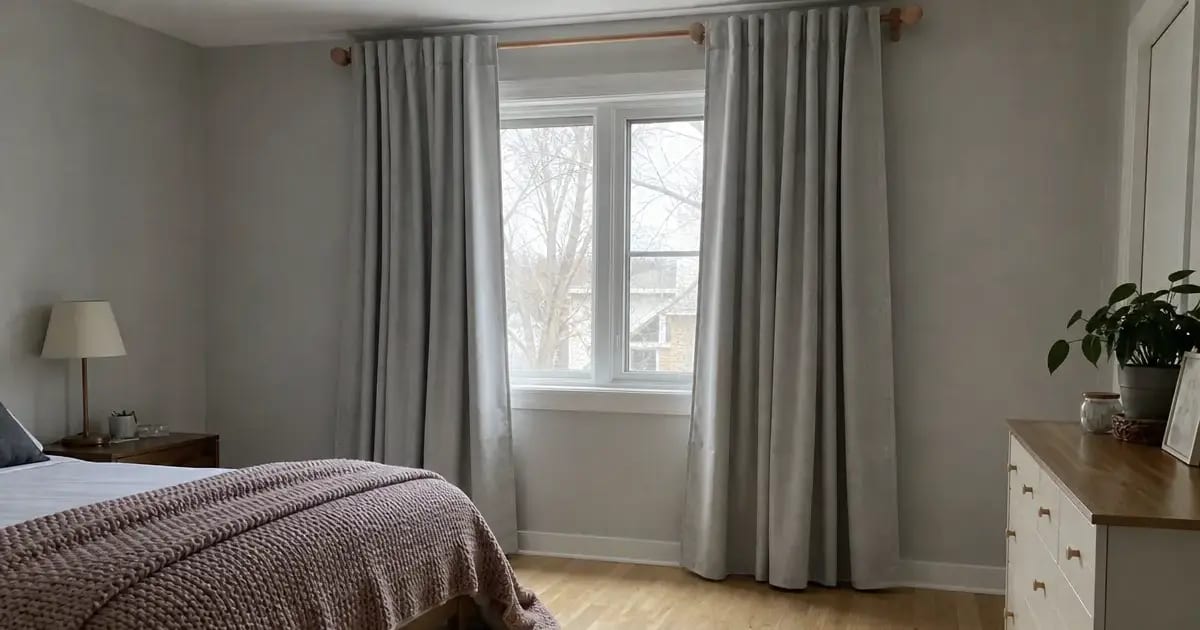
A curtain that stops 2 in (5 cm) below the sill looks like the wrong length. For tall windows, the same reasoning applies at the floor: I explain it in my post on curtain length.
Rod height for a cafe curtain
For a cafe curtain, the rod goes inside the frame or just in front of it, roughly halfway up the window. On a hung window I put it level with the middle rail: the curtain line follows the window line, and the rod is not seen from the street.
If you want to hide a bit more, raise the rod to two thirds. Beyond that you lose the point of a cafe curtain, and a full short curtain becomes easier to live with.
I do not supply the rod: you or your installer put it up. I cut the curtain to the exact height where it will hang, so mount it before I measure, or pencil the spot.
Basement windows: small, high and often opening
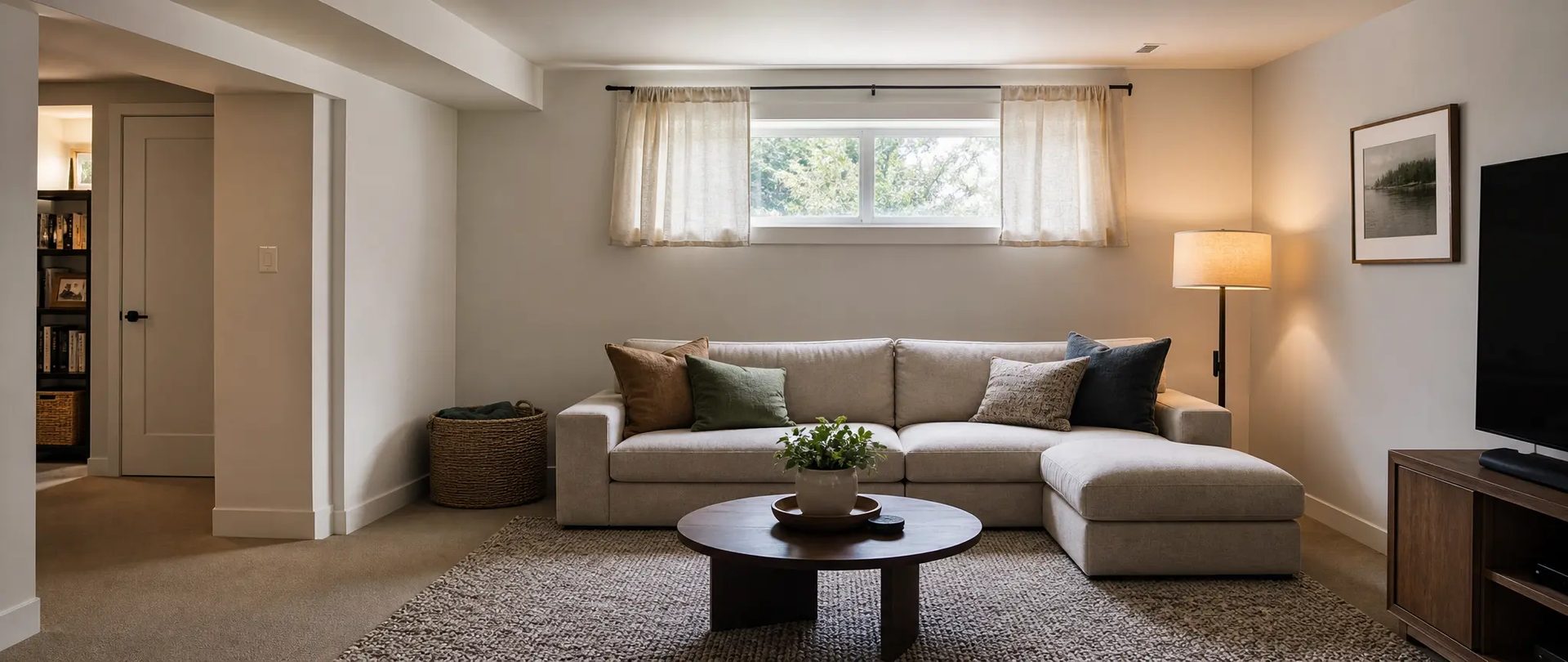
The typical basement window is wide, short and set high on the wall, just under the ceiling. It often measures 12 to 24 in (30 to 61 cm) tall. And it often tilts inward to open.
That changes three things:
- Mount the rod above the frame, not inside it, so the window can open without catching the fabric.
- Extend past each side by 3 to 4 in (8 to 10 cm). The open curtain then clears all the glass, which matters when that window is the only daylight. A basement window often has a wall corner or a joist right beside it, and those few inches are all the room there is. If there is space, go wider, up to 8 to 12 in (20 to 30 cm): the small window looks bigger. I look at it with you window by window.
- Pick a light fabric if you want light, a lined one if the window sits level with the driveway or the sidewalk.
In a basement bedroom there is one more reason. That window often doubles as an emergency exit, and the National Building Code asks for a clear opening of at least 3.8 sq ft (0.35 m²), with no side under 15 in (38 cm), as this guide to egress windows sums up. So the curtain must slide fully out of the way, with nothing fixed across the glass.
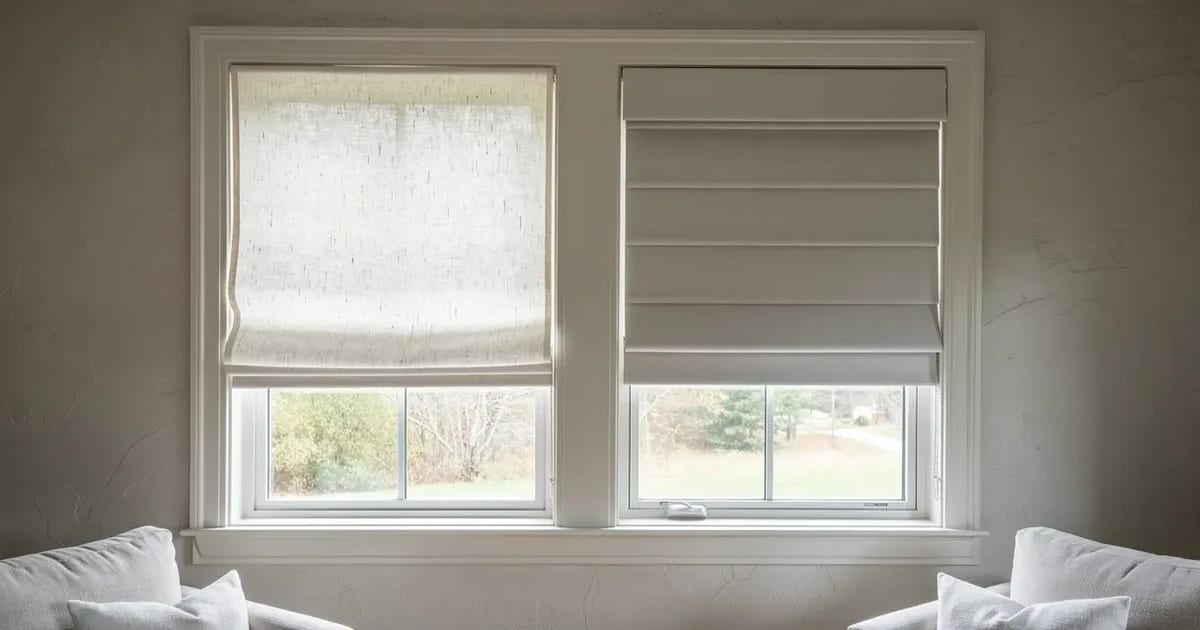
A roman shade is also a good answer for a basement window. It pulls all the way up and takes no room at the sides. I make them up to 5 ft (1.52 m) wide per shade, as I explain in my roman shade guide. For basement windows in general, see my page on basement window treatments.
Fabric and fullness
A small window is seen up close. Flaws show faster than on a large curtain.
- Fullness: I count about twice the rod width in fabric. Less, and the curtain looks stretched. Much more, and it puffs up and swallows the window.
- Fabrics: linen, cotton or a polyester voile hold up well. In kitchens and bathrooms I choose a fabric that washes easily, because it will be washed often.
- Patterns: a small check, a stripe or a quiet print suit a small window. A large motif gets cut in the middle and loses its point.
Frequently asked questions
How long should a small window curtain be?
At the sill, about 1/2 in (1 cm) above it, or 4 to 6 in (10 to 15 cm) below. In between, the curtain looks too short.
How high should a cafe curtain rod be?
Roughly halfway up the window, level with the middle rail on a hung window. At two thirds if you want more privacy.
What curtain works for a basement window?
A short curtain mounted above the frame, extending 3 to 4 in (8 to 10 cm) past each side to let in all the light, or a roman shade that pulls all the way up.
Where to start
If you have a small window that looks like nothing, call me at 873 200-4056. I come to see the window in Sherbrooke and the surrounding area, and we choose together between a short curtain, a cafe curtain or a shade. You can also book a consultation.