In stores, curtains come in a few fixed lengths: 63, 84, 96, 108 and sometimes 120 inches. The question I get on the phone next is nearly always the same. My ceiling is 8 feet, do I buy 96 or 108?
The answer does not depend on the ceiling. It depends on where your rod goes and how you want the curtain to meet the floor. Here is how I work it out in my workroom, and why a standard length rarely lands exactly right.
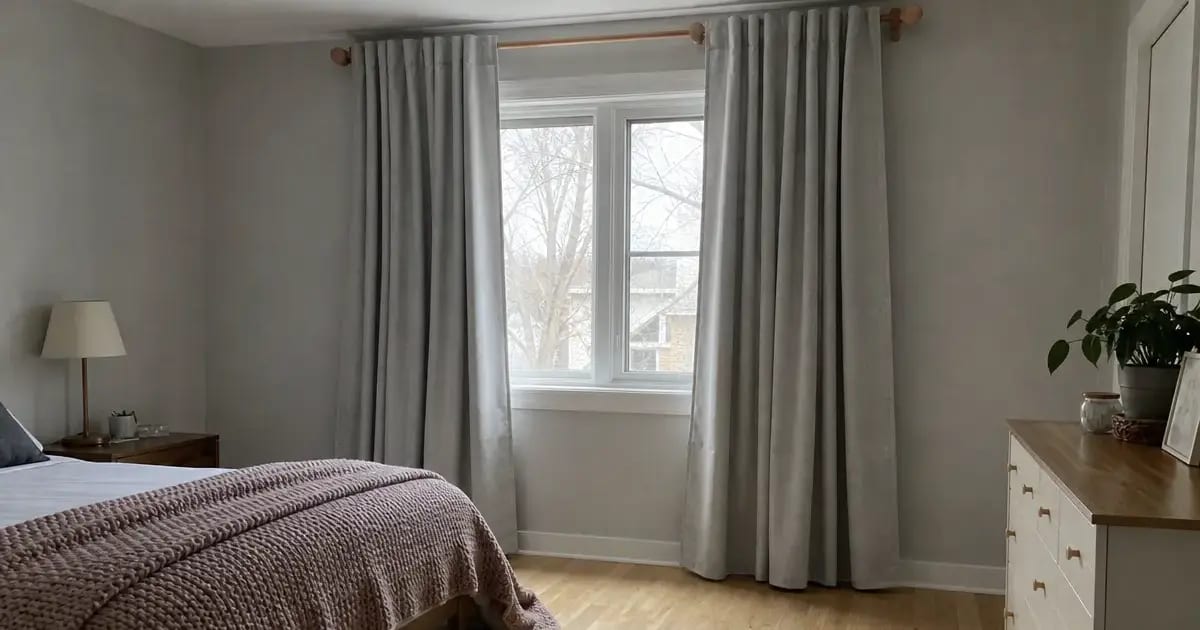
Where 84, 96 and 108 inches come from
Those lengths follow ceiling heights. An 8 ft ceiling is 96 in (244 cm), a 9 ft ceiling is 108 in (274 cm). In Quebec you mostly find 8 ft in older houses and often 9 ft on the main floor of newer construction, as this overview of ceiling heights in Canada sums up.
The 84 in (213 cm) length comes from another habit: a rod mounted just above an ordinary window frame, in an 8 ft room. The 63 in (160 cm) length is for a window dressed to the sill, not to the floor.
The catch is that curtain length is measured from the top of the curtain, not from the ceiling. In between sit the rod, the rings or hooks, and the gap you leave under the ceiling.
The right measurement starts at the rod, not the ceiling
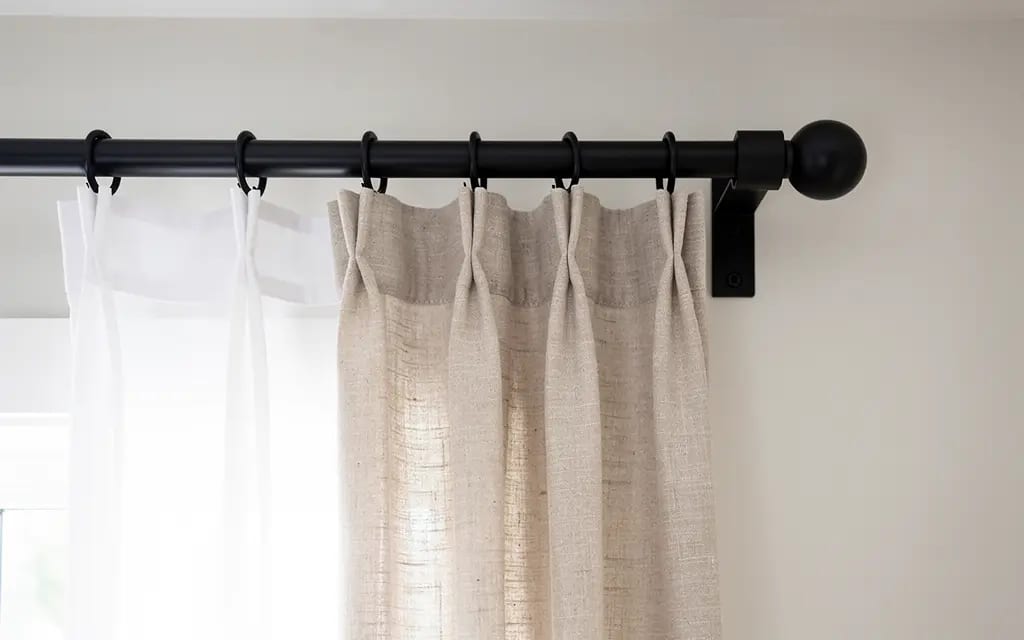
I always measure the same way: from the hanging point down to the floor. The hanging point is the bottom of the ring, the hook on a track, or the top of the rod if the curtain has grommets or a rod pocket. A ring often adds 1 1/2 to 2 in (4 to 5 cm) between the rod and the top of the fabric, and those inches make all the difference at the floor.
Three rod heights cover most homes:
- Just above the frame, 4 to 6 in (10 to 15 cm) up. The classic position. In an 8 ft room the curtain then often measures 84 to 90 in (213 to 229 cm).
- Halfway between the frame and the ceiling. A good compromise when the wall above the window is tall.
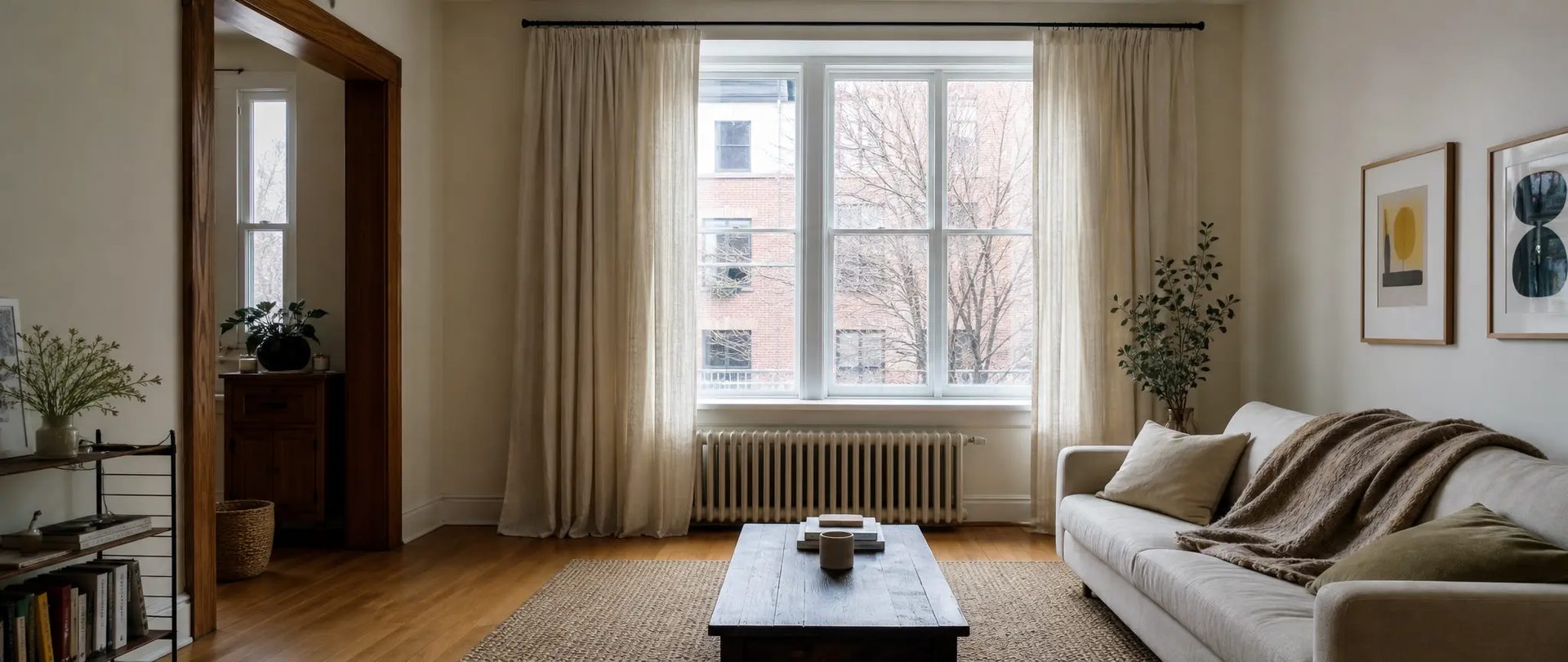
- Near the ceiling, 1 or 2 in (3 to 5 cm) below it. The window looks taller and so does the room. In an 8 ft room the curtain comes to about 92 to 94 in (234 to 239 cm). In a 9 ft room, about 104 to 106 in (264 to 269 cm).
You can see the problem: neither 96 nor 108 lands on those numbers. A 96 in panel hung near an 8 ft ceiling drags by a few inches. A 108 in panel under a 9 ft ceiling does the same. And an 84 in panel under a high rod leaves the curtain floating above the floor, the curtain-too-short look.
Grazing, touching or pooling on the floor
The second decision is how the curtain meets the floor. It is a matter of taste, and of use.
- Grazing: the hem stops about 1/2 in (1 cm) above the floor. The neatest look, and the one I recommend for curtains you open and close every day and for floors you sweep.
- Touching: the hem just kisses the floor. A little more generous, but it collects dust faster.
- Pooling: the curtain has 2 to 4 in (5 to 10 cm) extra and settles on the floor. Lovely with velvet or silk in a room where the curtain stays put, much less so at a patio door you open often.
In winter, a thermal curtain that reaches the floor holds heat better than one that stops at the sill. I cover that in my post on thermal curtains.
What happens with a standard length
A ready-made 96 or 108 in curtain can work fine. You just need to know what you gain and what you give up.
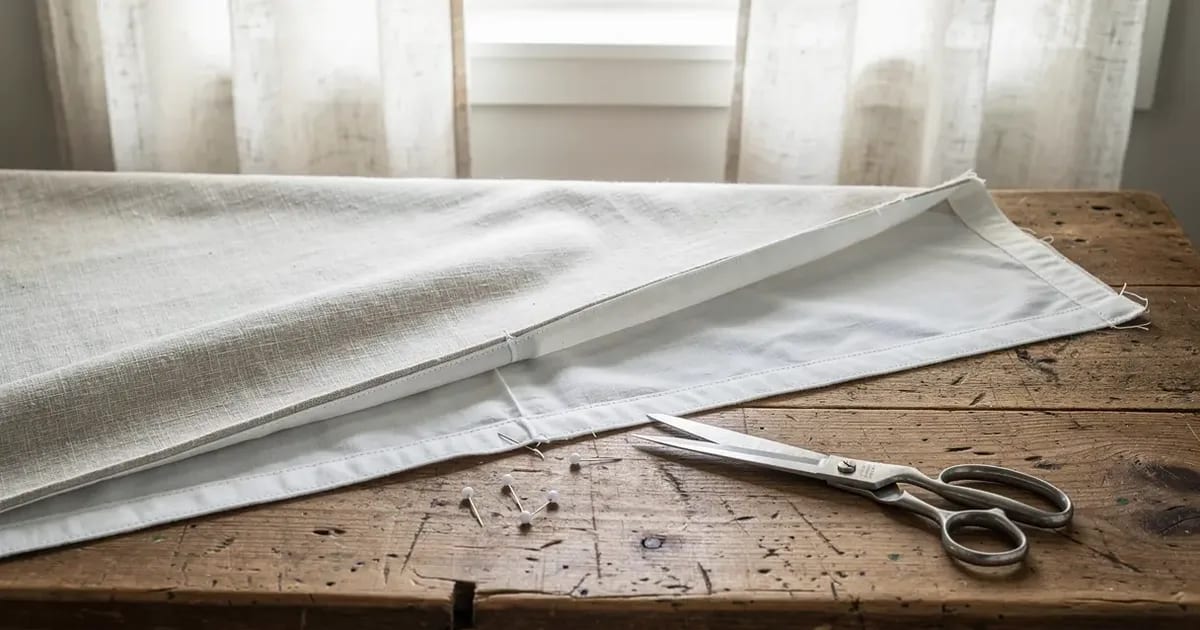
If it is too long, you can have it shortened. I do it often, and it is simple work when the curtain is unlined. With a lining or a pattern it is more delicate: I explain what can be changed in my post on curtain alterations.
If it is too short, there is not much to do. You can lower the rod, add a band of fabric at the bottom or use longer rings, but none of those goes unnoticed.
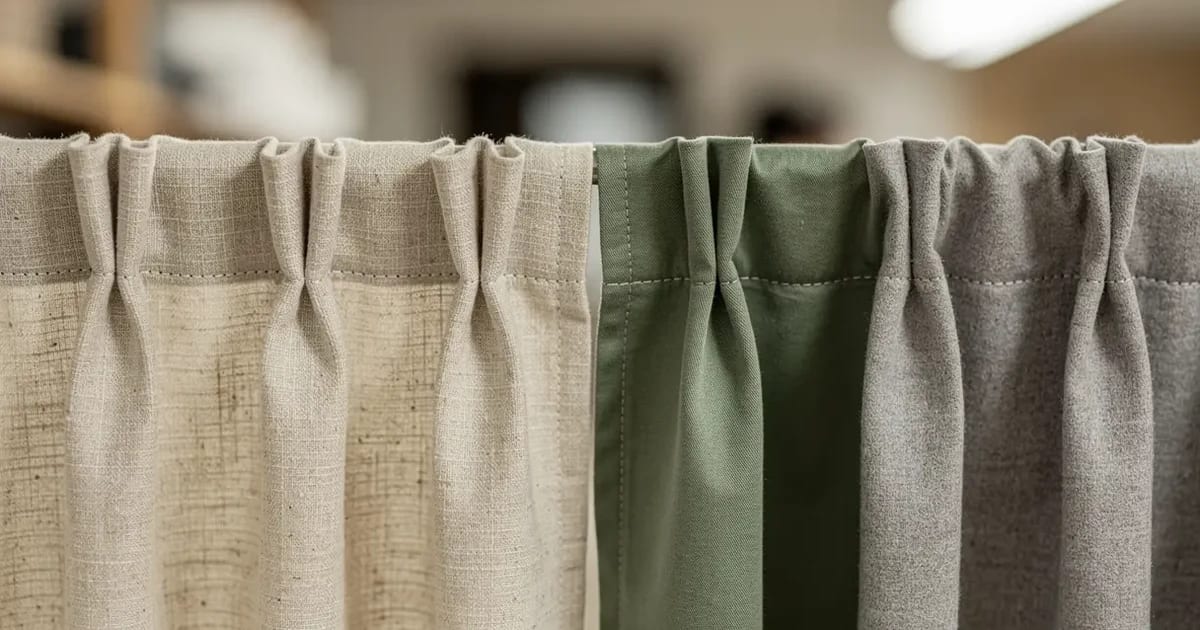
A made-to-measure curtain settles the question up front. I cut it to the length measured in your home, and the heading is planned for your hardware. The pleat style changes the finished length by a few inches, by the way: I compare headings in my pleat guide, and rods and tracks in my hardware guide.
How to measure before you call me
If you want to check your numbers before shopping or calling, here is the method:
- Mount the rod first, or pencil the exact spot where it will go. I do not supply the rod: you or your installer put it up.
- Measure from the hanging point to the floor at the left, the centre and the right. Floors and ceilings in our older houses are rarely level, and a 1/2 in (1 cm) difference shows at the hem.
- Keep the smallest of the three if you want the curtain to graze the floor everywhere.
- Decide whether you want grazing, touching or pooling, and add the difference.
When I take the measurements myself, I also look at the floor, the baseboards and the radiators. A radiator under the window, for one, sometimes changes the whole decision.
Frequently asked questions
What curtain length for an 8 ft ceiling?
With the rod just above the frame, an 84 in (213 cm) curtain often works. With the rod near the ceiling you need about 92 to 94 in (234 to 239 cm), so a 96 in panel shortened, or a curtain cut to measure.
What curtain length for a 9 ft ceiling?
With the rod near the ceiling, count on about 104 to 106 in (264 to 269 cm). A 108 in panel will drag slightly, which looks nice in a living room but is less practical at a door you open often.
Should curtains touch the floor?
Not necessarily. A curtain that stops 1/2 in (1 cm) above the floor is the easiest to live with. What stands out is a curtain that stops halfway between the sill and the floor: it looks too short, even when it was meant to.
Where to start
If your curtains drag, float, or do not hang at the same height on both sides, call me at 873 200-4056. I come to measure in Sherbrooke and the surrounding area, and I will tell you honestly whether a hem will do or whether it is better to start over. You can also book a consultation.