Around the middle of November, the same question comes up on the phone every year: are red curtains too much? My answer depends on the window, the light, and how long you want to live with that red.
Red warms a room in winter like few other colours. It also asks for more thought than a natural linen. Here is how I approach it in my workroom, from full velvet drapes down to the small touch you put away in January.
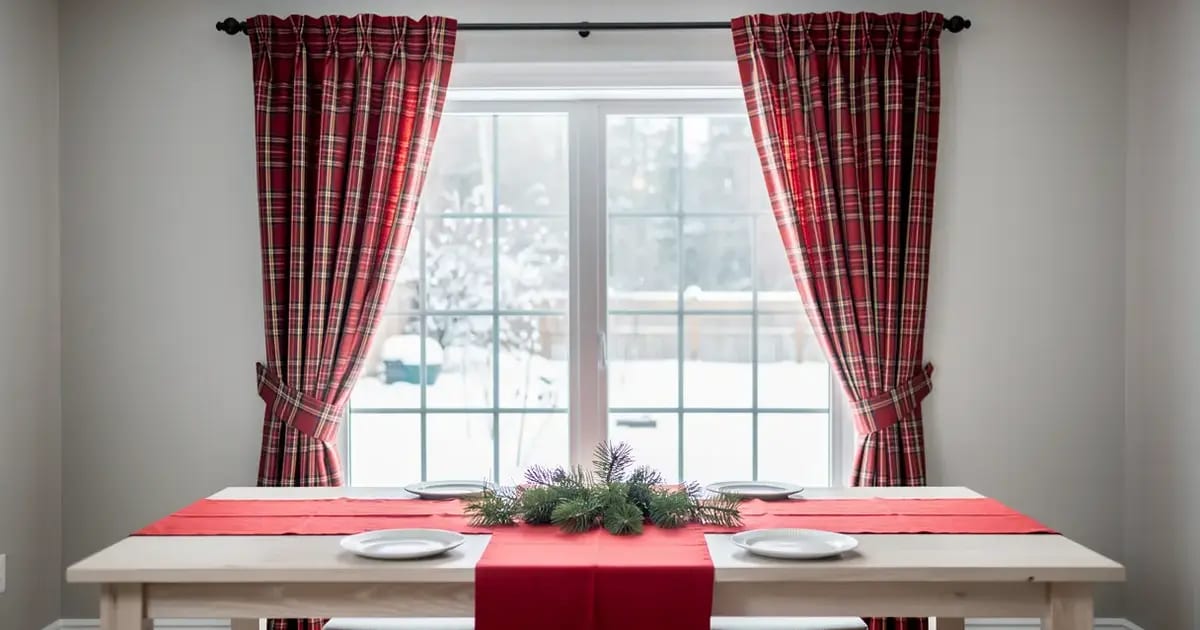
Full red drapes, or a red layer in front of your sheers
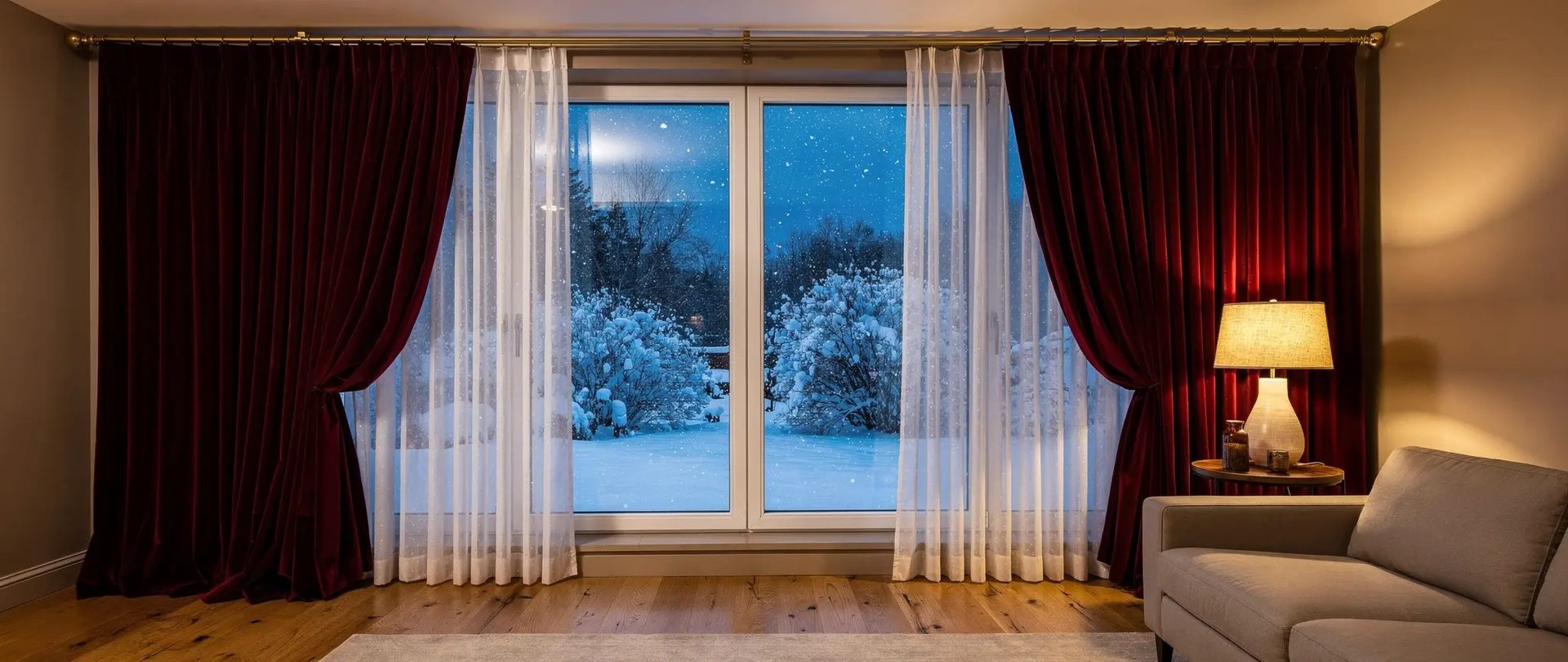
If you already like your sheers, keep them and add red panels in front. It is the simplest way to get red curtains without starting over.
The sheer stays on its rod against the glass and softens the daylight. The red panels go on a second rod, or a double rod, and close in the evening. The rod comes from you or your installer. I sew the panels to the exact height where it will hang.
Full red drapes with no sheer behind them make a stronger statement and take over the wall. If that is what you want, mount the rod close to the ceiling and let the panels reach the floor. The red then dresses the full height of the room instead of cutting the window into a box.
Red velvet: warm, heavy, and sensitive to sun
Red velvet is the warmest fabric I sew for winter. Properly lined, it holds heat in the room and muffles sound.
I make it up with a lining, and for a cold room, with a flannel interlining between the velvet and the lining. The panel becomes heavy, hangs straight and seals the pocket of air against the glass. I explain how that works in my post on thermal curtains. That weight needs a sturdy rod, so check yours before you order.
Velvet also has a direction. The pile lies one way, and the colour shifts with the angle of the light. I cut every panel in a room the same way up. Otherwise one panel reads darker than its neighbour, and that is all you see.
Then there is the sun. The Canadian Conservation Institute notes that light fades colours and weakens fibres, and that the damage builds up and cannot be undone. Reds are among the first colours to go. On a south-facing window, with the low December sun and snow bouncing light back in, the exposed leading edge fades first. The lining shields the face fabric, and swapping your two panels left to right once a year spreads the wear.
Tartan and check: it all comes down to the match
A red check curtain looks right when the lines fall at the same height on every panel. Tartan repeats in both directions, up and across, so I never cut at random.
I pick the strong horizontal line in the pattern and place it at the same height on each panel, often just above the hem. On a window wider than one width of fabric, the pattern also has to carry across the vertical seam. That takes more fabric than a plain, and it is worth asking how much extra your quote includes.
The big red and black buffalo check suits a cottage or a wood-panelled living room. A small red and white check is lighter, for a dining room or kitchen. A wool tartan hangs with body. A cotton check washes more easily. The fibres themselves are covered in my fabric guide.
The light touch: a red valance or tie-backs
Full red drapes are a commitment. They stay up all winter, often all year, and they set the tone of the room. If you want red only for the holidays, go with a valance or a set of tie-backs.
A soft valance, a band of fabric with a rod pocket, slides onto a rod above your curtains and comes off in seconds in January. A flat, board-mounted valance stays up longer and looks more built-in.
Tie-backs are simpler still. I sew a pair in red velvet or tartan, and they hook onto the holdbacks already on your wall to gather your existing curtains. After the holidays, they go in a drawer.
A table runner and tablecloth in the same fabric
A table runner or tablecloth sewn from your curtain fabric ties the window to the table. In a dining room, that is what makes the space feel planned from end to end.
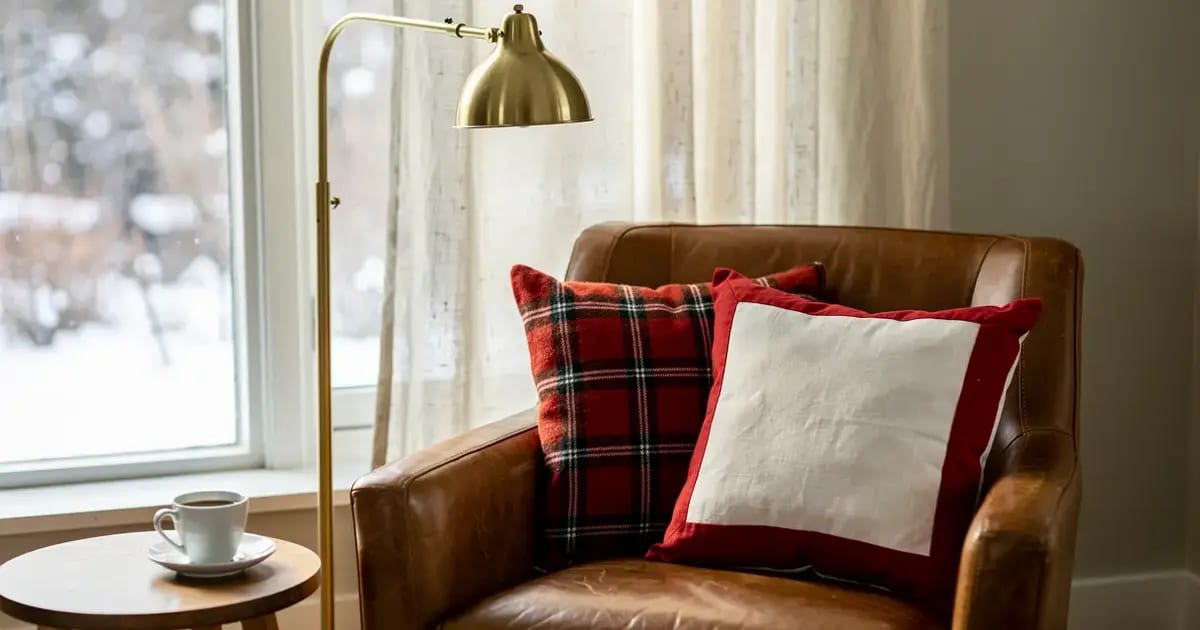
A check fabric often leaves offcuts after matching. Depending on how much is left, they can make a table runner, a few cushion covers or a tree skirt. On a tartan runner, I centre one line of the pattern down its length and line it so it lies flat. To bring the sofa into it too, see my red and white cushions in velvet and plaid.
Frequently asked questions
Can I keep my sheers and add red curtains in front?
Yes. The red panels hang on a second rod or a double rod, in front of the sheer. I do not supply the rod: you or your installer put it up, and I sew the panels to its height.
Will red velvet curtains fade on a south-facing window?
Over time, yes, especially the edge that stays exposed when the curtain is open. A good lining and swapping the panels once a year slow the wear. For a very sunny window, you can also keep the red for rooms facing north or east.
What fabric should I use for a table runner that matches my curtains?
The same fabric as the curtains, or the offcuts left after matching a check. I line it so it lies flat on the table.
Where to start
If you are thinking about red curtains this winter, call me at 873 200-4056. We talk about your windows, the light and what you have in mind. You can also book a consultation.