Porch and verandah curtains: privacy, wind, and late-day sun
An outdoor curtain provides no shade. It solves three other problems that neither a shade sail nor a pergola canopy touches. A guide for Townships verandahs.
Worth clearing up first: outdoor curtains provide no shade. A shade sail cuts sun coming from above. A pergola canopy does the same on an existing structure. An outdoor curtain works vertically, and it solves three problems neither of those touches.
It is also the most underrated outdoor product, because it is hard to sell online: it depends entirely on the shape of your porch.
Problem 1: privacy on a shared or street-facing verandah
This is the most common request. An upstairs balcony, or a deep front porch separated from the sidewalk by six feet of lawn, and you do not sit out there because you are on display.
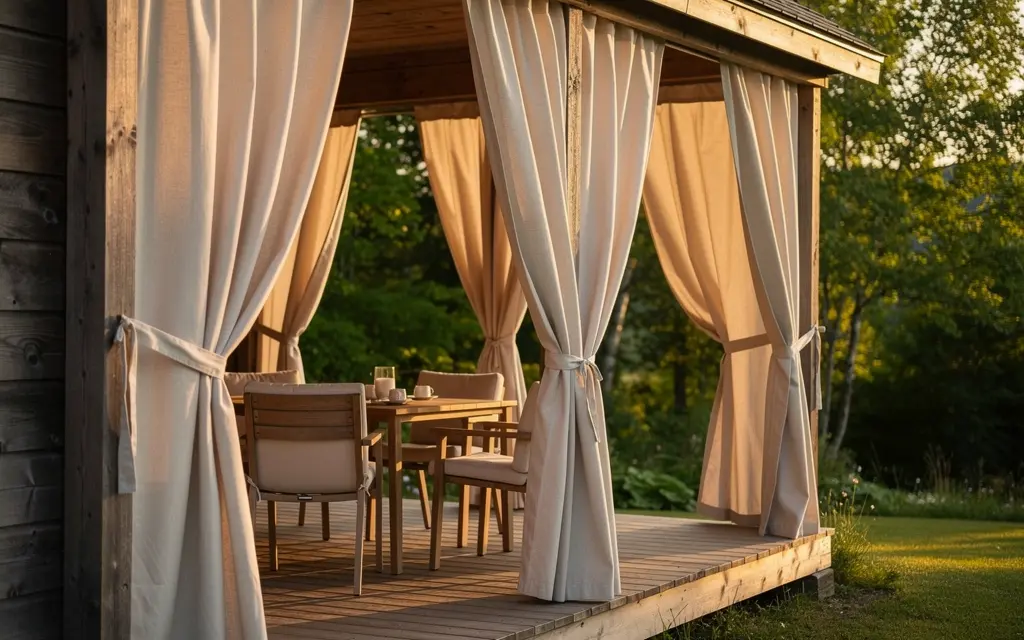
A horizontal canopy solves none of it. It is not the sky looking at you. An outdoor curtain on one side or two creates a room. That word is accurate: you move from an exposed platform to a space with soft walls, which you open when you want the view back.
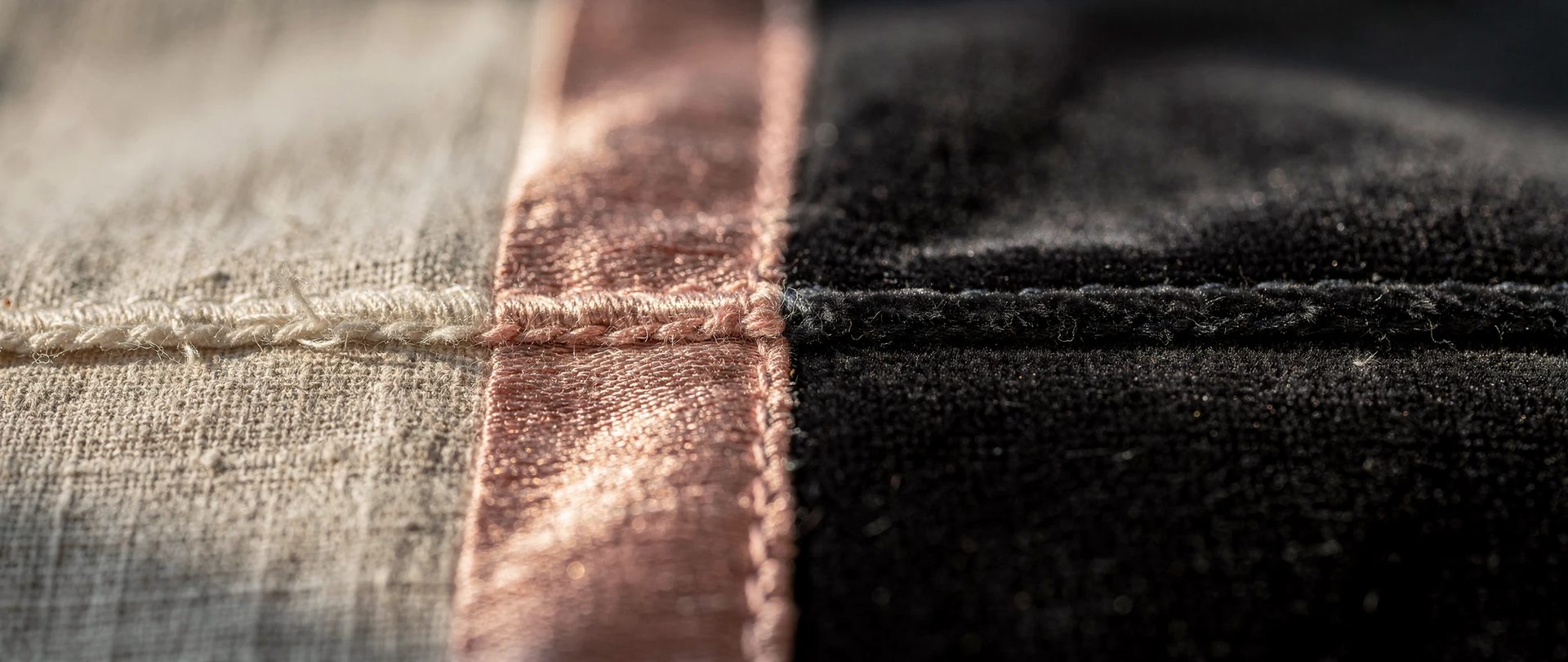
Two making details decide the result. There has to be enough fullness for a closed panel to have body, roughly twice the width being covered, or you get a stretched bedsheet. And the panel has to slide easily, because an outdoor curtain you never open becomes a permanent wall you end up resenting.
Problem 2: late-day sun
This is the one overhead shade cannot fix, as a matter of geometry.
Late in the afternoon the sun is low. The light arrives nearly horizontally, passes under your pergola, under your sail, under your awning, and lands directly in your eyes and on the backs of the chairs. That is precisely when you want to be outside in the Townships, between five and eight, May through September.
Only a vertical element stops a horizontal ray. An outdoor curtain on the west or southwest side handles in ten seconds what nothing overhead can.
Plenty of porches need both: a canopy for noon, a curtain for six.
Problem 3: wind
An outdoor curtain cuts crosswind, the kind that tips glasses and puts an end to a September evening. It does not replace a solid windbreak, but it changes the comfort noticeably.
It is also the problem that destroys the product when the making is wrong. A poorly weighted panel cracks in the wind, and what cracks wears at its fixings. Three things prevent it:
- Weight at the bottom, a loaded hem or a chain weight, so the panel hangs vertical.
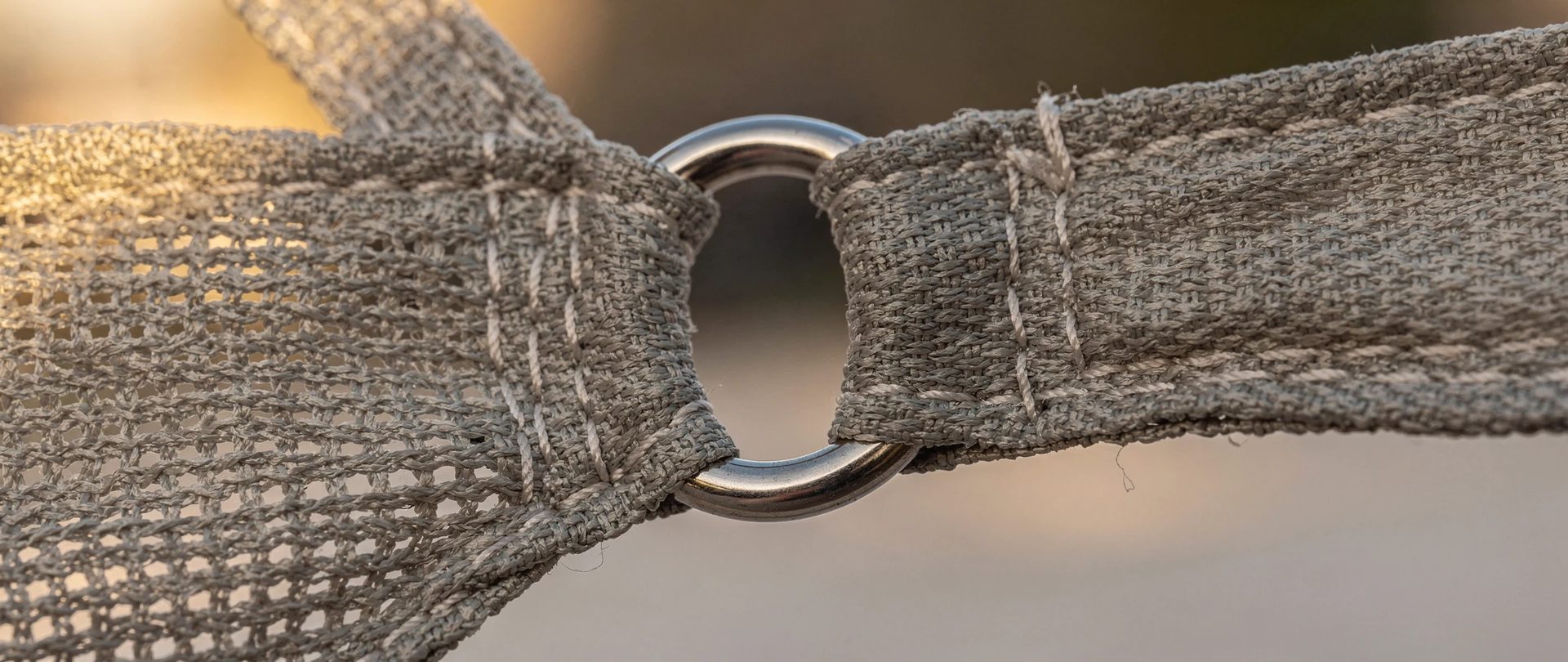
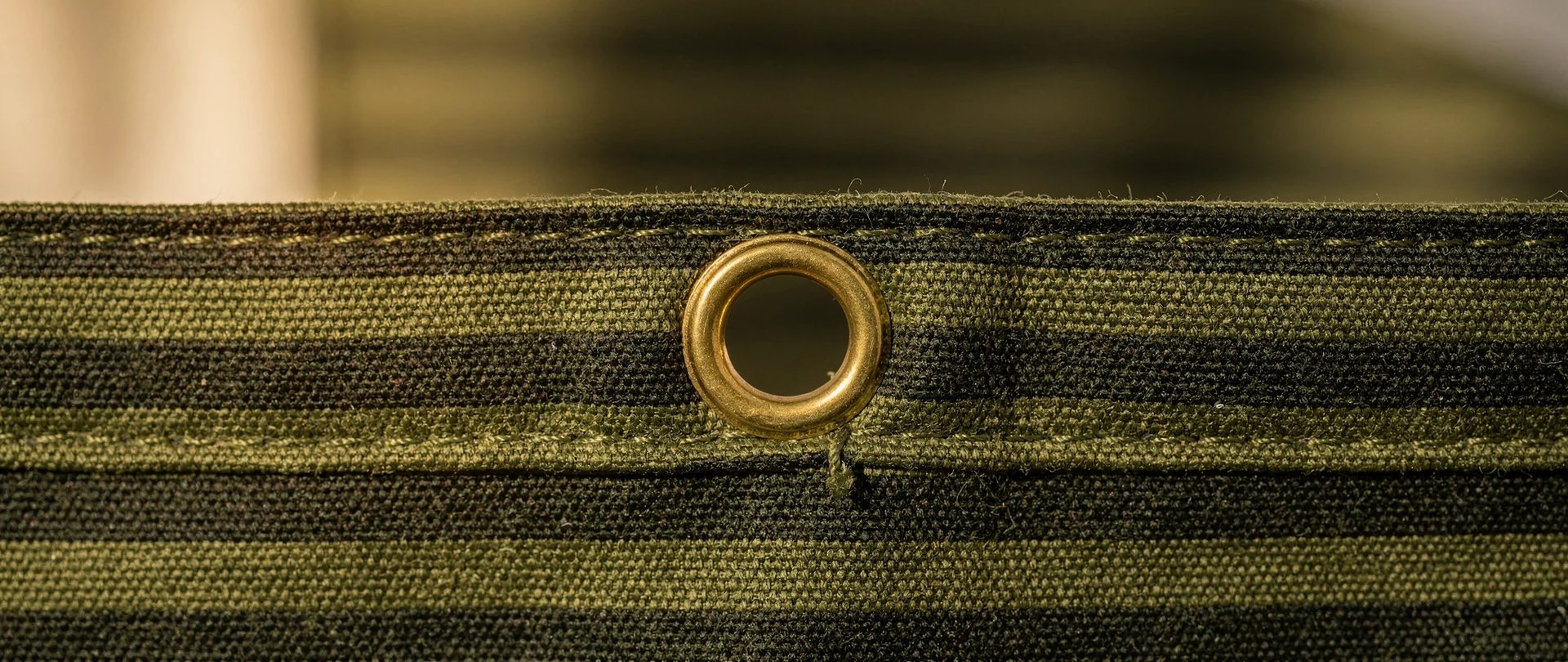
- Low fixings, grommets and cord to a fixed point at deck level or on the railing, on exposed sides.
- A system that unhooks fast, because you do not leave curtains up through a wind warning.
I usually add tiebacks at mid height, simply so an open panel can be secured rather than left to flap.
Fabrics that last here
Solution-dyed acrylic is my default for an outdoor curtain. It holds colour under our sun, dries fast, resists mildew, and has enough body to hang well. It is the awning fabric, and that is exactly why it lasts.
Coated outdoor polyester is lighter and cheaper. It does a good job on a covered verandah where it never takes direct rain. In full wind and weather it ages faster.
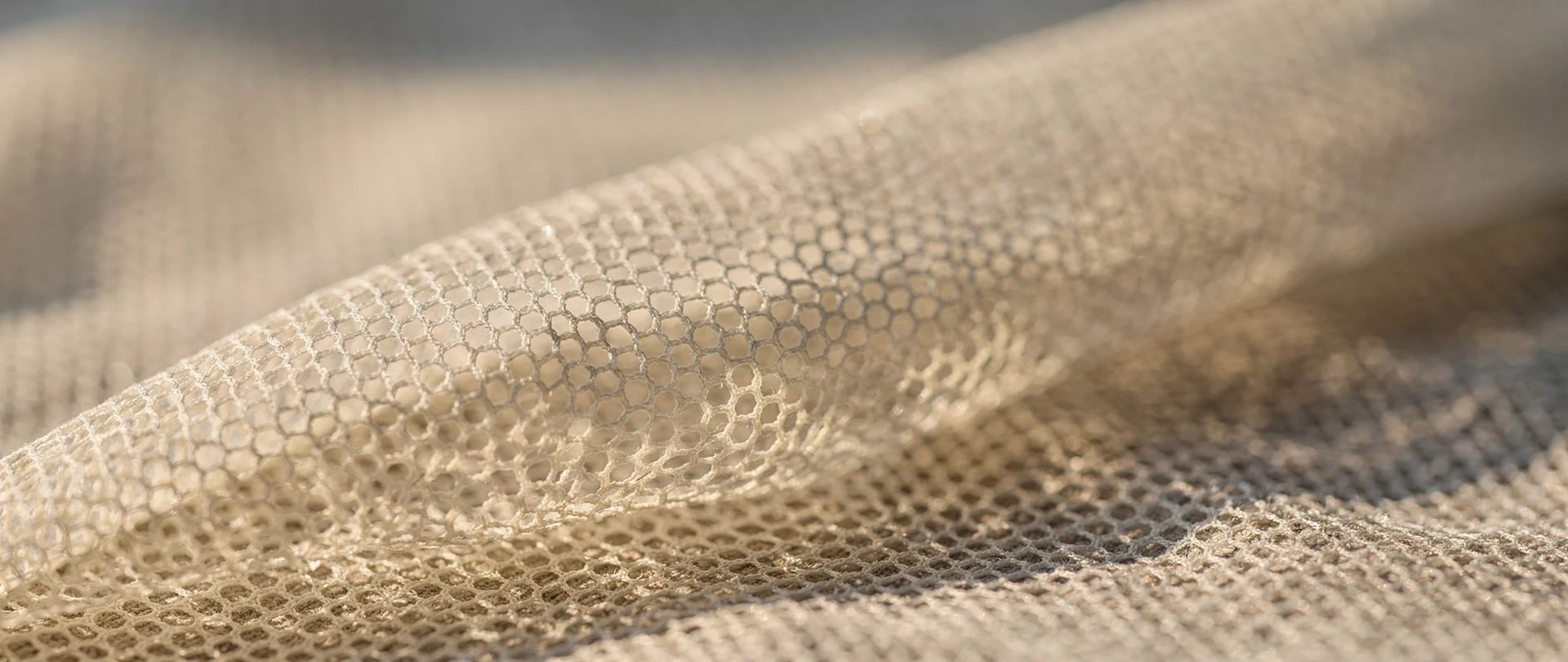
Open mesh has its place when you want to cut sightlines and heat without closing up. It passes air, so it moves less in wind, and it keeps part of the view.
What I avoid: untreated cotton and linen. Beautiful for two summers, then mildewed at the hem and faded in bands.
An outdoor curtain is textile that lives outdoors. What kills it is not the sun. It is being put away damp.
Mounting decides everything
An outdoor curtain needs a track or cable fixed to something solid overhead. On a verandah or pergola the structure is there. On an open balcony you often need a crossbar first, and that point determines whether the project is simple.
The second point is the bottom height. An outdoor curtain should not touch the deck. It collects water and leaves and mildews from the bottom up. I aim for an inch of clearance.
Winter storage
Like a sail, outdoor curtains overwinter indoors. Down in October, washed in warm soapy water, dried completely, stored folded and dry. A panel put away properly lasts easily twice as long.
That is why I design the fixings to come down without tools. Anything needing a ladder and a screwdriver never gets taken in.
Where to start
Call me at 873 200-4056 and tell me the hour the porch bothers you. Six o'clock sun does not come from the same side as noon sun, and that detail usually says where the problem comes from.
Then we work out whether it is a curtain, a canopy, or both. All the outdoor products are on the exterior page.