Shade Sails in Sherbrooke: What Lasts a Summer
Shade sail, pergola canopy and outdoor curtain are three different products solving three different problems. What decides the job is your anchor points, not the fabric.
Every summer a good number of people around here go looking for a shade sail. Most of them end up on the site of a manufacturer in Montreal or Quebec City, order a sail made two hundred kilometres away, and find out on installation day that the anchor points in their yard do not match the drawing.
I work with outdoor fabric year round at the atelier, on the Plateau St-Joseph in Sherbrooke: pergola canopies, gazebo canopies, outdoor curtains. The shade sail is the neighbouring product, and it is the one I get asked about most. Before we talk about fabric, there is a confusion worth clearing up, because it is expensive: three different products go by almost the same name, and they do not solve the same problem.
One thing straight away, because it changes what you should read next. This is a buyer's guide, not an offer of service. A sail tensioned between anchor points is not something I sew: it needs equipment and a work surface I do not have at the atelier, and for that product you want a specialist manufacturer. What I do make is pergola canopies and outdoor curtains, two things people often confuse with a sail and which sometimes solve the problem better. I would rather tell you in the first paragraph than after a site visit. The rest of this is useful either way, because the expensive mistakes are the same no matter who sews the cloth.
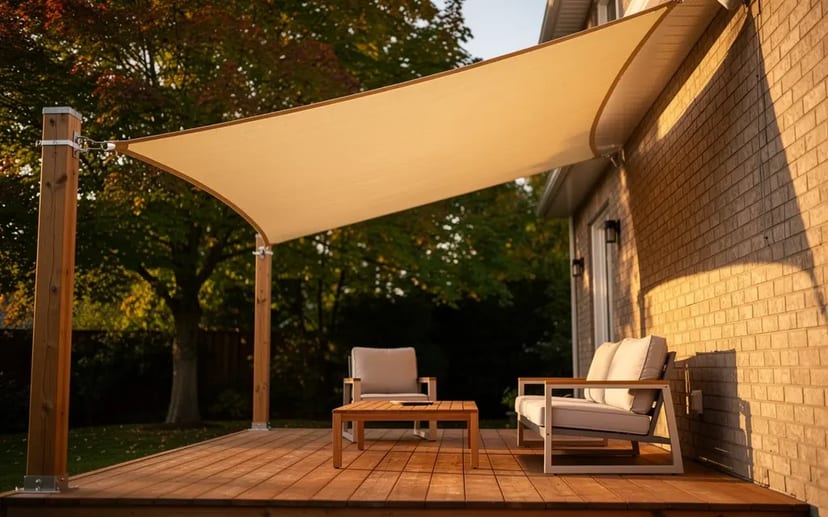
Shade sail, pergola canopy, outdoor curtain
A shade sail is a cloth held in tension between anchor points. It floats above an open surface with no structure underneath. It is the answer when you have nothing to hang a roof from: a yard, an open deck, a corner of a pool. Tension is what holds it up, and tension is also what makes it demanding.
A pergola canopy sits on a structure that already exists. It follows the exact dimensions of your pergola or gazebo. It is not working in free tension, it is carried. That makes it easier to get right and longer-lived, because the frame absorbs what the cloth would otherwise take.
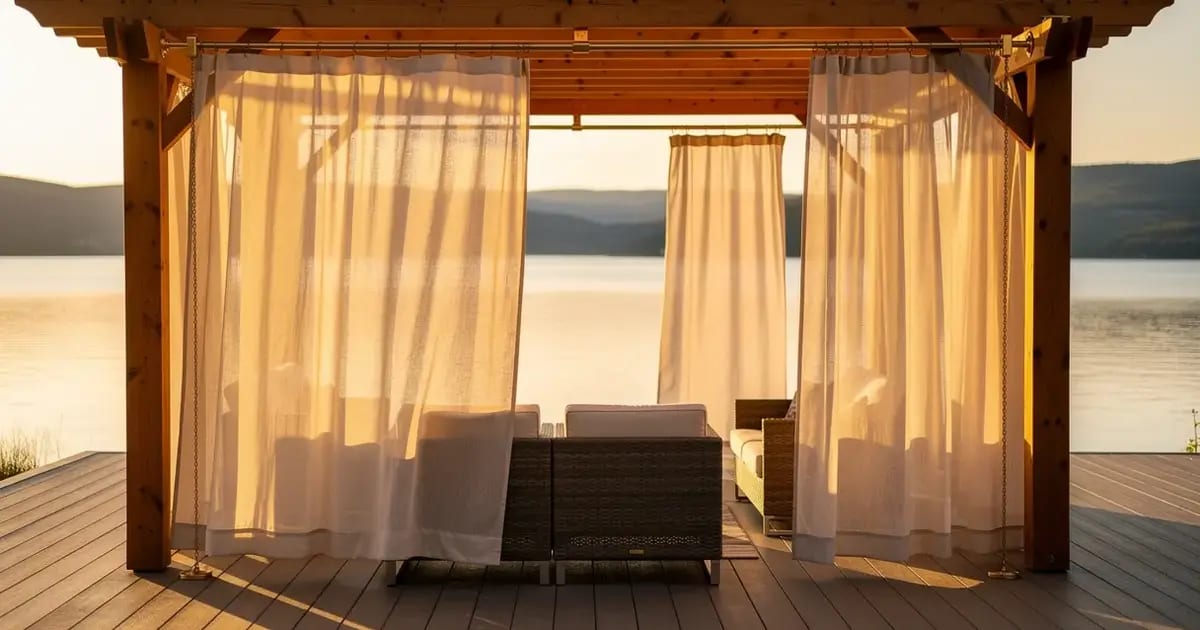
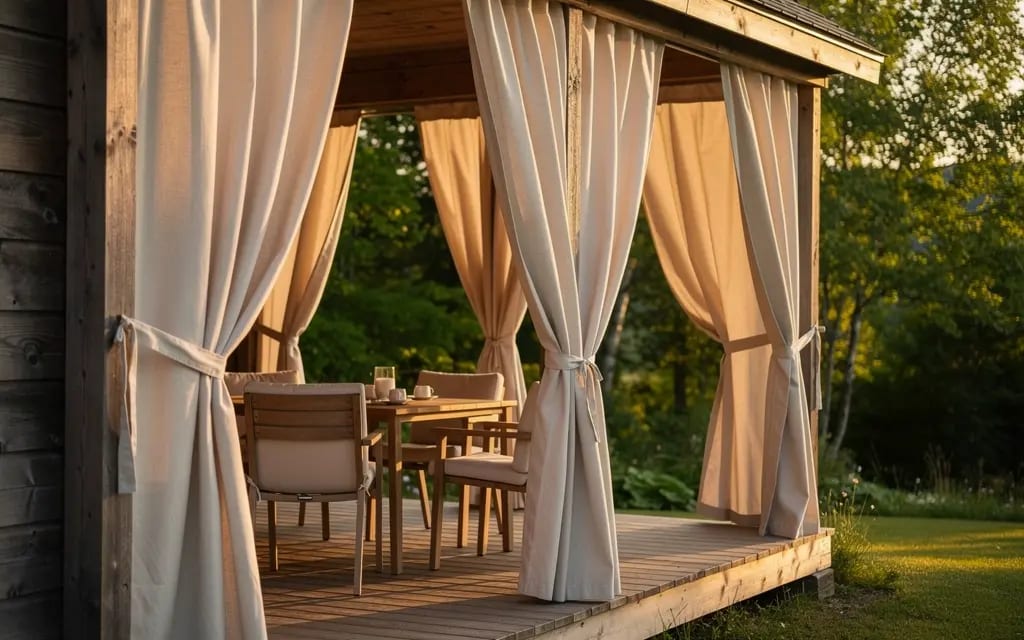
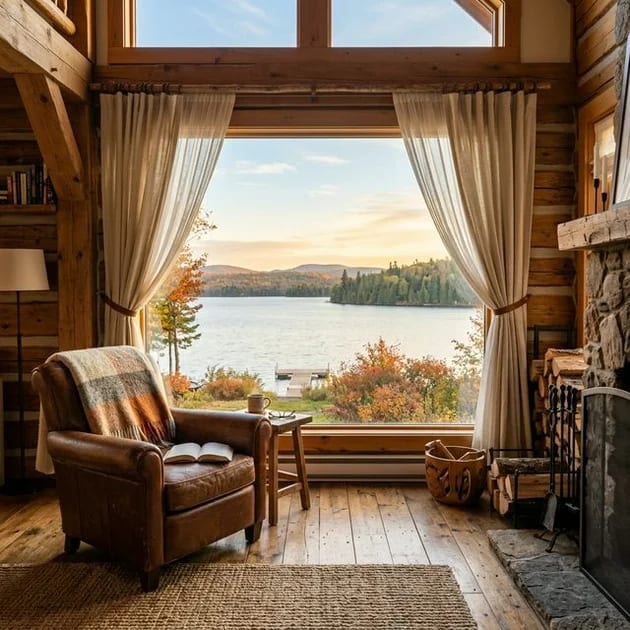
An outdoor curtain provides no shade at all. It hangs, it slides, and it solves three other problems: privacy from the neighbours, wind, and the late-day sun that comes in sideways and that no horizontal cloth ever stops.
The sites you will find while searching almost always sell one of those three and present it as the answer. In practice a lot of Townships yards need two of them.
Your anchor points decide the project. The fabric does not.
This is the part the online configurators skip. You enter dimensions, you pick a colour, and the site sells you a triangle. But a shade sail is not an object, it is a system under tension.
A decent-sized sail pulls on its anchors harder than people expect. In a gust, a cloth four metres on a side can put several hundred kilos of load into a single corner. What fails is almost never the fabric. It is the badly set post, the screw driven into siding, or the joist that was never meant to take a sideways pull.
So before shape and colour, we look at what you actually have:
- A load-bearing masonry wall, which will take a chemical anchor.
- A wooden structure whose framing size and fixings we can verify.
- A mature tree, which moves and has to be rigged differently.
- A post to be installed, which means a footing poured below the frost line.
That last line is why an honest quote in the Eastern Townships is never the price shown online. Our frost line demands a deep footing. A post set forty centimetres down will move by the first spring, and a sail on a post that moves does not stay tensioned.
What I tell clients: show me your yard before you ask me for a price. I know how to make the cloth. It is your four corners that decide the project.
The real shape of your yard, not a catalogue triangle
Configurators offer triangle, square, rectangle, trapezoid. A yard is almost never any of those.
Working custom, you start from the anchor points you have and draw the cloth that connects them while covering what needs covering. The result is often an irregular quadrilateral, with sides of different lengths and corners at different heights. That is deliberate. A sail set with a fall between its corners sheds rain, while a perfectly level sail forms a pocket, fills, and eventually sags or tears out an anchor.
A simple rule I apply: at least twenty centimetres of height difference between the highest and lowest point for every two metres of cloth. On a small deck sail you barely notice it. On a large one it is the difference between a sail that lasts five years and a sail that ripples after one summer.
Fabrics that survive a Quebec summer
Three families of fabric are used outdoors, and they do different work.
Open mesh cloth lets air through, and that is what makes it comfortable. Under a solid cloth the heat stays trapped and you gain less than you would think. Mesh blocks 85 to 95 per cent of UV depending on density, lets hot air rise through, and handles wind better because it lets the wind pass. It is my default for a tensioned shade sail.
Solution-dyed acrylic keeps its colour for years under our sun and resists mildew well. It is solid, so it also stops light rain, but it works harder in wind and wants more serious anchors. It is a pergola-canopy fabric more than a tensioned-sail fabric.
Vinyl and coated cloths are waterproof and easy to wash. They are heavy, they do not breathe, and in full sun they radiate a heat you can feel. They belong on an enclosed shelter or a windbreak curtain, less so on a sail above people's heads.
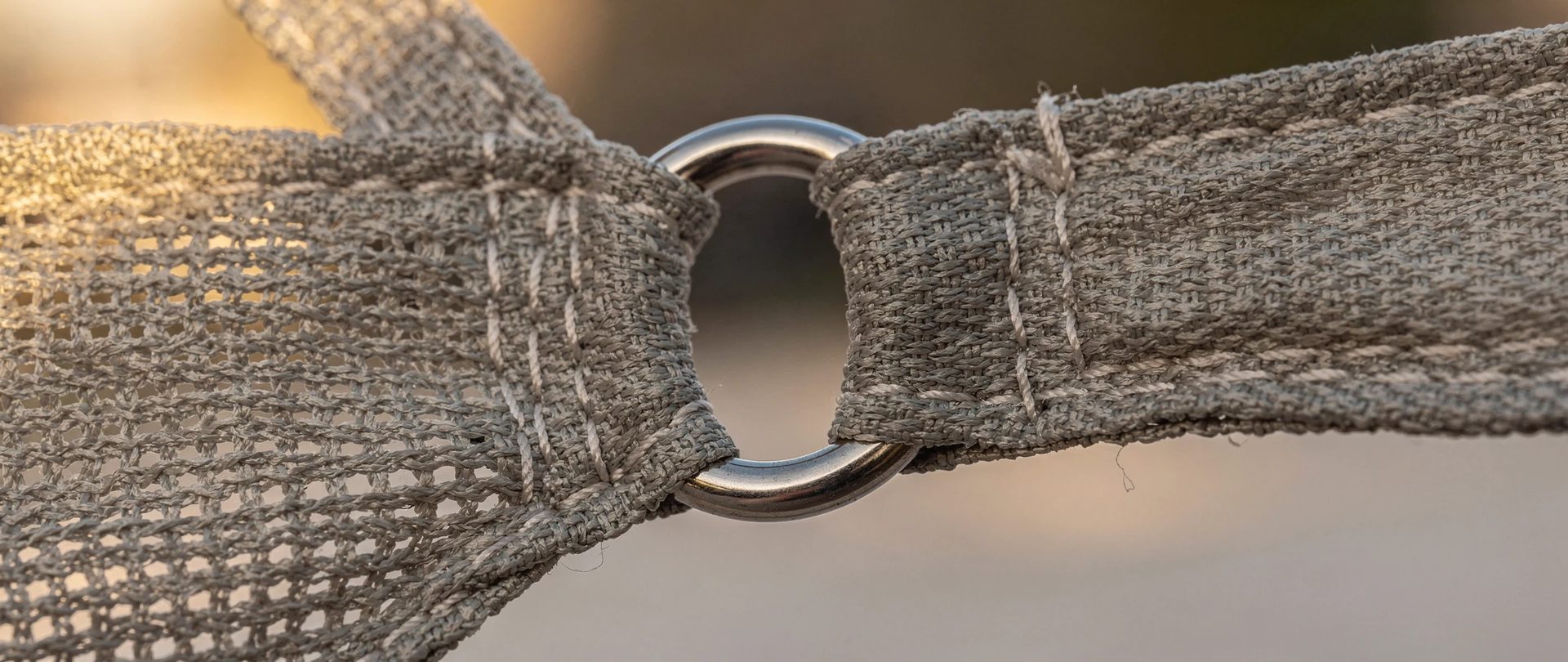
Whatever the fabric, what wears out first on a sail is the corners. I reinforce every corner with several layers, a webbing band sewn around the entire perimeter, and a marine-grade stainless ring caught in that webbing. None of that is visible, and it is what decides how long the sail lasts.
What comes down before the first snow
A shade sail does not winter outdoors in the Townships, and nobody should sell you otherwise. Wet snow is heavy, it collects in the smallest hollow, and a tensioned cloth becomes a collecting surface. I have seen anchors pulled out of a wall by a single November storm.
The practice is simple. The cloth comes down in October, gets washed in warm soapy water, dries completely before being folded, and spends the winter dry. A sail stored properly lasts two to three times longer than one left out.
That is also why I design the fixings to be released by one person, without a ladder where the layout allows it. A sail you cannot take down alone is a sail that stays up.
What having it made here actually changes
The difference is practical rather than romantic. I come and look at the yard. We measure the real distances between anchor points, not the dimensions you would have estimated. We account for the fall between corners, for where the sun sits late in the afternoon, and for the direction the wind actually arrives from at your place.
And if I look at your yard and conclude that a pergola canopy or an outdoor curtain would solve your problem better and for less, I will say so. It often is the case, and those are two things I do make. A shade sail is a fine product. It is not the answer to every yard.
For an outdoor project the easiest start is to call me at 873 200-4056 with a line about what is bothering you: the midday sun, the neighbour, the wind. We go from there.