Cushion and Throw Pillow Covers: Never Match Them to the Sofa
Two of the rules that matter for throw pillow covers are really about construction. Why the insert must be bigger than the cover, and the leftover fabric nobody plans for.
The rule everyone repeats is not to match your cushions to your sofa. It is good advice and it is the least useful thing anyone can tell you, because it says what to avoid and nothing about what to do.
Six rules actually decide whether a set of cushions looks bought or looks put together. Two of them are not styling rules at all. They are construction, and they are the reason a store cushion looks tired a year before the fabric has worn out.
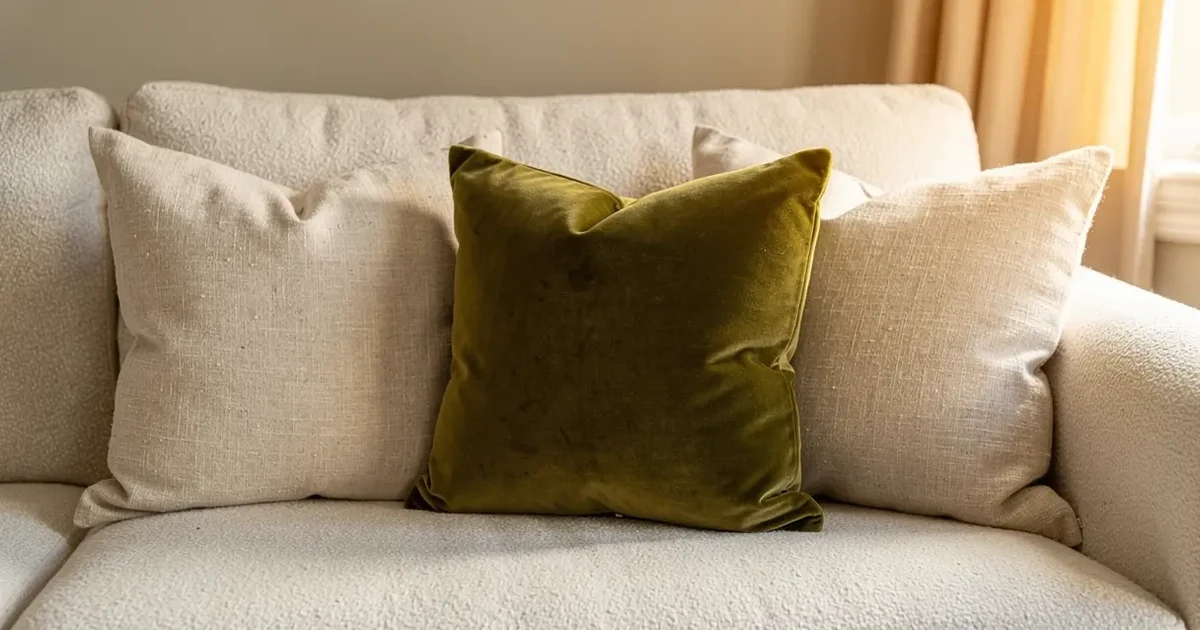
The six rules, and the two that are really about construction
The four styling rules are quick, and you have read them before: vary the sizes rather than buying a matched set, keep the palette to three notes and let one of them be a texture instead of a colour, put the largest at the outside and work in, and let at least one cushion pick up something else in the room rather than the sofa it sits on.
Follow those and the arrangement will look considered. It will still go limp in a month if the last two are wrong, and those two are mine rather than a stylist's: the insert has to be larger than the cover, and the closure has to be on the bottom edge.
Why the insert has to be bigger than the cover
This is the single cheapest thing to get right and almost nothing sold in a store gets it right.
A cover cut to the same size as its insert has nowhere to be full. The insert settles into the middle, the four corners empty out, and within a few weeks the cushion has the soft dog-eared look that reads as old. People blame the filling. The filling is usually fine.
I cut a cover two to three centimetres smaller than the insert on each dimension: a fifty-centimetre insert gets a forty-seven-centimetre cover. The insert has to be compressed slightly to go in, which is briefly annoying and is exactly the point. The compression is what pushes filling into the corners and keeps it there.
A cushion looks expensive when its corners are full. Everything else is fabric choice. The corners are arithmetic.
Buy the insert first, or tell me its true measured size rather than the size on its label, because labels are optimistic by a centimetre or two often enough that I measure every one that comes through the atelier.
Feather and down inserts take the larger end of that difference and reward it most, because they can actually be pushed into a corner. Solid foam forms take the smaller end, since they will not compress much at all.
The leftover yardage nobody plans for
Here is an economy that only exists because someone already cut the curtains.
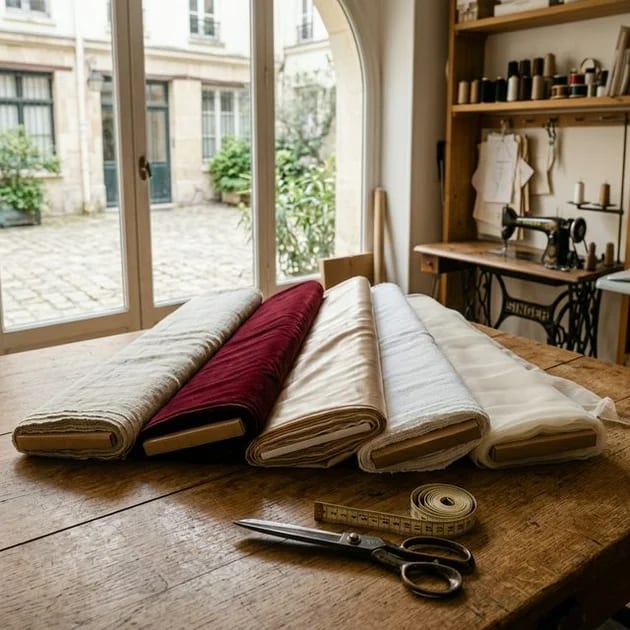
Curtain fullness is calculated in whole fabric widths. You almost never buy the exact number, and patterned cloth forces you to buy extra for the repeat. So after a set of curtains there is nearly always usable fabric left, and it goes into a bag in a closet.
That remainder is usually enough for two or three cushion covers, sometimes for a cushion set plus a band of trim on something else. The room ends up co-ordinated without anyone having planned a scheme, and without paying for the fabric twice.
It is worth asking about at the time of a curtain order rather than a year later, for a boring reason: dye lots. Fabric bought eight months apart in the same reference is often not quite the same colour, and on two objects in one room that difference is visible.
A zip on the bottom edge
The closure decides how the cushion ages more than the fabric does.
An envelope back, where two fabric flaps overlap, is quick to make and it gapes. Every time the cushion is leaned on the flaps separate and the insert shows through. On a cushion nobody touches it is fine. On a sofa people sit on, it is a slow annoyance.
A hidden seam closure looks beautiful and cannot be opened without unpicking, which means the cover is not really washable.
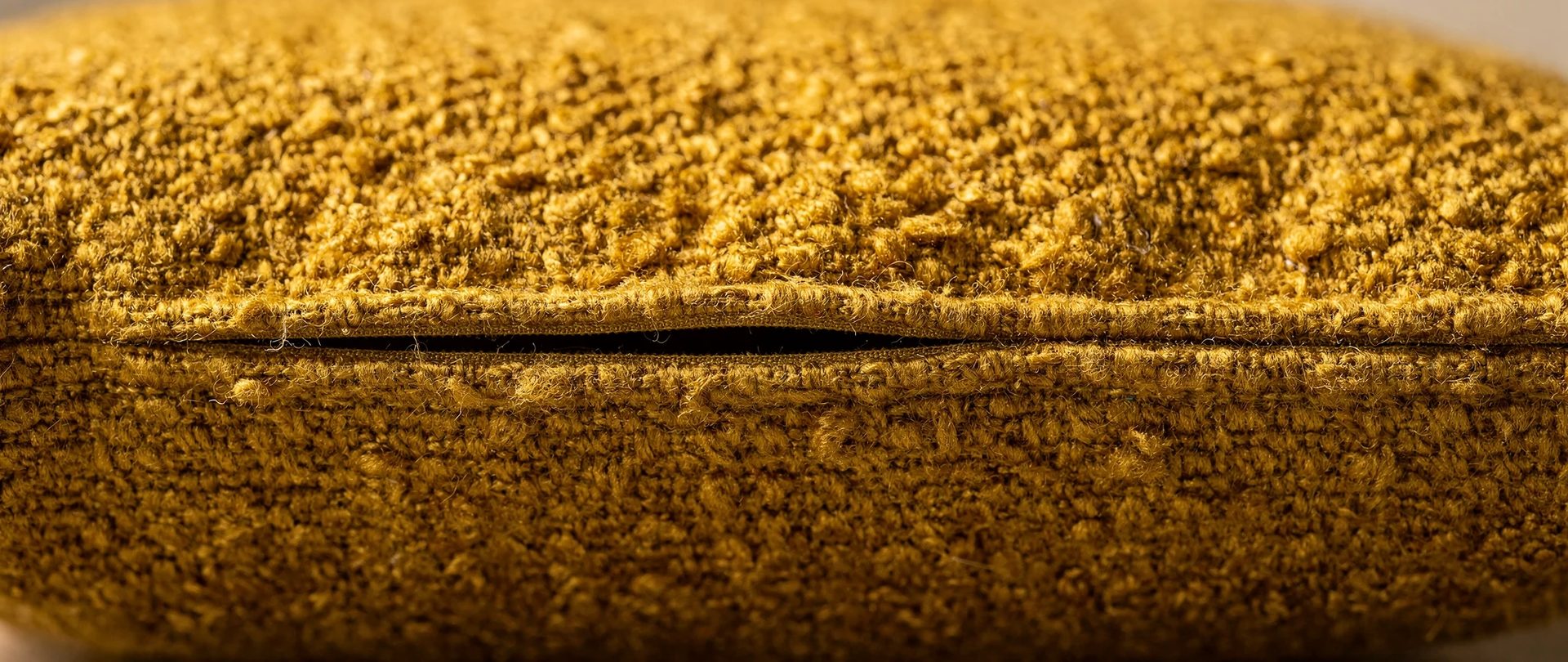
A zip along the bottom edge does the job: it takes the strain along a seam that is never in view, it lets the cover come off in one motion, and it survives being opened and closed a hundred times. Put it on a side seam instead and it eventually shows as a hard line down the visible edge.
Weaves that survive being sat on
A cushion cover has a harder life than a curtain and gets chosen as though it does not.
What lasts: mid-weight linen, cotton canvas, wool blends, cotton velvet with a short dense pile, and anything with a tight weave you cannot push a fingernail into.
What does not: loose open weaves that snag on a button or a zip, long-pile velvets that crush into permanent shadows where people lean, and silk anywhere near a place someone actually sits.
The practical test is the one I do at the atelier. Press your thumbnail into the cloth and drag it a centimetre. If the yarns shift and stay shifted, that fabric will look worn along the front edge of the cushion within a year.
When drapery fabric is the wrong choice
The leftover-yardage idea has a limit, and it is worth knowing before I cut.
Drapery cloth is engineered to hang. Much of it is stiffer and heavier than anything you want against your neck, and some of it, especially the ones with a coated or thermal back, is simply unpleasant to lean on. A gorgeous heavy linen makes a superb decorative cushion, the kind that goes on the chair rather than behind your back.
So I ask one question before using a curtain remnant: is this cushion to look at, or to lean on? The answer changes the fabric, and it is much easier to answer before the cover is made than after the first evening.
Before you order
Measure your inserts rather than trusting their labels, and tell me which cushions are for leaning on. If you have curtain fabric left from a previous order, bring the bag.
The room-level thinking sits on the residential page, and if the bed is part of the same question, the sizing arithmetic behind duvet covers and shams is the same arithmetic in a different place.