In my guide to pleat types, I go through each pleat one by one. Here I start from the other end: what the curtain will do in your home. Does it open every morning, or stay closed? Is the fabric a big, bold pattern? Does the glass have to be fully clear when it is open? Depending on the answer, the pleat changes.
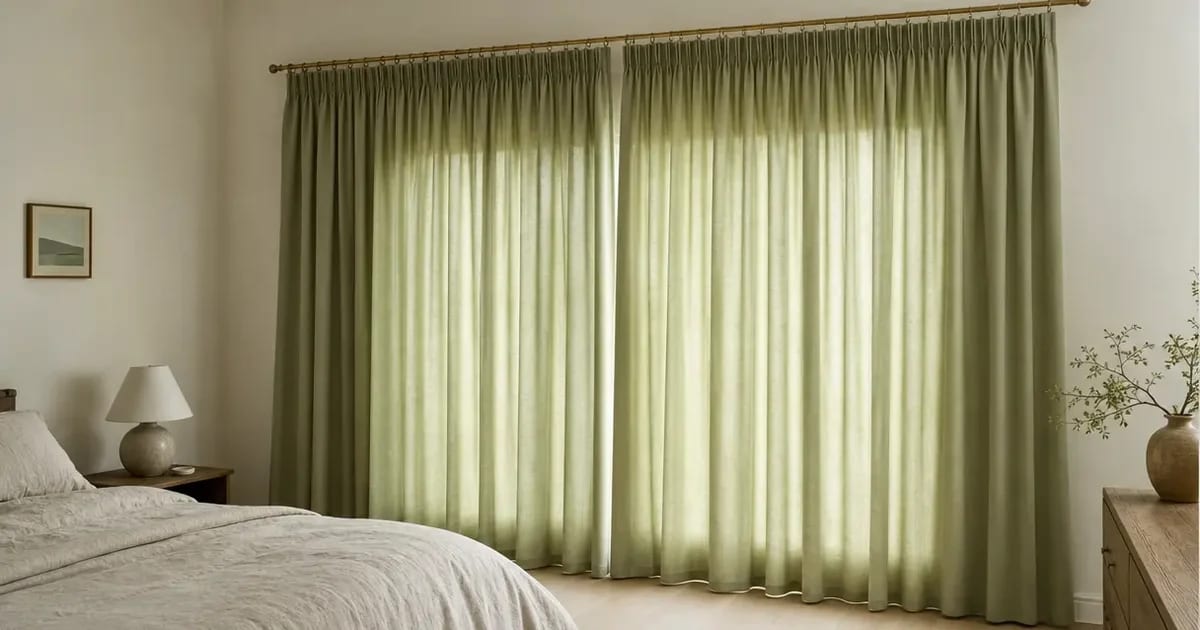
Pinch and pencil: two ways of making a curtain, not two names
In my guide I list them side by side, and people often mix them up. They are different products.
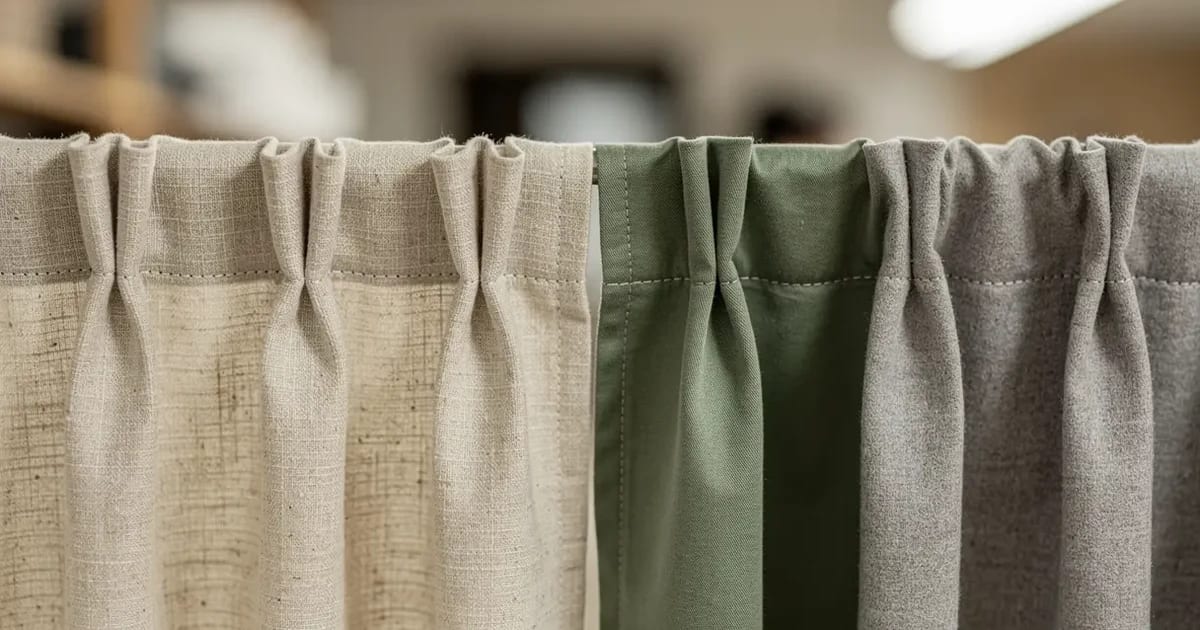
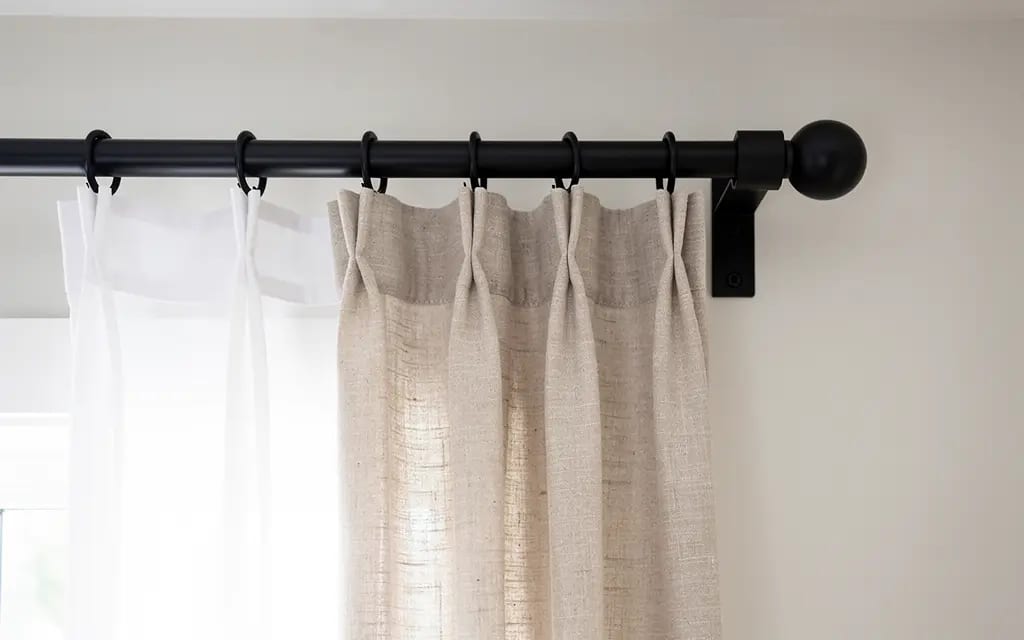
A pinch pleat is folded by hand, group by group, with a stiffener sewn into the heading. A pencil pleat is often made with a gathering tape sewn along the top of the panel, which gives a continuous row of small folds. The UK workroom Aquarius Interiors puts it plainly: "A pinch pleat curtain made with hand-sewn pleats and buckram takes more time than one on a standard pencil pleat tape." The same workroom adds that "The cost is mainly driven by how much fabric the heading needs and how much hand work is involved."
Where sources disagree is on which of the two costs more:
- Hay Interiors, a workroom in Perth, writes that "A properly made pencil pleat uses more fabric than the fullest pinch pleat we make, which means it generally costs more."
- The Millshop Online, a UK retailer, says the opposite: "If you were to have a simple pair of machine finished pencil pleat headed curtains this would take less material and time to make up than a handstitched, pinch pleat, interlined pair of made to measure curtains."
Each is right for its own case. It all depends on the fabric and the work the curtain needs. Without seeing the fabric, I will not pick a winner.
In daily use, the difference shows most when the curtain is open. Hay Interiors notes that with a pencil pleat "The gather is continuous, so rather than folding, the fabric bunches." IXA Curtains observes that "Pinch pleat and tailored pleat headers have permanent folds, which generally makes the stack more orderly and easier to estimate."
The fullness workrooms use
Fullness is how many times the finished width you need in fabric. The figures other workrooms publish do not always agree, and they do not all measure the same thing (rod width for one, finished width for another). Take them as reference points. In my workroom, the calculation is done for your window and your fabric.
| Pleat | Published fullness | Sources |
|---|---|---|
| Triple pinch | 2.5 times the width; 2.25 to 2.5, up to 3 in heavy or interlined cloth | Hay Interiors, Stitched, FibreCalcs |
| Double pinch | 2.2 times | Hay Interiors |
| Goblet | 2.5 times; 2.25 to 2.5 | Stitched, FibreCalcs |
| Pencil | 3 times (Hay Interiors); 2 times (Stitched) | Hay Interiors, Stitched |
| Inverted pleat | 1.5 to 2 times (50% to 100% extra fabric) | ShowTex |
Look at the pencil row: from 2 to 3 times depending on the source. A pleat that fits in two widths for one workroom takes three for another. That is why I will not give a number without the fabric in hand.
Plan the stack-back before you pick the pleat
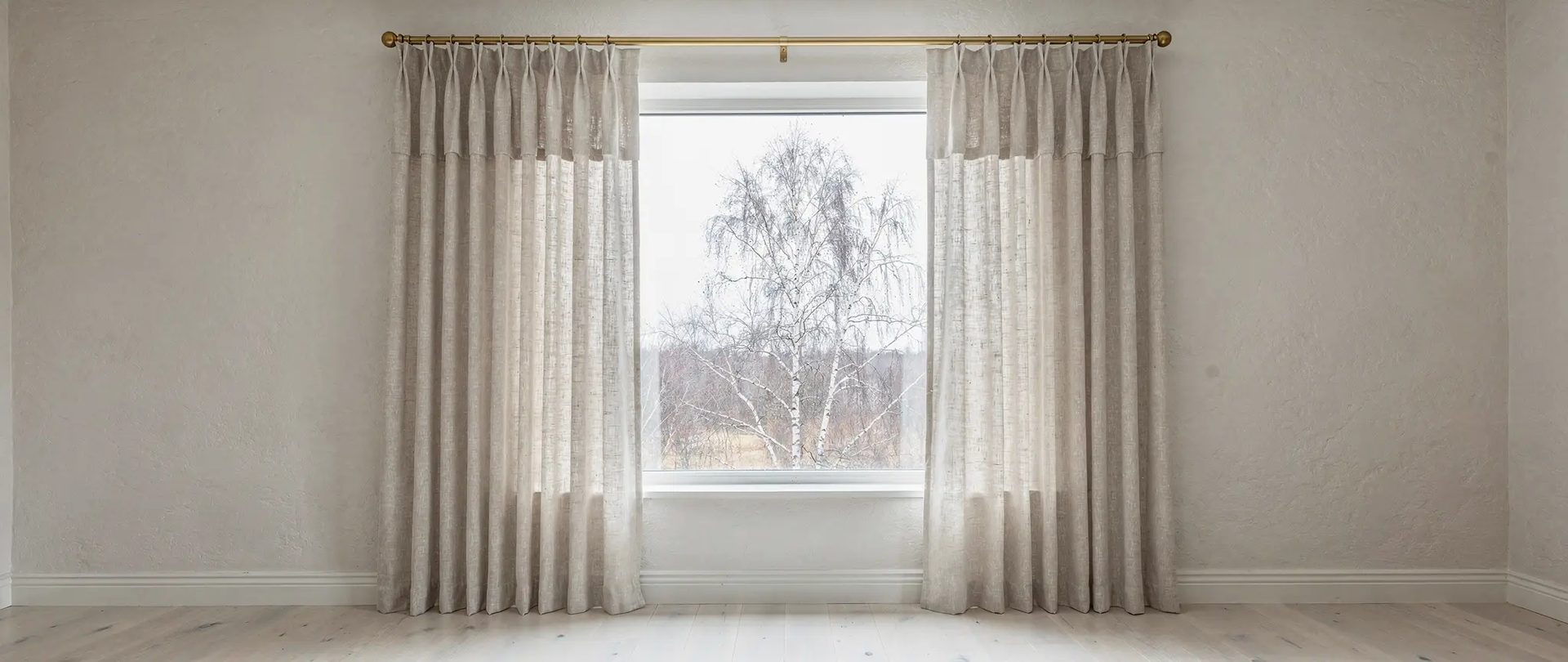
A pleated curtain does not vanish when it is open. It stacks to the side, and the stack takes up room. Hay Interiors writes: "Stacking is the thing people forget to ask about and then live with for fifteen years."
Two suppliers give the same order of magnitude for a pinch pleat. IXA Curtains works with 20 to 25% of the panel width, and Three Girls says "For pinch pleat curtains, stacking width is usually about 20% of the total curtain width." IXA gives an example: "Stackback per panel: 48 × 20–25% = 9.6–12 inches", that is about 9 to 12 in (24 to 30 cm) for a panel 4 ft (122 cm) wide. IXA also warns: "Do not calculate from the fabric width before the pleats are made."
In practice, it is simple subtraction. If you want the glass fully clear, the rod or track has to extend past the frame on each side by at least that reserve. On a window where the finished panel is 4 ft (120 cm) wide, count 9 to 12 in (24 to 30 cm) on each side. You or your installer put up the rod or track. I make the panel so that it opens where you plan it. For the choice of system, see my guide to rods, tracks and wave systems.
Heavy cloth thickens the stack too. Aquarius Interiors: "A pinch pleat curtain with heavy interlined fabric will stack into quite a thick bundle." In a narrow room, that counts as much as the pleat itself.
A bold pattern: the pleat that lets it read
Any pleat that uses up fabric at the top interrupts a big pattern. Hay Interiors: "Any heading that consumes fabric at the top will interrupt a bold pattern." The Drapery Company, in the United States, goes further: "an inverted or box pleat keeps the pattern flat and readable across the panel face, while a pinch pleat can interrupt a bold repeat at the header."
An inverted pleat is one where the fabric is folded to the back. The Color House describes the inverted box version this way: "the pleat is folded and sewn to protrude to the back of the panel, leaving a flat, smooth front." It also takes less fabric than the pinch pleats (see the table).
I did not cover it in my guide. If a big pattern or a large check is in play, call me before you choose: we will look together at whether this pleat suits your room and your fabric.
Goblet and inverted pleats: for panels that stay put
The more shaped a pleat, the less it likes being pulled. Interior Decorating puts it this way: "Goblet, cartridge, and inverted pleats are usually made as stationary panels because their shaped tops do not stack neatly when drawn." The Color House says the same of the goblet: "goblet pleats are best for stationary panels, as their intricate shape can be difficult to maintain if the drapery is frequently opened and closed." The Drapery Company: "Pinch pleats and ripplefold track well; goblet and cartridge do not." And The Shade Store: "Grommet, Inverted Pleat, Goblet and Rod Pocket are best as decorative, stationary panels."
That matches what I say in my guide: the goblet is a pleat for show. A panel you pull every day leans toward the pinch pleat. A panel that stays on each side of the window can afford the goblet.
Fabric with no body will not hold a pleat
Hay Interiors warns that "What it does not tolerate is a fabric with no body at all, which will not hold the fold at the base of the pleat." The reverse is true too: "Heavy cloth fights the continuous gather and produces a stiff, lumpy heading rather than an even ripple." The Drapery Company adds: "Heavier fabrics need headers with buckram or sew-in stabilizer to hold their shape."
In other words, a fabric with no body will not hold a pleat, and a very heavy one will not go with a tight gather. The fabric decides at the same time as the pleat. I talk about it in my fabric guide.
A new curtain has to be trained
The pleats of a new curtain do not always hang right on day one. The White Window explains: "The goal is to keep the folds in place until they 'learn' to stay in this position and develop pleat memory." Designer Davina Ogilvie, quoted by House Digest, says "Training your drapes will ensure the panels will follow the pleat style throughout the fabric from top to bottom," and Sailrite adds: "Over time, the curtains will maintain their pleats with little to no effort required."
A new curtain can therefore take a while before it hangs right. It has not yet taken its pleat.
Where to start: your use first
| Your curtain | The pleat to look at first |
|---|---|
| It opens and closes every day | Pinch, which glides well and stacks in an orderly way |
| It stays fixed on each side of the window | Goblet or inverted pleat |
| The fabric has a big pattern | Inverted pleat, which keeps the pattern readable |
| The fabric has almost no body | It will not hold the fold at the base: call me before you choose |
| The room is narrow | Stack-back first, pleat second |
Frequently asked questions
What is the difference between a pinch pleat and a pencil pleat?
A pinch pleat is folded group by group and takes more hand work. A pencil pleat is a continuous gather, often made with a tape. Workrooms do not agree on which costs more: it depends on the fabric and the work.
How much room does a pleated curtain take when it is open?
Suppliers count about 20 to 25% of the panel's finished width for a pinch pleat. Plan that reserve on each side of the window so the glass stays clear.
Can the pleat of my existing curtains be changed?
It depends. I have to see the piece before I can answer.
Call to decide
If you are torn between two pleats, call me at 873 200-4056. In Sherbrooke and the Eastern Townships, we talk about your window, your fabric and how you will use it every day.