Does a fabric shower curtain actually work, or does it end up as a damp rag with a mildew line along the hem? I get asked some version of this every time someone sees a linen curtain in a bathroom.
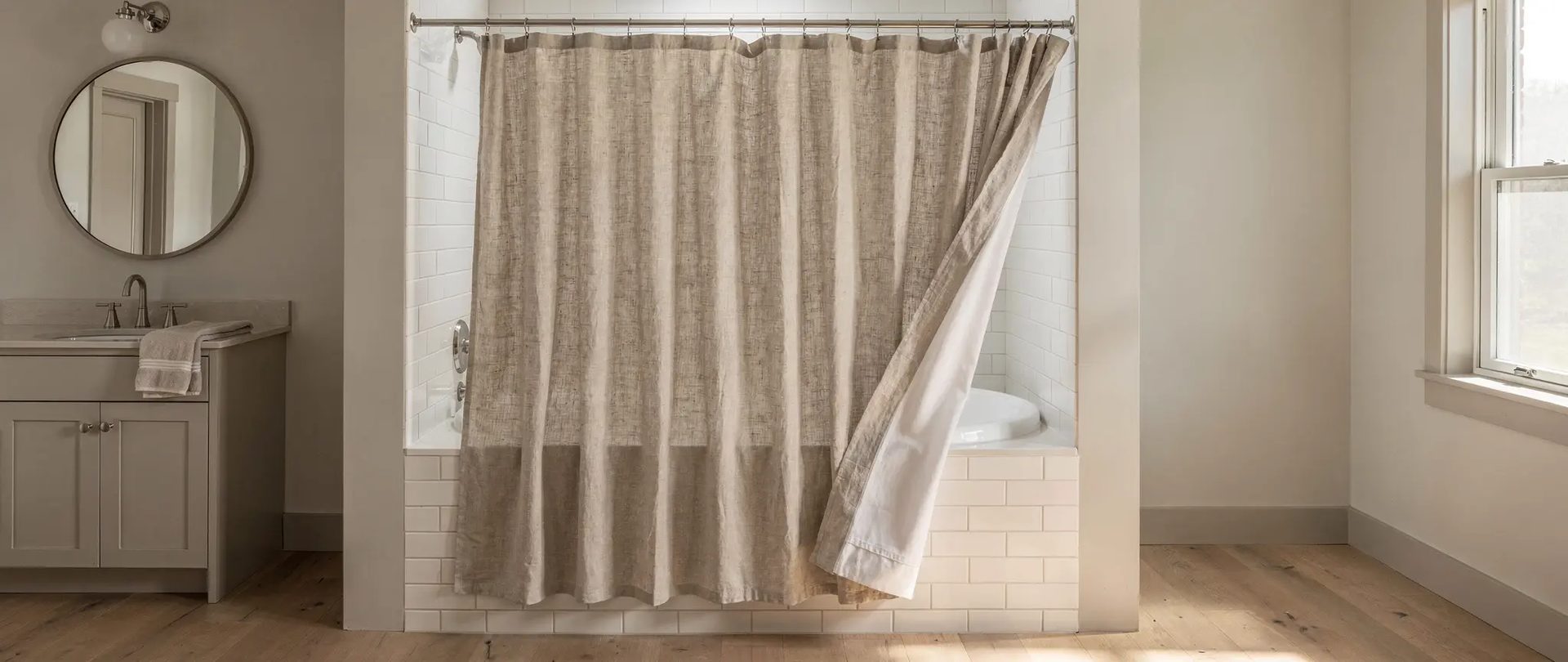
It works, as long as there is a liner behind it. The linen or cotton curtain hangs outside the tub and is the part you look at, while the liner hangs inside and takes the water. Both share one set of hooks.
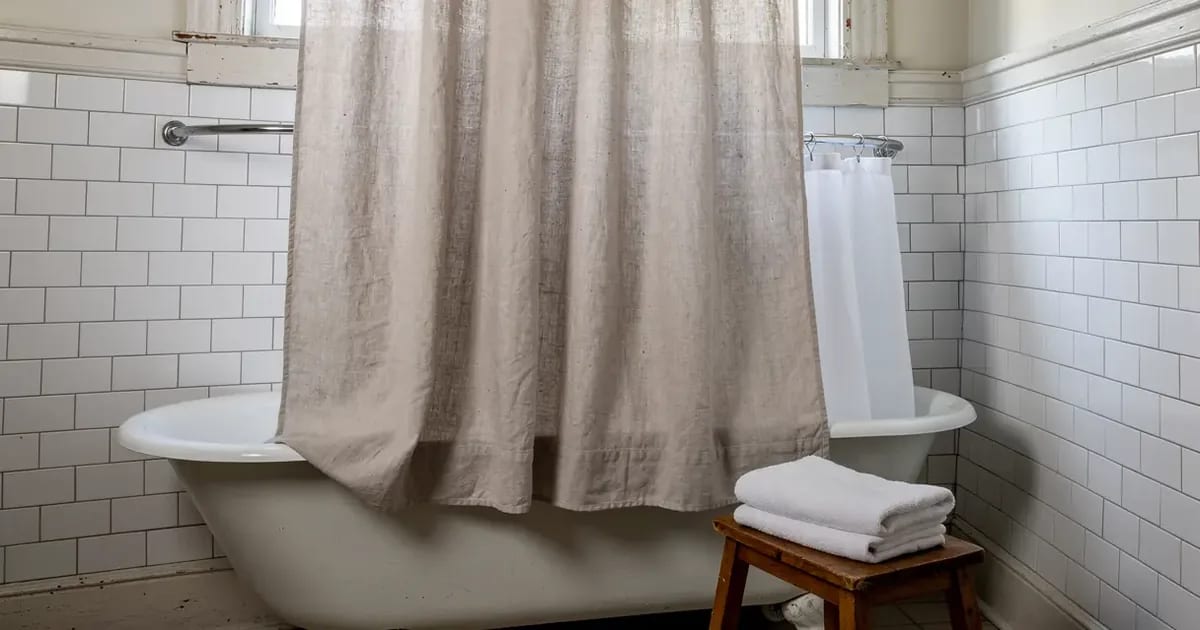
Why I make an exception for the shower
In my guide to bathroom window treatments I tell people to keep fabric out of the splash zone. The shower curtain is the one exception I make, and the reasons are practical.
It hangs free on a rod, nowhere near a cold pane of glass. Pulled open after a shower, it dries in a few hours. And it can go through the washer as often as you like, which nobody does with a window curtain.
A liner with no plastic in it
The honest part first. A vinyl or PEVA liner keeps water in better than any fabric will. PEVA is often sold as the greener choice, and it is still a plastic. A lot of people are finished with them anyway: they yellow, they cling to your legs, and they never quite come clean.
The alternative is a fabric liner in water-repellent polyester. The weave is tight and treated so that water beads up and runs off. It sheds water without sealing it out completely, so a jet aimed straight at it will eventually come through. In an ordinary shower, with the liner tucked inside the tub, the water stays in the tub. It goes in the washer and holds up well against mildew.
Depending on your shower, I do it one of two ways.
The easy way is a ready-made fabric liner. For a standard tub, this is what I recommend. Polyester fabric liners sell in most stores at 183 x 183 cm (72 x 72 in), or 183 x 213 cm (72 x 84 in) for a rod mounted high. I make the linen curtain to size, with the buttonholes lined up with the liner's, and you hang the two together.
The custom way is for when store sizes don't fit. Think of a clawfoot tub with a wraparound rod, a high ceiling, a shower wider than 183 cm or a narrow stall. In those cases I sew the liner too, cut from water-repellent polyester bought by the metre, to the same measurements as the curtain.
Some people skip the liner altogether and hang a tightly woven hemp curtain tucked inside the tub. With good ventilation and frequent washing it can hold up, though some have watched theirs go mouldy. I would rather use a liner, because it is simply easier to live with.
Which fabric for the curtain itself
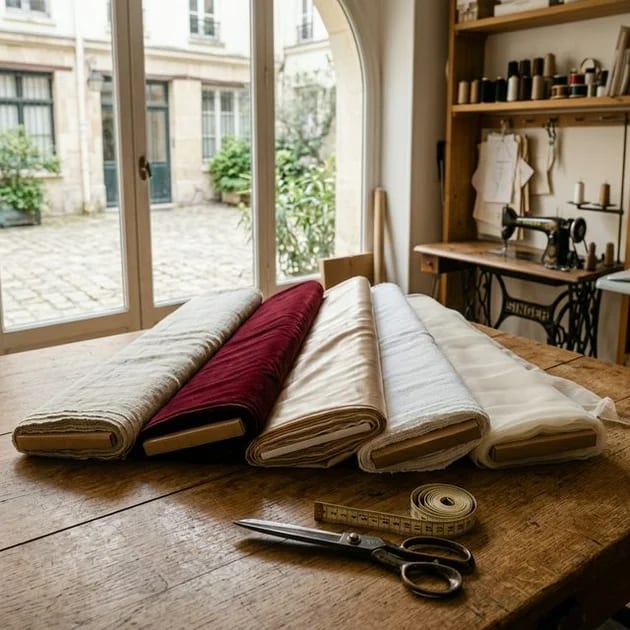
Linen is my first choice. It dries fast, takes the washer and ages well, and it wrinkles, which is a good part of its relaxed look in a bathroom.
Tightly woven cotton, a canvas or a chambray, holds up just as well and wrinkles less. A linen and polyester blend keeps the look of linen, dries even faster and needs less ironing.
I leave out velvet, silk and anything that needs dry cleaning. A shower curtain goes through the washer several times a season. If you want to go further into fibres, my curtain fabric guide covers how each one behaves.
Sizes, from the store to the workroom
Store-bought liners and curtains come in three sizes:
- Standard tub: 183 x 183 cm (72 x 72 in).
- Long: 183 x 213 cm (72 x 84 in), for a rod mounted higher.
- Shower stall: 137 x 183 cm or 137 x 198 cm (54 x 72 in or 54 x 78 in).
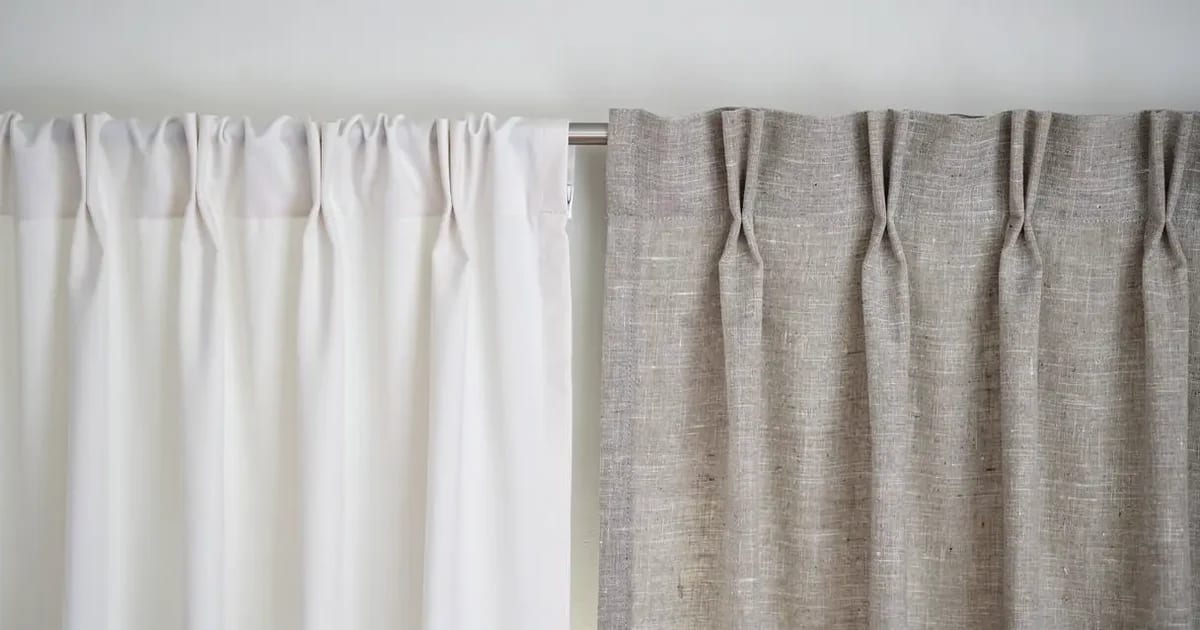
I make the fabric curtain a little longer than the liner, 188 to 203 cm finished, so it hides it. The top gets 12 buttonholes, one per hook, backed with interfacing so they hold. The sides and bottom get a double hem, and I can sew small weights into the bottom corners so the curtain hangs straight.
For a high ceiling or a clawfoot tub, measure from the rod down to the floor or to the rim of the tub. I work out the rest.
Keeping it fresh
- Wash the curtain and the liner every two to four weeks, in warm water, on a gentle cycle for linen.
- Hang them to dry, or rehang them damp on the rod. The weight of the water pulls the wrinkles out of linen.
- After every shower, pull the curtain out to its full width. Bunched up like an accordion, it stays wet in the folds, and that is where mildew starts.
- Run the exhaust fan for a good while after you shower. Health Canada recommends an exhaust fan in every bathroom in its guide to moisture and mould.
Common questions
What is the standard shower curtain size?
For a tub, 183 x 183 cm (72 x 72 in). The long version is 183 x 213 cm, and a stall takes a 137 cm width. A custom curtain follows your rod instead of these sizes.
What is the best material for a shower curtain?
For the liner, water-repellent polyester, which dries fast and washes well. For the curtain you see, linen or a tight cotton. Plastic still blocks water best, if you don't mind having it.
Can you put a fabric shower curtain in the washing machine?
Yes, and you should. Take down the curtain and the liner, wash them together in warm water on a gentle cycle, and rehang them damp. No bleach on linen.
What can I use instead of a shower curtain on a tub?
A glass panel. I don't install those; that is a job for a glazier or a contractor. If you keep a rod, fabric stays the softest option to look at and the easiest to change when you redo the room.
What I supply
I make the curtain and, when your shower calls for it, the liner. The rod and hooks are yours, since I don't sell hardware. If you plan to change your rod, put the new one up before you send me measurements.
Shower curtains are part of my special projects, alongside bathroom window treatments.
Where to start
Write down three things: the width of the rod, the height from the rod to the floor or the rim of the tub, and the kind of shower you have, whether a standard tub, a clawfoot tub or a stall. With those answers I can tell you which of the two ways suits it.
Call me at 873 200-4056, or book a consultation. I bring linen and liner samples so you can see them in your bathroom's own light.