Custom Patio Door Curtains
Custom patio door curtains and drapes in Sherbrooke. Sliding door treatments with no maximum panel width and no maximum height. Handmade in the Eastern Townships.
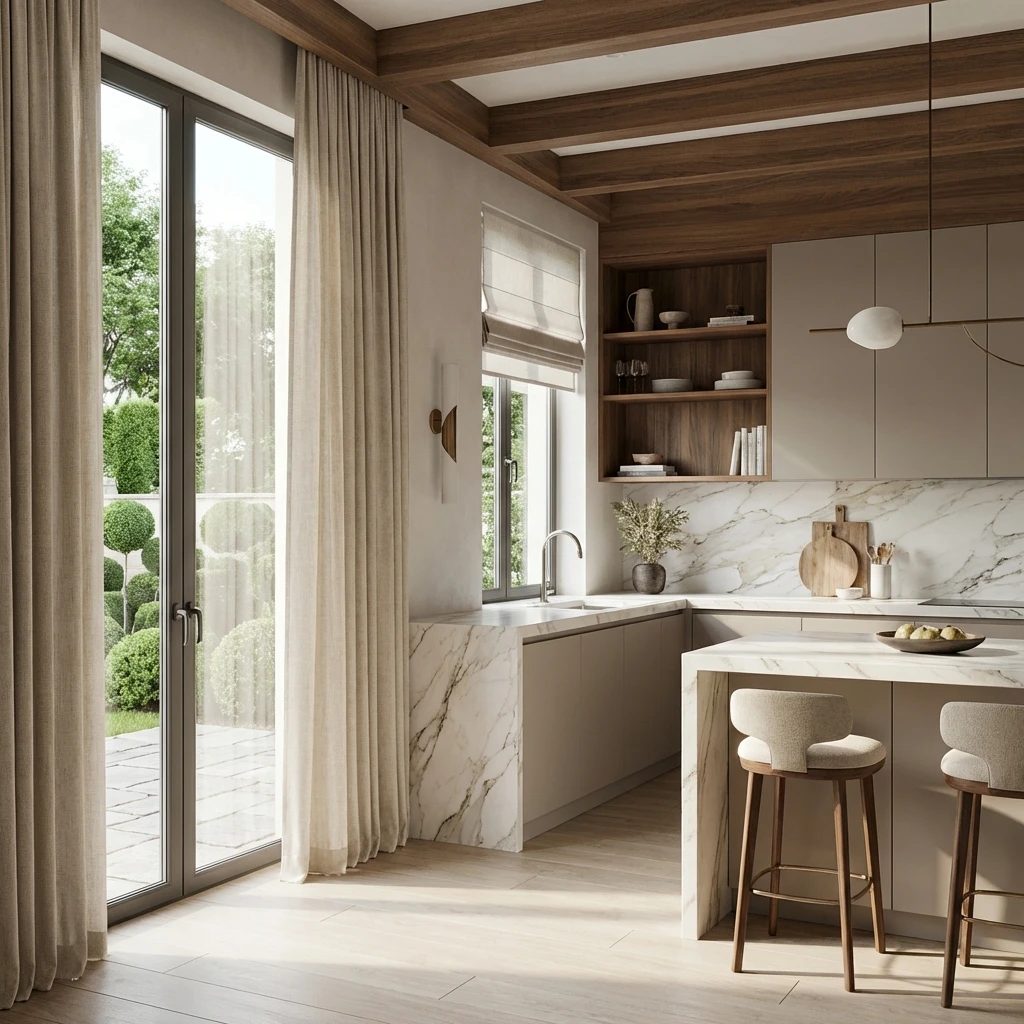
Kitchen with a View
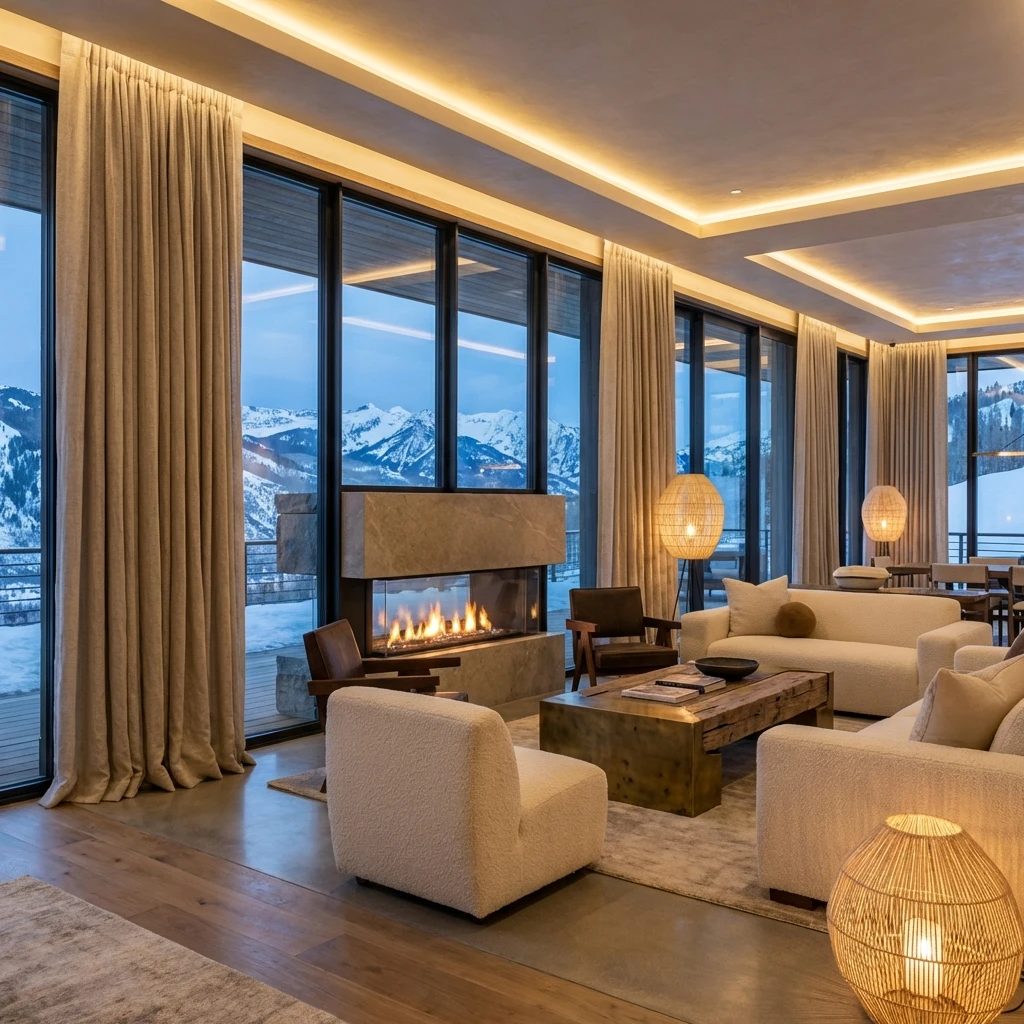
Modern Alpine Retreat
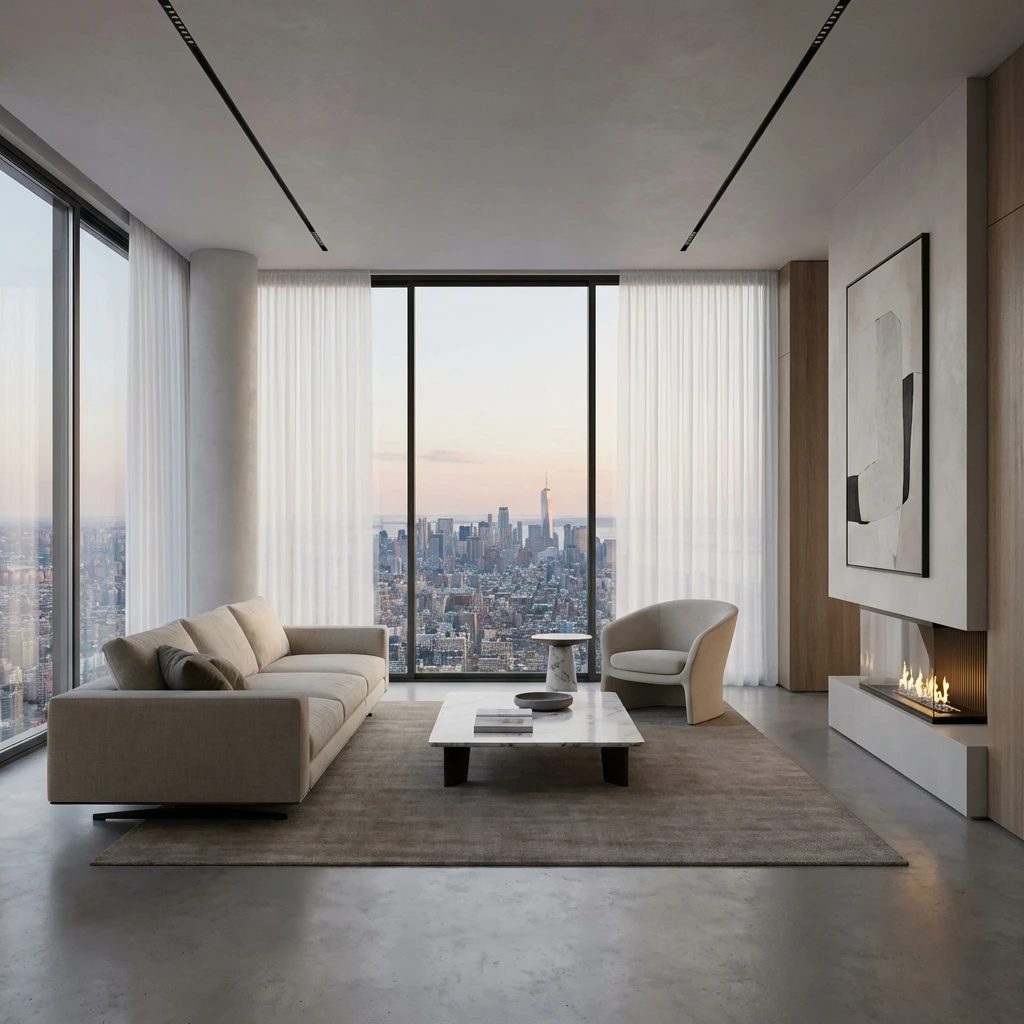
Ville-Marie Penthouse
Dressing a patio door without getting in its way
The patio door is the largest opening in the house and the one that gets dressed worst. It is wide, it is tall, it slides, and it is a doorway several times a day. A curtain that suits a living-room window becomes a nuisance in front of a door you open to let the dog out or carry a plate to the deck. I make custom patio door curtains and drapes in Sherbrooke, built to clear the opening completely.
There is no maximum panel width and no maximum height. An eight-foot door, a twelve-foot door, a three-panel slider under a cathedral ceiling: the fabric is cut to the real dimension, not to a catalogue size. That is the main difference from a store-bought curtain, which comes in two or three widths and makes you pick the one that disappoints you least.
The rest comes down to details you only notice in use: which side the panel stacks on, how much wall is left to receive it, what height the curtain hangs at so it does not sweep the threshold, and how the fabric behaves when the door is open and air is moving through. Those four things decide whether you are still happy with the curtain in two years.
Sheers, blackout curtains or both at a patio door
At a patio door, or a French door, I offer three set-ups. Sheers alone keep privacy by day and let the light through: the usual choice for kitchens and dining rooms that face the yard. A lined blackout curtain cuts the light and the cold in the evening, which matters on that much glass in winter. Both together, on a double rod or two tracks, give you a sheer that stays closed by day and a blackout curtain you draw at night.
What I advise against: a curtain that drags on the floor in front of a door you open often. I have it stop about 1/2 in (1 cm) above the floor, so it slides without sweeping the threshold or the snow tracked in from the deck. Vertical blinds and sliding panel blinds are not part of my work; my work is patio door curtains and drapes, sewn to the size of your door.
One panel, two panels, or a single-side stack
The first question I get. A single panel that stacks entirely to one side is the practical choice when the door has a fixed half and a sliding half: the fabric parks in front of the fixed glass and leaves the doorway completely clear. A centre-opening pair looks more symmetrical when closed, but it leaves a mass of fabric at each edge and eats width on both sides.
The real criterion is not looks, it is available wall. A stacked patio door curtain occupies a real band of wall, and if that band does not exist, the fabric stays in front of the glass permanently. So we measure what is to the left and right of the frame before deciding anything about fabric. A door recessed between two walls and a door in the middle of a long wall do not call for the same answer.
What gets measured on a patio door
- The clear wall on each side of the frame, which decides whether the panel can actually clear the glass.
- The mounting height, from ceiling or frame, and the floor clearance: a door curtain gets dirty from the bottom if it drags on the threshold.
- Which way the door slides and which side the handle is on, so the fabric never ends up between your hand and the handle.
- Any baseboard heater, furniture or screen door, three things that change the final length more often than the window itself does.
The hardware does not come from me
Worth saying up front, because it changes your budget and your timeline: I do not supply or install the rod, the track or the wave system. I make the fabric; you or your installer handle the support. This is not a hidden restriction, it is how I work, and it leaves you free to choose hardware that suits the rest of your house. What I will tell you is exactly what that support has to carry: a full-height patio door drape is heavy, and an undersized rod sags in the middle within months.
The frame measurement and the free wall space on each side: that is all I need to start. Call 873 200-4056.
“A patio door curtain is judged with the door open, not closed.”
Request a quote