Modern Window Treatments: A Contemporary Curtain Guide
Modern window treatments: hidden ceiling tracks, natural linen and monochrome layering. An architectural result. By Nalia, Sherbrooke.
When a client tells me they want something "modern," I've learned to ask what they mean. Modern can mean cold. Minimalist can mean empty. But the contemporary interiors that actually work share something more specific: restraint that lacks nothing. Clear lines, materials with presence, a quiet architectural quality that doesn't need to announce itself. That's what a well-executed modern window treatment looks like, and it's far less simple to get right than it appears.
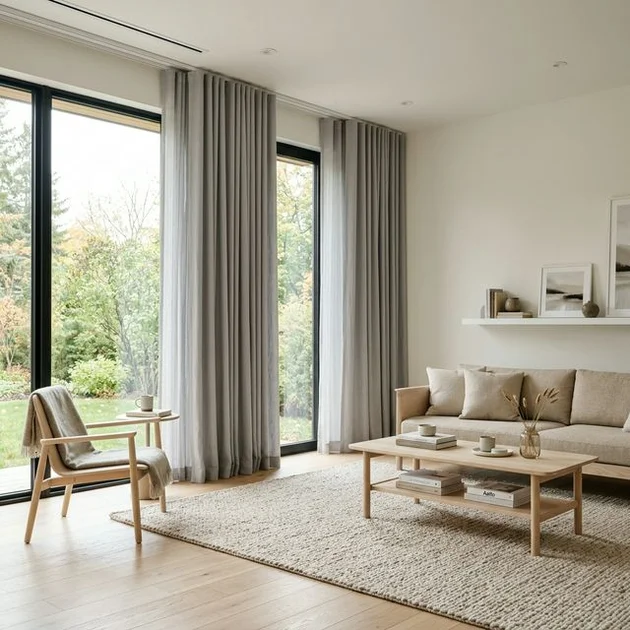
What "modern" actually means in 2026
Modern window treatments in 2026 mean restraint that allows itself texture: clean lines with natural materials that have depth, not the austerity that defined early 2010s minimalism.
Lines stay clean. Ornamentation is absent or reduced to the essential. But the materials themselves have depth: a slightly rough-woven linen, a raw silk with understated lustre, a fine-rib fabric that plays with light at different angles. The eye isn't engaged by pattern, but by the richness of the material itself.
In terms of colour, contemporary window treatments work within a narrow tonal range: warm beiges, dove greys, off-whites, deep charcoals. Monochrome isn't a limitation. It's a deliberate choice. For windows, this means curtains that don't contrast harshly against the walls but extend them.
What modern style has moved away from: heavy decorative tiebacks, sculpted valances, intricate floral patterns, gilt accents. Not because traditional style is wrong, but because in a contemporary room, those elements compete for attention in ways that disrupt the breathing of the space.
Ceiling-to-floor curtains as architectural element
If I had to name one decision that changes a room's character more than any other, it's this one: mount the track at the ceiling.
In a modern interior, the curtain doesn't cover the window. It dresses the wall. The panel begins at the ceiling, travels the full height of the room, and meets the floor, often with a slight excess that rests gently at the base. The effect is immediate: the window reads twice as tall, the room gains volume, and the whole composition has an architectural presence that no piece of furniture can replicate.
This isn't a decorator's trick reserved for loft apartments. I work regularly in homes in Sherbrooke's Plateau St-Joseph neighbourhood with standard ceiling heights, and ceiling-mounted tracks consistently transform how the space is perceived. The requirement is that panels are made to the precise length, which means measuring on-site, with the chosen fabric confirmed, before anything is cut.
For residential projects where this architectural quality is the goal, it's almost always the first thing I recommend.
Hidden track systems: when the hardware disappears
In traditional window treatments, the curtain rod is part of the composition: visible, often ornate, sometimes the visual centrepiece of the whole arrangement. In modern treatments, the logic reverses: the suspension system disappears.
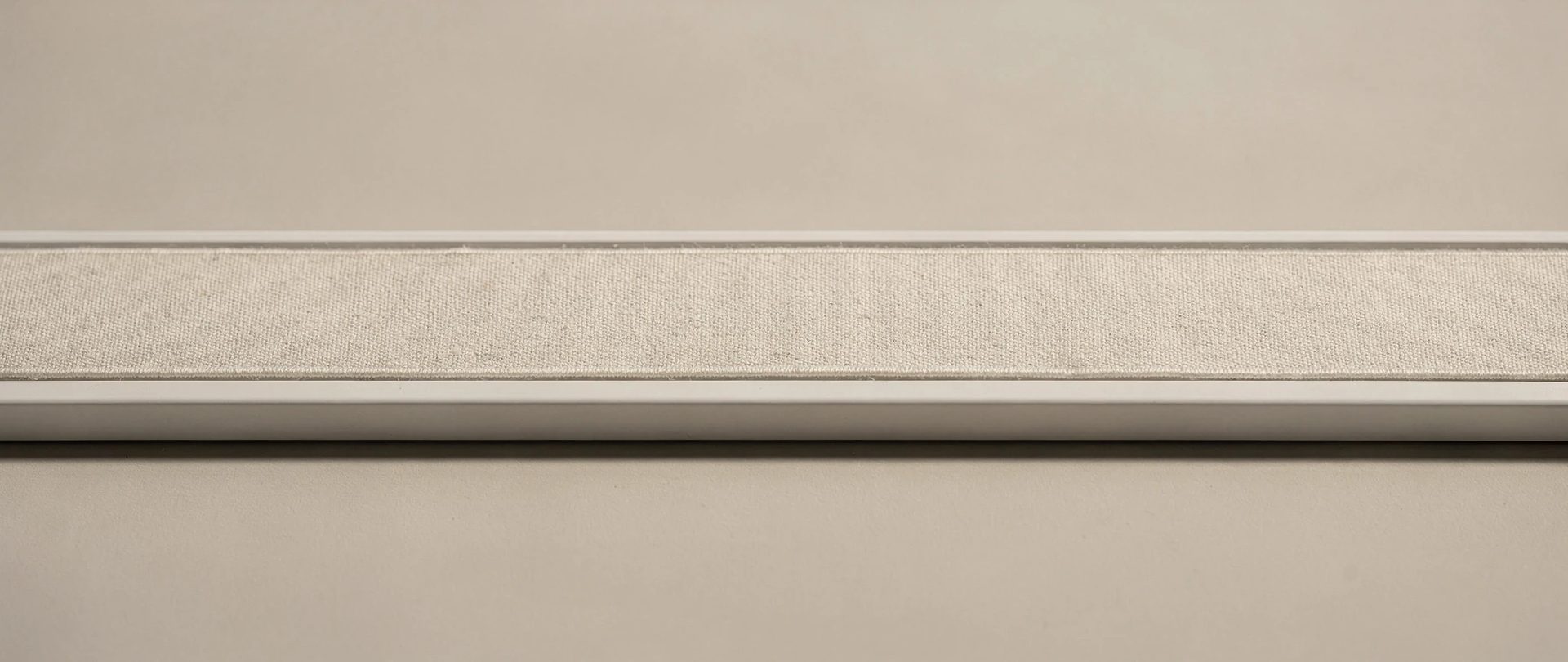
Hidden tracks, recessed into a ceiling slot or concealed behind a slim fascia board, allow the curtain to appear to float. You see only the fabric, its folds, its movement. The absence of visible hardware reinforces the impression of lightness and control.
Wave pleat heading pairs naturally with these systems: its even, continuous waves read more clearly when no rod competes for attention above them. But other headings work well too: a gently relaxed flat panel, or generously spaced pinch pleats kept deliberately minimal.
In a contemporary interior, the curtain shouldn't have to justify itself. It should simply be there: present, functional, beautiful, without needing to explain why.
Monochromatic layering: sheer and opacity in the same tonal register
One of the defining signatures of contemporary window dressing is the double layer within a single colour story. Not a standard white sheer under charcoal panels, but a nearly translucent pale grey sheer under dove grey linen. Two close tones, two levels of transparency, one coherent register.
This approach offers something a single layer can't: live modulation of light. The sheer alone lets in a soft, diffused light during the day. The main panel closed creates full privacy in the evening. Both open, the window is entirely clear. The transitions feel considered rather than mechanical.
What makes this technique demanding is coordinating the tones. With two separate track systems and two fabrics chosen independently, you need to verify that the layered effect works in the actual light of the room, not on a screen, not in a catalogue. That's why I always work with physical samples placed together in your space before any decision is made.
Natural materials in a contemporary context
There's a persistent misconception that modern style requires synthetic or cold materials. It doesn't, and in many ways the opposite is true.
The most convincing contemporary interiors in 2026 are often those that combine clean lines with natural, imperfect materials. A linen with slight variation in its weave brings exactly the texture a uniform white wall is asking for. A raw silk, with its shifting lustre as the light moves through the day, turns a solid-coloured panel into something alive.
For modern windows, the materials that consistently work:
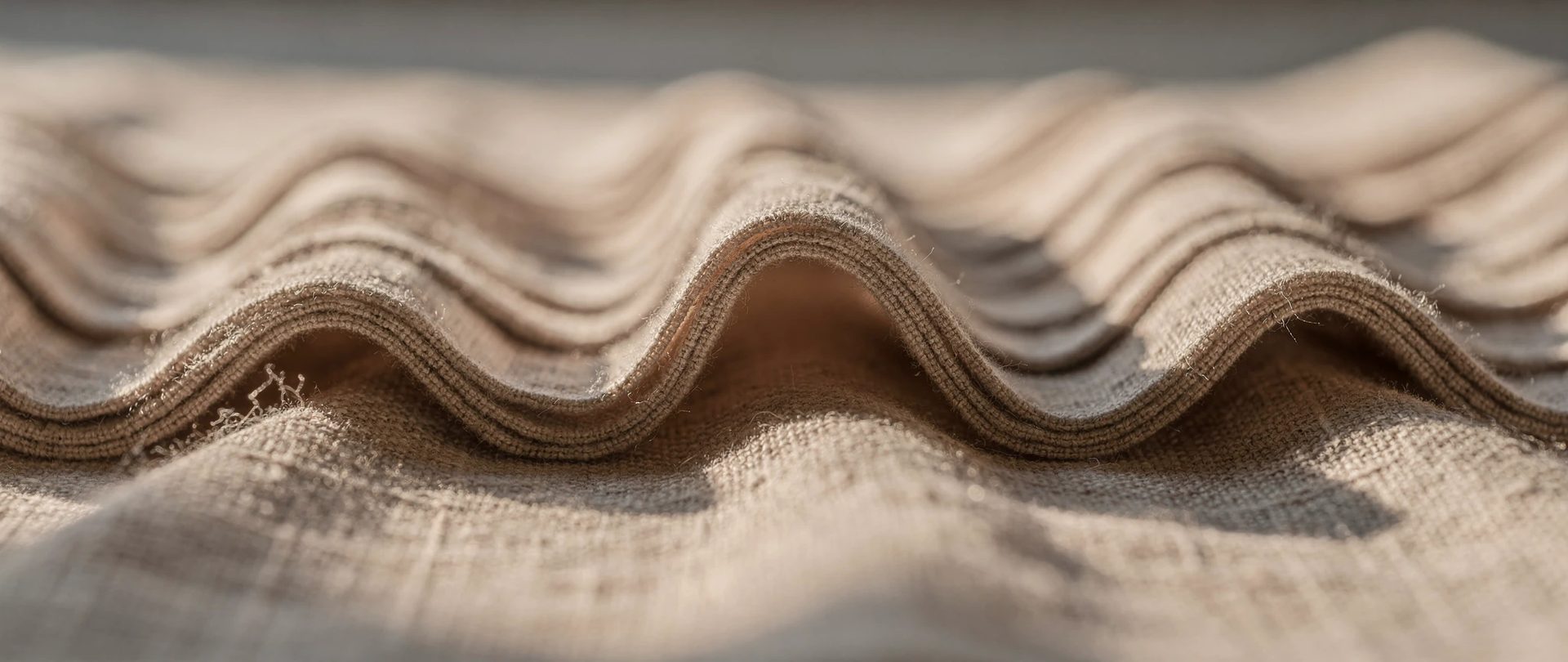
- Mid-weight linen: the reference material for contemporary interiors in Sherbrooke. It falls with seriousness, ages well, and its slight roughness tempers lines that might otherwise feel too polished.
- Raw silk: for rooms where a bit more refinement is welcome. Its naturally uneven surface is paradoxically one of the most modern things you can hang.
- Ribbed woven cotton: more accessible than silk, with a quiet texture that catches light beautifully.
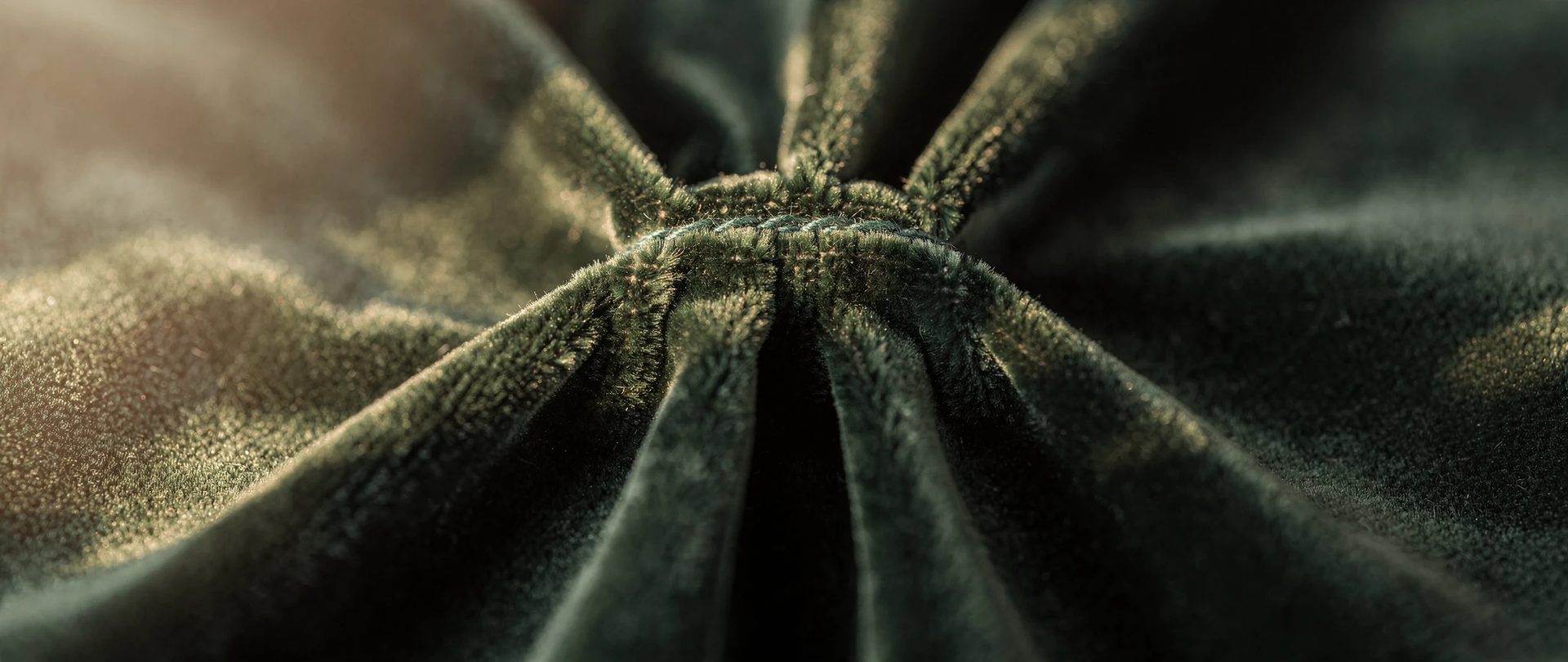
- Matte velvet: in spaces where more visual weight is acceptable. In slate grey or deep charcoal, it reads as thoroughly contemporary: anything but cold.
What I steer away from in modern projects: busy prints, embroidery, fabric with pronounced metallic sheen. Not as a rule, but because they direct the eye in ways the rest of a contemporary room doesn't follow.
Modern doesn't mean cold
This is probably the most common hesitation I encounter. Clients interested in a contemporary look worry they'll lose the warmth of their home. But the two aren't in conflict.
Warmth doesn't come from style. It comes from material and volume. A panel of unbleached natural linen, hung ceiling to floor in a room with white walls, is at once strictly contemporary and genuinely warm. It isn't floral pattern or trim that creates intimacy: it's the volume of fabric, its texture, the way it softens morning light as it passes through.
The real difference between traditional and modern isn't in the feeling they produce, but in the means they use to get there. Traditional style pursues warmth through ornament and layered detail. Contemporary style pursues it through material quality and proportion. Both succeed, differently.
At the atelier, I regularly work with clients who want to modernize without losing a sense of enclosure. We choose warm tones within a narrow palette, prioritize materials with body, avoid pure white in favour of warm white or sandy beige. The result is contemporary and welcoming at the same time.
If you're thinking about your windows and want something that holds up over time, aesthetically and practically, book a consultation. I come to measure, we look at the space together, and everything is made to order in Sherbrooke.