Layered Curtains for the Bedroom: Sheers and Heavy Panels
Layered bedroom curtains use two independent layers for bright days and full privacy at night. Custom advice by Nalia, Sherbrooke.
There's a question I receive almost every week at the atelier, phrased in dozens of different ways, but always coming back to the same thing:
How do I have a bedroom that's bright during the day and completely enveloping at night, without sacrificing one for the other?
The answer is layered curtains. And no, it's not complicated. It's simply a matter of understanding how to layer them correctly.
The layered curtain principle
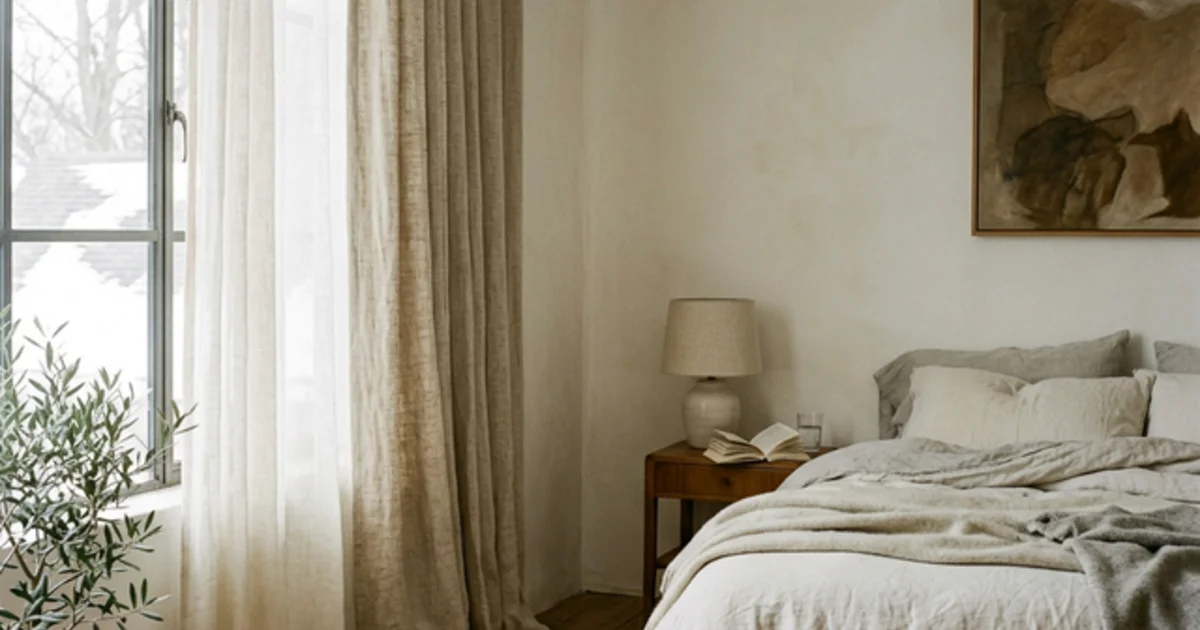
Two layers. Two functions. One double track (or two separate rods, depending on your window).
The inner layer: the sheer. This one manages daytime light. A well-chosen sheer diffuses natural light without blocking the view, creates a pleasant visual softening toward the outside, and gives that quality of filtered light you want in a bedroom in the afternoon. It typically stays in place all day.
The outer layer: the heavy curtain. This one manages nighttime, privacy, insulation, and atmosphere. You close it in the evening. Depending on the fabric chosen, it can be fully blackout (for light-sensitive sleepers) or simply dense and warm: what we call a "dimming" curtain.
The magic of layered curtains is that they address two opposing needs without compromise. During the day, the bedroom breathes. At night, it closes around you.
Choosing the right sheer
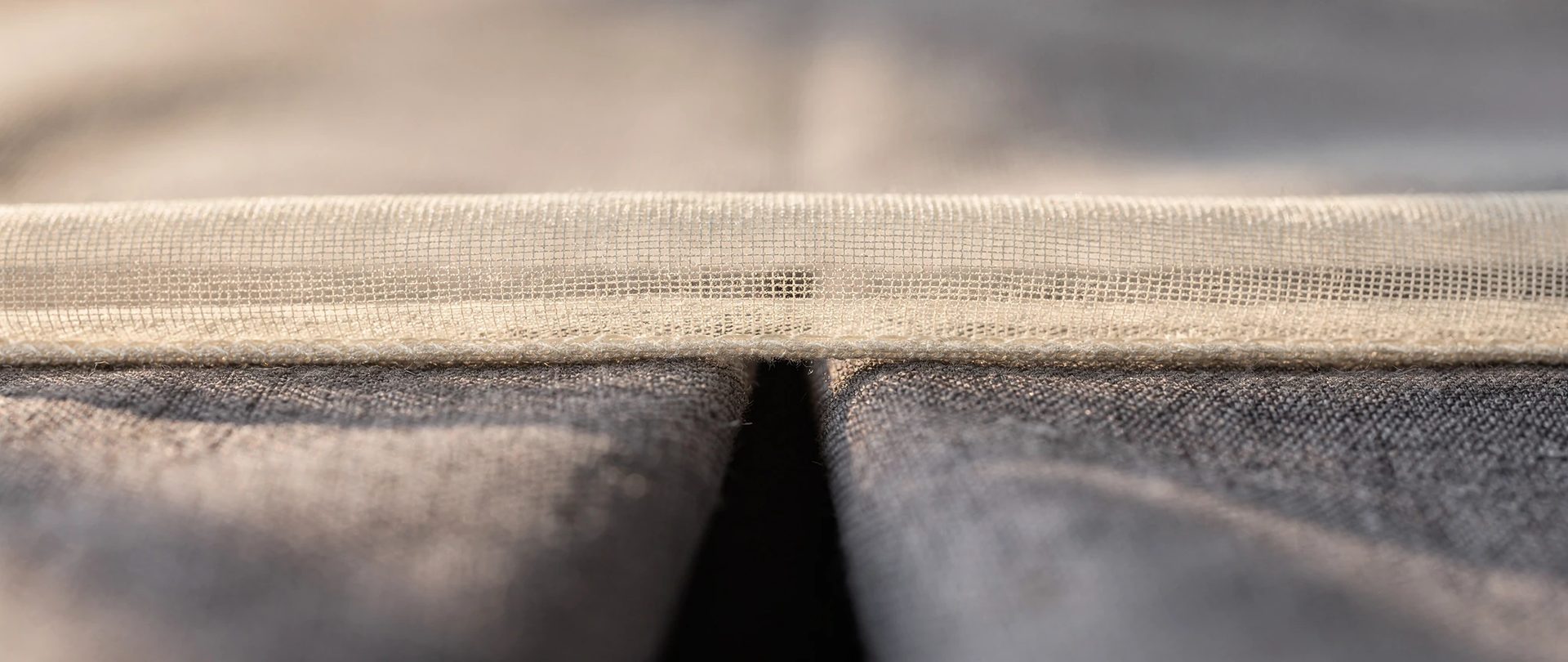
Not all sheers are equal. The first thing I look at is weave density: a sheer that's too transparent turns into a display window at night once interior lights are on, making anyone outside able to see directly in. A slightly more opaque sheer (often called "semi-opaque" or "light-filtering sheer") creates the opposite effect: you can see out, but you can't be seen from outside.
For material: polyester sheer holds up well over time and doesn't yellow. Linen sheer has a beautiful organic quality but requires more careful maintenance. For a master bedroom, I often recommend linen sheer: the visual result is worth the extra care.
For colour: natural white, off-white, natural linen. I almost always stay within these tones for bedroom sheers. They're universal and respond beautifully to changing light throughout the day.
Choosing the right heavy curtain
This is where the choice is most open, and most personal.
If you want total blackout (children's rooms, night-shift workers, east-facing rooms for those who like to sleep in), fabric choice should be paired with a blackout lining. The exterior colour and material can be whatever you want; it's the lining doing the work.
If you're after atmosphere rather than complete darkness, a bedroom that feels "enveloping" without being a cave, then you have much more freedom. Fabrics I love for this:
- Natural heavy linen: warm, pleasantly imperfect, ages beautifully.
- Cotton velvet: the bedroom fabric par excellence. Dense, warm, acoustically absorbing. It creates a sound envelope around the room.
- Boucle or textured fabric: a beautiful option for bedrooms with clean, modern lines where you want material without ostentation.
Height, again
I bring this up at every consultation because it always surprises people: both layers should reach to the floor.
The sheer to the floor: yes. Many clients hesitate because they worry about it getting dirty. But a sheer that just grazes the floor by 1 cm doesn't show wear, and the visual result compared to a sheer that stops 5 cm from the floor is incomparable.
The heavy curtain to the floor: yes, with a slight surplus of 2 to 4 cm if the fabric allows. This small puddle is one of those details that transforms an ordinary curtain into something truly finished.
What I recommend for cold bedrooms in February
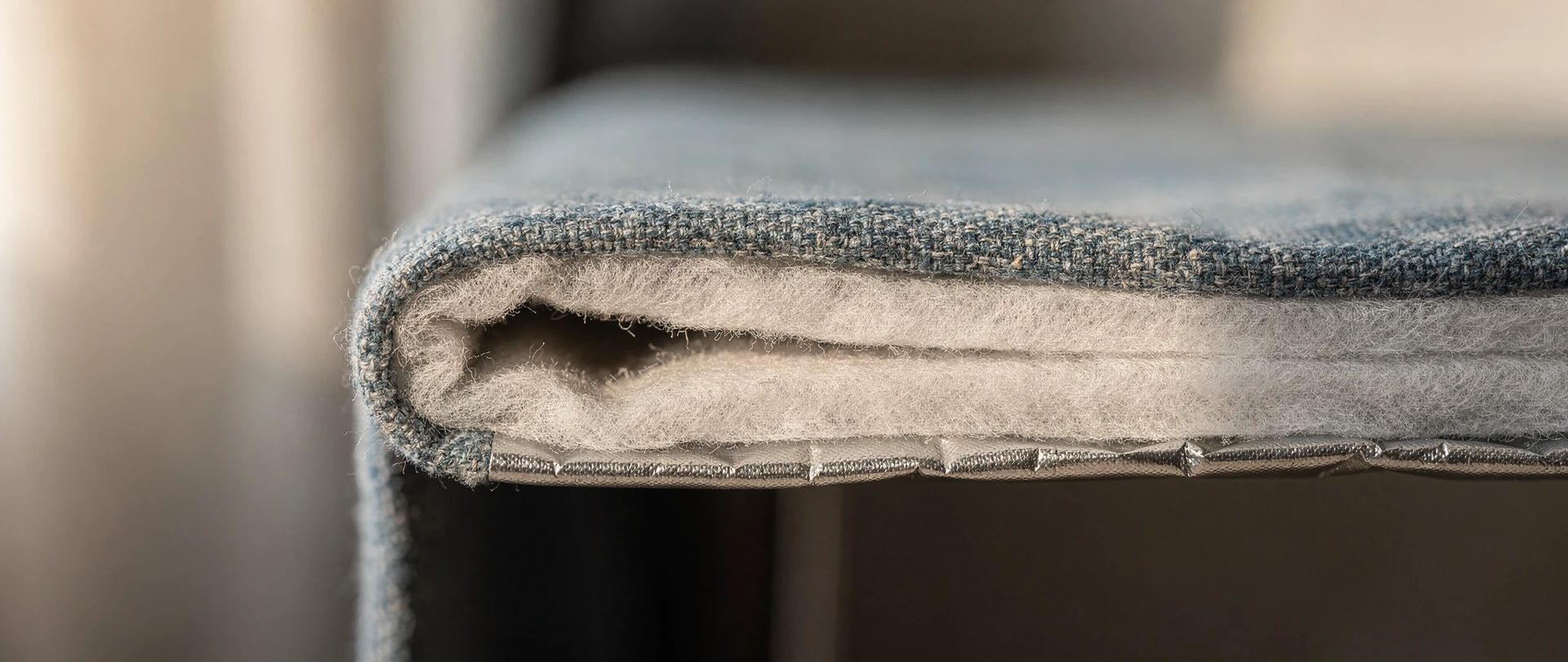
Right now, with the temperatures we have, I almost always recommend a thermal lining on the heavy curtain. The combination of sheer plus thermally-lined heavy curtain is one of the best ways to improve bedroom comfort without touching the windows.
A double track mounted high, 15 to 20 cm above the frame, or all the way to the ceiling, with both layers descending to the floor: it's an investment that lasts for years and genuinely changes the quality of your sleep.
Do you have a bedroom to dress? Tell me about your project. I travel to your home in Sherbrooke and across Estrie for measurements and fabric selection.